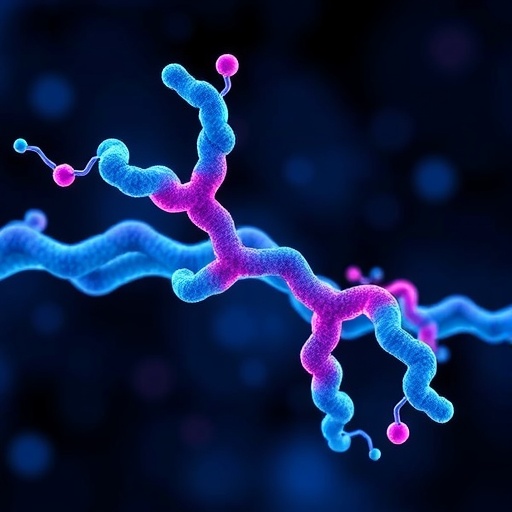
Antibody medicines are often discovered by searching through an overwhelming biological library. Researchers may begin with millions or even billions of antibody candidates, yet only a small proportion will recognize a disease-associated target and bind it strongly enough to become useful therapeutics. A new study from Boston University describes an artificial intelligence framework designed specifically to make that search more efficient. Rather than relying on a larger and more general protein model, the researchers taught a comparatively compact AI system to concentrate on the small antibody regions that determine target recognition. The approach improved predictions of antibody binding affinity by as much as 27 percent across large experimental datasets, potentially helping scientists identify promising candidates before committing them to laboratory testing.
The work addresses a central problem in the development of antibody drugs, which are used against cancers, autoimmune disorders, infectious diseases, and other conditions. An antibody’s amino-acid sequence contains information about its three-dimensional structure and biological behavior, but the sequence is not equally important at every position. Most of the molecule forms a relatively stable scaffold that supports the binding site. Recognition of a virus, bacterium, cancer-associated molecule, or other antigen is concentrated in six flexible loops known as complementarity-determining regions, or CDRs. These loops form the molecular surface that contacts the antigen. Small changes in their sequence can alter the shape, chemistry, and flexibility of the binding site, sometimes converting a weak interaction into a powerful one—or eliminating binding altogether.
General protein language models learn biological patterns in much the same way that language models learn relationships between words. During training, the system is shown protein sequences in which selected amino acids have been hidden, and it must predict the missing residues. By repeating this process across vast numbers of proteins, the model learns statistical relationships associated with protein structure and function. That strategy works well when functionally important information is distributed broadly across a molecule. Antibodies present a more difficult case because their most biologically informative regions are short, highly variable, and subject to evolutionary diversification. Randomly masking residues throughout an antibody can therefore cause the model to spend much of its capacity learning features of the structural scaffold rather than the regions that control antigen recognition.
The Boston University team redesigned the masking strategy around this biological distinction. Its antibody-specific language model preferentially hid amino acids inside the CDRs while leaving most of the surrounding structure visible. During training, as many as half of the residues in those binding loops were masked, challenging the system to reconstruct the sequence patterns most relevant to antibody-antigen interactions. The model was trained on more than 1.6 million naturally paired antibody heavy and light chains. These two chains work together to form the complete binding site, so preserving their natural pairing gives the AI information that would be lost if each chain were treated as an independent sequence. The training design effectively directs the model’s attention toward the molecular “tip” of the antibody rather than allowing the scaffold to dominate what it learns.
The resulting system contains approximately 600 million parameters, making it smaller than many existing antibody and protein language models. Despite that difference in scale, it matched or exceeded larger systems on several benchmark tasks. The researchers evaluated its ability to predict binding affinity—the strength with which an antibody attaches to its antigen—using datasets containing more than 90,000 engineered antibody variants directed against six different antigens. Across those tests, the preferential CDR-masking approach improved prediction performance by up to 27 percent. The findings suggest that model size alone is not the decisive factor in this type of biological prediction. A model trained with a strategy that reflects molecular function may extract more useful information from a smaller, carefully selected dataset than a larger general-purpose system.
The implications are particularly important for antibody discovery during viral outbreaks, when speed can determine how quickly experimental countermeasures become available. Once an antibody binds a viral antigen, researchers may still need to improve its affinity, stability, manufacturability, and ability to perform in the complex environment of the human body. Exploring these properties experimentally can require the construction and testing of enormous libraries of sequence variants. Because the number of possible combinations rises rapidly with every altered amino acid, laboratories can examine only a tiny fraction of the theoretical search space. An AI model capable of ranking candidates by predicted binding strength could help researchers select a manageable group for synthesis and testing, reducing the number of low-probability experiments.
The framework could also assist with the optimization of antibodies that already show activity against a virus. Viral proteins evolve, and mutations can weaken the ability of existing antibodies to recognize them. In principle, the model could evaluate proposed changes in antibody CDR sequences and identify substitutions that are likely to preserve or strengthen binding to an altered viral antigen. Such predictions would not replace structural studies or laboratory measurements, because affinity is only one component of therapeutic performance. Nevertheless, they could guide the design of focused libraries for experimental screening. Instead of testing mutations indiscriminately, researchers could prioritize variants predicted to make favorable contacts with the target while maintaining the overall antibody structure.
The study reflects a broader shift in biological artificial intelligence from simply increasing computational scale to incorporating domain-specific knowledge into model design. Protein language models have demonstrated that sequence data contain hidden information about molecular structure, but antibodies challenge models because their function depends heavily on a small set of rapidly changing regions and on the interaction between paired chains. By encoding those facts into the training procedure, the Boston University researchers sought to make the AI learn the biology that matters most for the task. The result was not a model that understands every aspect of antibody behavior, but a specialized predictor designed to make one of the most consequential decisions in antibody engineering— which candidates deserve further testing—more informed.
The researchers emphasize that computational predictions remain an early step in the drug-development process. Binding affinity measurements, structural analysis, cell-based assays, animal studies, and clinical trials are still required to establish whether a candidate is safe and effective. Antibodies can bind strongly to an isolated antigen yet fail to work in cells or in patients because of poor stability, unintended interactions, inadequate tissue distribution, or other properties not captured by a single sequence-based prediction. Even so, narrowing a search from millions of possibilities to a few hundred experimentally tractable candidates could save substantial time, material, and laboratory effort. It could also allow scientists to respond more rapidly when new viral threats emerge or when familiar viruses accumulate mutations that compromise existing antibody responses.
Published in the Nature Portfolio journal Communications AI & Computing, the study presents biologically informed training as a practical alternative to building ever-larger AI systems. Its central message is that antibody discovery may benefit most when models are designed around the molecular architecture of immune recognition. By focusing on the CDR loops in paired antibody chains, the Boston University team created a more targeted route to predicting how strongly antibodies will bind their antigens. If validated across additional targets and experimental settings, such models could become useful tools for developing antiviral treatments, cancer immunotherapies, diagnostic reagents, and vaccines. The work points toward a future in which AI does not merely search biological sequence space faster, but searches it according to the principles that make molecular recognition possible.
Subject of Research: Computational simulation/modeling
Article Title: Preferential CDR masking in paired antibody language models improves binding affinity prediction
News Publication Date: 13-Aug-2026
Web References: https://doi.org/10.1038/s44488-026-00010-2
References: 10.1038/s44488-026-00010-2
Image Credits: Diane Joseph-McCarthy/Boston University
Keywords: Antibodies, artificial intelligence, antibody language models, complementarity-determining regions, CDR masking, binding affinity, antibody engineering, antiviral therapeutics, protein sequences, viral diseases
Tags: accelerating drug discovery with artificial intelligenceAI framework for antibody recognitionAI-driven antibody binding predictionantibody drug discoveryantibody sequence and structural analysisantibody-antigen interaction modelingautoimmune and infectious disease antibody researchbiological library screening optimizationcomputational antibody designmachine learning for antibody affinityprotein structure prediction in drug developmenttargeted antibody therapeutics