Understanding of Quaternary land connections and knowledge of historic collection gaps were crucial in identifying remote regions likely to harbor novel avian species
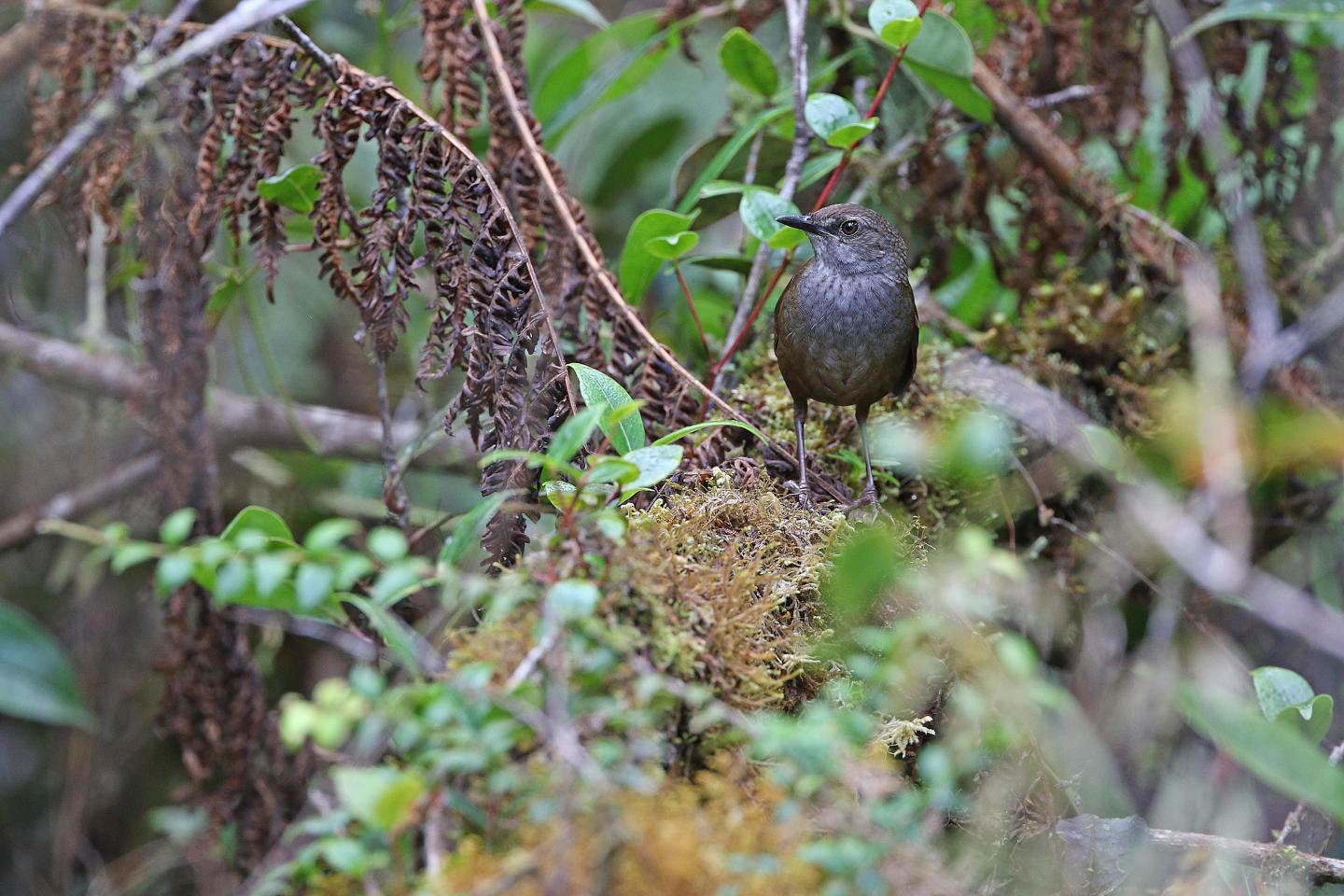
Credit: James Eaton/Birdtour Asia
Birds are the best known class of animals, and since 1999, only five or six new species have been described each year on average. Recently, a joint research team from the National University of Singapore (NUS) and the Indonesian Institute of Sciences (LIPI) made a quantum leap in the discovery of cryptic avian diversity by uncovering five bird species and five subspecies new to science.
The team, led by Associate Professor Frank Rheindt from the Department of Biological Sciences at NUS Faculty of Science, found the birds in three small island groups off Sulawesi, Indonesia. The islands are situated in Indonesia’s Wallacea region, an archipelago at the interface between the Oriental and Australian biogeographical realms, named after Sir Alfred Wallace, who was the most famous historical collector exploring the area.
The results of the study, which were published in the journal Science on 10 January 2020, provide evidence that our understanding of species diversity of complex areas such as Wallacea remains incomplete even for relatively well-known groups such as birds. The findings also suggest that modern exploration to find undescribed species diversity can be targeted to areas of high promise.
Insights from paleo-climatology and history guided discovery of new taxa
Sea depth is an important and long-neglected factor in determining the distinctness of an island’s terrestrial communities. The Earth undergoes periods of glacial-interglacial cycles, leading to the formation of land bridges between shallow islands during ice ages, allowing fauna of the different islands to interbreed. Deep sea islands, which have always been isolated, and high elevation islands are more likely to harbour endemism due to absence of land connections even during glacial cycles.
Guided by this knowledge, Assoc Prof Rheindt and his team concentrated their research efforts on the islands of Taliabu and Peleng, which are located off the north-eastern coast of Sulawesi, as bathymetric data indicate the presence of deep sea between these islands and Sulawesi.
The research team also examined the accounts of historic collectors such as Sir Alfred Wallace, and sought to focus on parts of Wallacea that had received the least coverage by historic collectors, as these areas would hold the highest promise of harbouring undescribed avian diversity.
The islands that the team targeted were characterised by such incomplete historic coverage: Taliabu and its neighbours, together forming the Sula group, were only briefly visited by eight historic collecting expeditions, all of which remained in coastal areas and failed to penetrate the highlands of the interior because of poor accessibility; and Peleng and the remaining islands of the Banggai group were visited along their coastline by only three historic collectors who never ventured far uphill into the interior.
New taxa found
Assoc Prof Rheindt and his team undertook extensive fieldwork in the three remote islands for six weeks, from November 2013 to January 2014, and collected 10 new, long-overlooked avian forms.
By integrating genomic and phenotypic research methodologies, the team successfully described five new songbird species and five new subspecies:
- On Taliabu, they found three new species: the Taliabu Grasshopper-Warbler, the Taliabu Myzomela and the Taliabu Leaf-Warbler; as well as three subspecies: the Taliabu Snowy-browed Flycatcher, Taliabu Island Thrush and Sula Mountain Leaftoiler.
- On Peleng, two new species – the Peleng Fantail and the Peleng Leaf-Warbler – and a new subspecies – the Banggai Mountain Leaftoiler – were discovered.
- On Togian, a new subspecies – the Togian Jungle-Flycatcher – was found.
“Studying the routes and operations of historic collecting expeditions and identifying gaps has been a fruitful approach to pinpoint focal areas in our case. The description of this many bird species from such a geographically limited area is a rarity,” shared Assoc Prof Rheindt.
He added, “Going forward, the use of earth-history and bathymetric information could also be applied to other terrestrial organisms and regions beyond the Indonesian Archipelago to identify promising islands that potentially harbour new taxa to be uncovered.”
Implications for conservation
During the expedition, the research team found that both Taliabu and Peleng have suffered from rampant forest destruction. There is virtually no primary lowland forest on both islands, and most highland forests have been impacted by some form of logging or forest fires.
“While most of the avifauna we described seems to tolerate some form of habitat degradation and is readily detected in secondary forest and edge, some species or subspecies are doubtless threatened by the immense levels of habitat loss on these islands. As such, urgent, long-lasting conservation action is needed for some of the new forms to survive longer than a couple of decades beyond their date of description,” said Assoc Prof Rheindt.
###
Media Contact
Carolyn Fong
[email protected]
65-651-65399
Related Journal Article
http://dx.