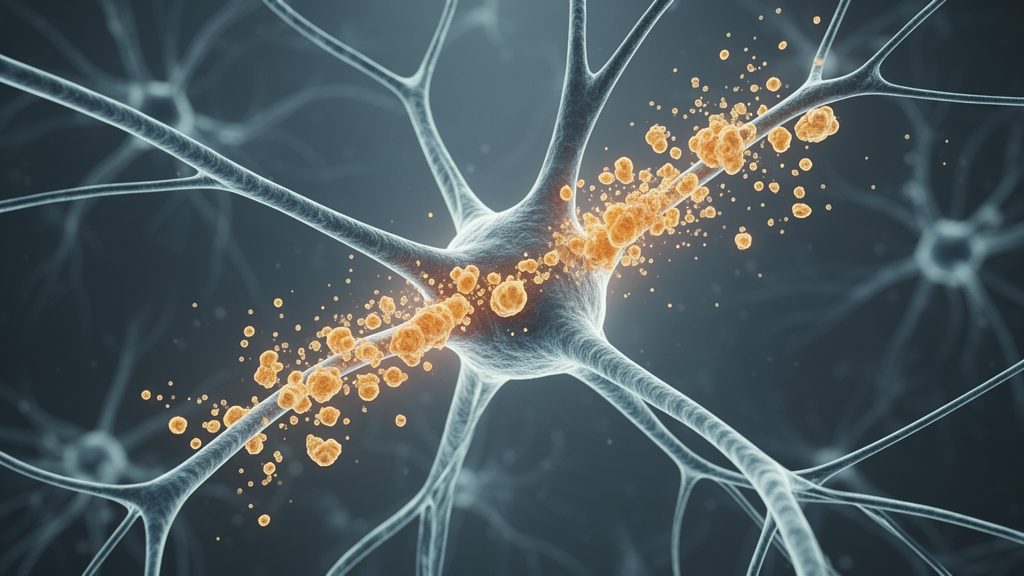
A new study reveals that the protein tau, long associated with neurodegenerative disorders when misfolded or aggregated, acts as a context-dependent regulator of cellular activity in the brain. Researchers performing single-nucleus RNA sequencing on aged mice discovered that removing tau triggers distinct transcriptional and signaling rewiring depending on the environmental context, providing protection in otherwise healthy aging and restoring homeostatic function in the presence of vascular amyloid pathology. The study, which analyzed the cortical tissue of 22-month-old mice, highlights that the loss of endogenous tau does not merely suppress toxic gain-of-function processes but also induces compensatory cellular mechanisms. By mapping transcriptomic shifts across excitatory neurons, astrocytes, oligodendrocytes, and microglia, the team identified how the brain rebalances network activity and cellular support programs in response to the absence of the microtubule-associated protein.
The study design involved comparing wild-type mice to tau knockout mice in both physiological conditions and in a transgenic model of familial Danish dementia (Tg-FDD), which exhibits vascular amyloid deposition. Using high-resolution single-nucleus RNA sequencing, the researchers obtained over 76,000 single-cell transcriptomes in the initial aging cohort and expanded this to more than 104,000 cells when evaluating the disease model. The team processed samples using the Singulator S100 system and integrated transcriptomic data with established cell-type markers to ensure precise annotation. By applying advanced statistical frameworks, such as the Speckle framework for quantifying cell proportions and CellChat for inferring ligand-receptor communications, the investigators could pinpoint how individual cell types adapted their gene expression profiles following tau depletion without relying on pseudoreplication.
Under normal physiological aging, the researchers found that tau ablation led to the selective expansion of a specific excitatory neuronal population, designated as ExNeuron12. This subtype showed a distinct transcriptional program characterized by enhanced glutamatergic signaling, specifically involving markers such as Tcf7l2, Prkch, Grin3a, and Grin2c. Transcriptomic analysis suggested a potential increase in the capacity for glutamate clearance, mediated by an upregulation in the expression of the glutamate transporter SLC1A2. The findings suggest that in the absence of physiological tau, neurons shift toward a transcriptional state that prioritizes synaptic homeostasis and buffering against potential excitotoxic stress, contrasting with the tau-driven excitotoxic amplification observed in pathological conditions. This ExNeuron12 signature demonstrated significant overlap with gene expression changes observed in human iPSC-derived glutamatergic neurons treated with tau-targeting antisense oligonucleotides, suggesting that these compensatory mechanisms in mice reflect conserved pathways of tau modulation.
Non-neuronal cells also exhibited profound transcriptional remodeling. Astrocytes in tau-knockout mice displayed significant heterogeneity, with a specific subcluster showing an enrichment of genes associated with extracellular matrix organization and neuroprotective functions. Similar adaptive responses were observed in oligodendrocytes and microglia, which upregulated genes linked to connectivity, structural remodeling, and chemical synaptic transmission. These findings indicate that the healthy aged brain engages cell-type-specific compensatory responses following tau ablation rather than undergoing widespread cellular reorganization.
Intercellular communication analysis further underscored the network-level changes prompted by tau deletion. In physiological conditions, the removal of tau resulted in an overall increase in predicted cell-to-cell signaling interactions, particularly between excitatory and inhibitory neurons. The signaling dynamics, inferred via coordinated ligand-receptor expression, suggested an enhancement in pathways central to neurotransmission, such as GABAergic and glutamatergic signaling. This network-wide rebalancing is consistent with the hypothesis that tau plays a fundamental role in modulating global brain activity. The increase in synaptic interaction strength highlights how the removal of endogenous tau promotes a refined, highly communicative network, contrasting with the often aberrant or hyperexcitable states linked to tau dysregulation in neurological disorders.
In the context of vascular amyloid pathology, modeled by the Tg-FDD mouse, the impact of tau ablation diverged significantly. While the amyloid insult persisted, tau-knockout Tg-FDD mice displayed a marked expansion of a different excitatory neuronal subcluster, ExNeuron6. A 3D differential expression framework was applied to categorize genes into genotype-specific patterns, revealing that these neurons engaged a unique transcriptional state—defined by a specific set of upregulated genes—associated with glutamate receptor-mediated plasticity and long-term potentiation. This adaptive response appears to enable the neurons to rewire their signaling networks, effectively mitigating the maladaptive influences of the amyloid pathology and shifting toward more resilient synaptic connectivity.
Astrocytes, oligodendrocytes, and microglia in the diseased brains similarly exhibited restoration toward wild-type-like transcriptional programs. Although the cellular proportions of these glial populations remained stable across genotypes, the transcriptional profiles in the Tg-FDD;Mapt knockout mice showed a distinct recovery. For astrocytes, this involved the suppression of disease-associated programs related to protein regulation and signaling, alongside the restoration of physiological programs responsible for neurotransmitter cycling and metabolic support. Oligodendrocytes and microglia showed complementary patterns, re-engaging programs for phagocytic activity and intracellular signaling that had been disrupted by the accumulation of Danish amyloid. This indicates that glial restoration occurs through both cell-autonomous and non-cell-autonomous mechanisms, where the elimination of tau allows glia to overcome maladaptive states triggered by the disease environment.
The intercellular communication landscape in the vascular disease model also revealed a state-dependent remodeling that contrasted with the physiological observations. In the Tg-FDD;Mapt knockout, there was a global reduction in the number of inferred cell–cell interactions across most cell types. However, this dampening of global signaling was accompanied by the selective preservation and enhancement of essential synaptic and neurotransmitter-related pathways within neuronal and glial clusters. This pattern suggests that in pathological stress, tau removal acts as a filter, attenuating globally maladaptive and inflammatory communication while refining and preserving the synaptic interactions necessary for homeostatic maintenance and functional recovery.
The study highlights a two-tiered model for the benefits of tau reduction in the aging brain. First, there are disease-independent compensatory programs induced by the loss of tau, which promote new synaptic signaling states and structural support across cell types. Second, there are disease-associated restorative programs that reverse the transcriptional dysfunction caused by specific pathological insults, such as vascular amyloid accumulation. While neuronal responses to tau loss appear primarily centered on adaptive remodeling and the emergence of novel cellular states, the glial response is characterized by the recovery of previously disrupted homeostatic functions. These dual mechanisms provide a robust explanation for why tau ablation consistently confers behavioral and physiological improvements across diverse neurodegenerative models.
Despite the insights gained, the researchers noted limitations in their methods, particularly concerning the use of CellChat to infer signaling. These predictions are based on transcriptional coordination rather than direct measurements of physical cell–cell contact or protein-level activity. Therefore, while the signaling patterns correlate strongly with the observed molecular phenotypes and immune staining validation, the precise biological nature of these interactions requires further experimental confirmation.
Ultimately, these findings suggest that the therapeutic efficacy of tau-lowering strategies may rely on a combination of different mechanisms rather than a single pathway of action. By identifying how tau influences distinct transcriptional programs in health and disease, the study clarifies that the relative contributions of suppression, restoration, and adaptation are context-dependent. This distinction has profound implications for clinical development, as it suggests that different neurodegenerative conditions may require tailored strategies to leverage the specific protective effects of tau reduction across the various neuronal and glial cell types that form the brain’s complex cellular network.
Subject of Research: Investigation of the transcriptional and intercellular signaling consequences of tau ablation in healthy and diseased murine brains using single-nucleus RNA sequencing.
Article Title: Tau ablation rewires brain cell programs in health and restores function in disease
Article References: Chimal-Juarez, E., Patel, H., Jury-Garfe, N., Dabin, L. C., Thompson, S. G., Vidal, R., Kim, J., & Lasagna-Reeves, C. A. (2026). Tau ablation rewires brain cell programs in health and restores function in disease. Molecular Neurodegeneration Advances, 2(1), Article 53. https://doi.org/10.1186/s44477-026-00060-x
Image Credits: AI Generated
DOI: 10.1186/s44477-026-00060-x
Keywords: tau ablation, single-nucleus RNA sequencing, neurodegeneration, Mapt knockout, vascular amyloid pathology, transcriptional remodeling, excitatory neurons, astrocyte function, synaptic homeostasis, glial cell support, CellChat, Tg-FDD mouse model, glutamatergic signaling, SLC1A2 transporter, neuroplasticity, context-dependent regulation, cellular adaptation, brain network connectivity, dementia research, synaptoprotective states
News Source: Cassandra Pierce. (November 16, 2026). Tau Ablation Reshapes Brain Cellular Programs to Restore Function in Disease. Scienmag.