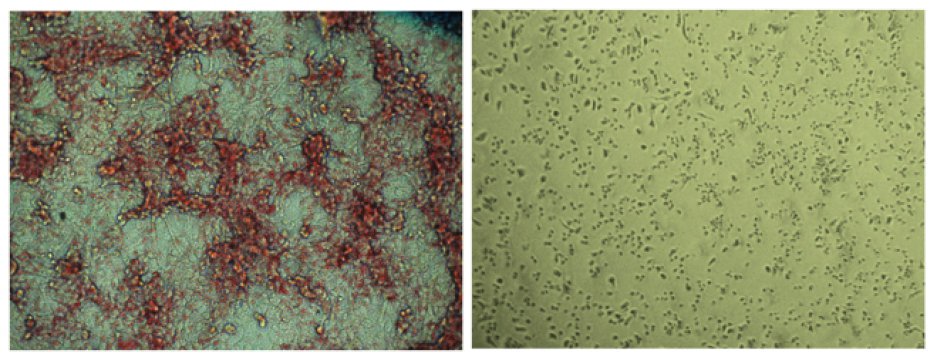
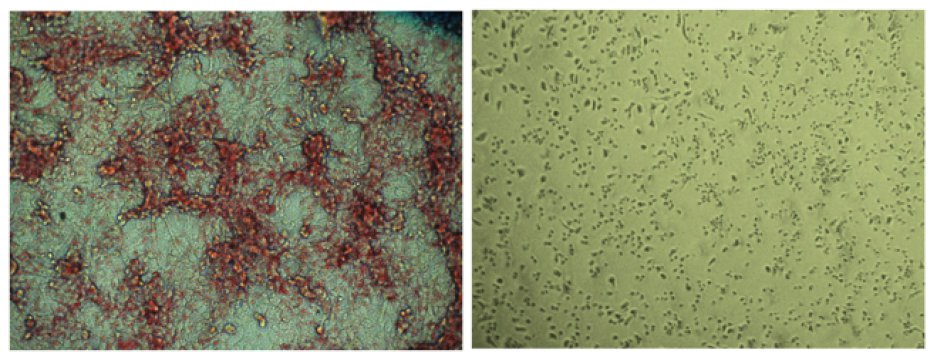
Credit: Image courtesy of Salk Institute
Fat isn’t just something we eat: it may also lie at the heart of a new approach to treating cancer.Cells create their own fat molecules to build their plasma membranes and other critical structures. Now, researchers at the Salk Institute, along with academic and industry collaborators, have found a way to obstruct this instrumental process to stifle cancer’s growth, detailed September 19, 2016 in Nature Medicine. Like halting the delivery of supplies to a construction site, the approach stalls the molecular building blocks cancer needs to grow.
“Cancer cells rewire their metabolism to support their rapid division,” says Salk Professor Reuben Shaw, whose lab has made significant progress in establishing the ties between cancer and metabolic processes. “Because cancer cells are more reliant on lipid synthesis activity than normal cells, we thought there might be subsets of cancers sensitive to a drug that could interrupt this vital metabolic process.”
Researchers had previously hypothesized that interrupting cells’ lipid assembly line could disable cancer, but it was only recently that they were able to disrupt the process and test this theory. Shaw’s team partnered with a Boston-based biotech, Nimbus Therapeutics, which discovers and develops small molecules in the hopes of treating a variety of diseases, who were developing a molecule to shut off a critical player in lipid synthesis, an enzyme called Acetyl-CoA Carboxylase, or ACC.
“This confirms that shutting down endogenous lipid synthesis could be beneficial in some cancers and that inhibitors of the ACC enzyme represent a feasible way to do it,” said Rosana Kapeller, Chief Scientific Officer at Nimbus Therapeutics and a co-author of the paper. “We’ve taken a novel computational chemistry approach to designing high-potency allosteric inhibitors of this difficult enzyme, and we are very encouraged by the results.”
In multiple and extensive large-scale tests in both animal models of cancer and in transplanted human lung cancer cells, the results of the novel ACC inhibitor, dubbed ND-646, were far more promising than expected: tumor mass shrank by roughly two-thirds compared to untreated animals. And when the researchers paired ND-646 with one of the common treatments for non-small lung cancer called carboplatin, the anti-tumor response was even greater: a dramatic 87 percent of tumors were suppressed, compared to 50 percent with the standard treatment of carboplatin alone.
This combination of carboplatin (which damages DNA, a problem for rapidly dividing cells) and ND-646 (knocking out ACC and halting lipid synthesis) didn’t seem to impair normal cells even as it dramatically slowed cancer growth.
“We found surprisingly well-tolerated dosing with some of these novel ACC inhibitors that have broad bioavailability and should not be far away from what would be needed to initiate clinical trials,” says first author Robert Svensson, a Salk research associate.
“This is the first time anyone has shown that this enzyme, ACC, is required for the growth of tumors and this represents compelling data validating the concept of being able to target fat synthesis as a novel anticancer approach,” adds Shaw, who is the holder of the William R. Brody Chair. “The implications are that we have a very promising drug for clinical trials for subtypes of lung cancer as well as liver and other types of cancer. This represents a new weapon in the arsenal to fight cancer.”
Story Source:
The above post is reprinted from materials provided by Salk Institute. Note: Content may be edited for style and length.
Journal Reference:
Robert U Svensson, Seth J Parker, Lillian J Eichner, Matthew J Kolar, Martina Wallace, Sonja N Brun, Portia S Lombardo, Jeanine L Van Nostrand, Amanda Hutchins, Lilliana Vera, Laurie Gerken, Jeremy Greenwood, Sathesh Bhat, Geraldine Harriman, William F Westlin, H James Harwood, Alan Saghatelian, Rosana Kapeller, Christian M Metallo, Reuben J Shaw. Inhibition of acetyl-CoA carboxylase suppresses fatty acid synthesis and tumor growth of non-small-cell lung cancer in preclinical models. Nature Medicine, 2016; DOI: 10.1038/nm.4181
The post Targeting fat to treat cancer appeared first on Scienmag.