• HOME
  • NEWS
  • EXPLORE
    • CAREER
      • Companies
      • Jobs
    • EVENTS
    • iGEM
      • News
      • Team
    • PHOTOS
    • VIDEO
    • WIKI
  • BLOG
  • COMMUNITY
    • FACEBOOK
    • INSTAGRAM
    • TWITTER
Monday, August 17, 2026
BIOENGINEER.ORG
No Result
View All Result
  • Login
  • HOME
  • NEWS
  • EXPLORE
    • CAREER
      • Companies
      • Jobs
        • Lecturer
        • PhD Studentship
        • Postdoc
        • Research Assistant
    • EVENTS
    • iGEM
      • News
      • Team
    • PHOTOS
    • VIDEO
    • WIKI
  • BLOG
  • COMMUNITY
    • FACEBOOK
    • INSTAGRAM
    • TWITTER
  • HOME
  • NEWS
  • EXPLORE
    • CAREER
      • Companies
      • Jobs
        • Lecturer
        • PhD Studentship
        • Postdoc
        • Research Assistant
    • EVENTS
    • iGEM
      • News
      • Team
    • PHOTOS
    • VIDEO
    • WIKI
  • BLOG
  • COMMUNITY
    • FACEBOOK
    • INSTAGRAM
    • TWITTER
No Result
View All Result
Bioengineer.org
No Result
View All Result
Home NEWS Science News Biology

Targeted delivery of highly toxic anti-cancer drug to brain tumors

Bioengineer by Bioengineer
February 23, 2021
in Biology
Reading Time: 2 mins read
0
IMAGE
Share on FacebookShare on TwitterShare on LinkedinShare on RedditShare on Telegram

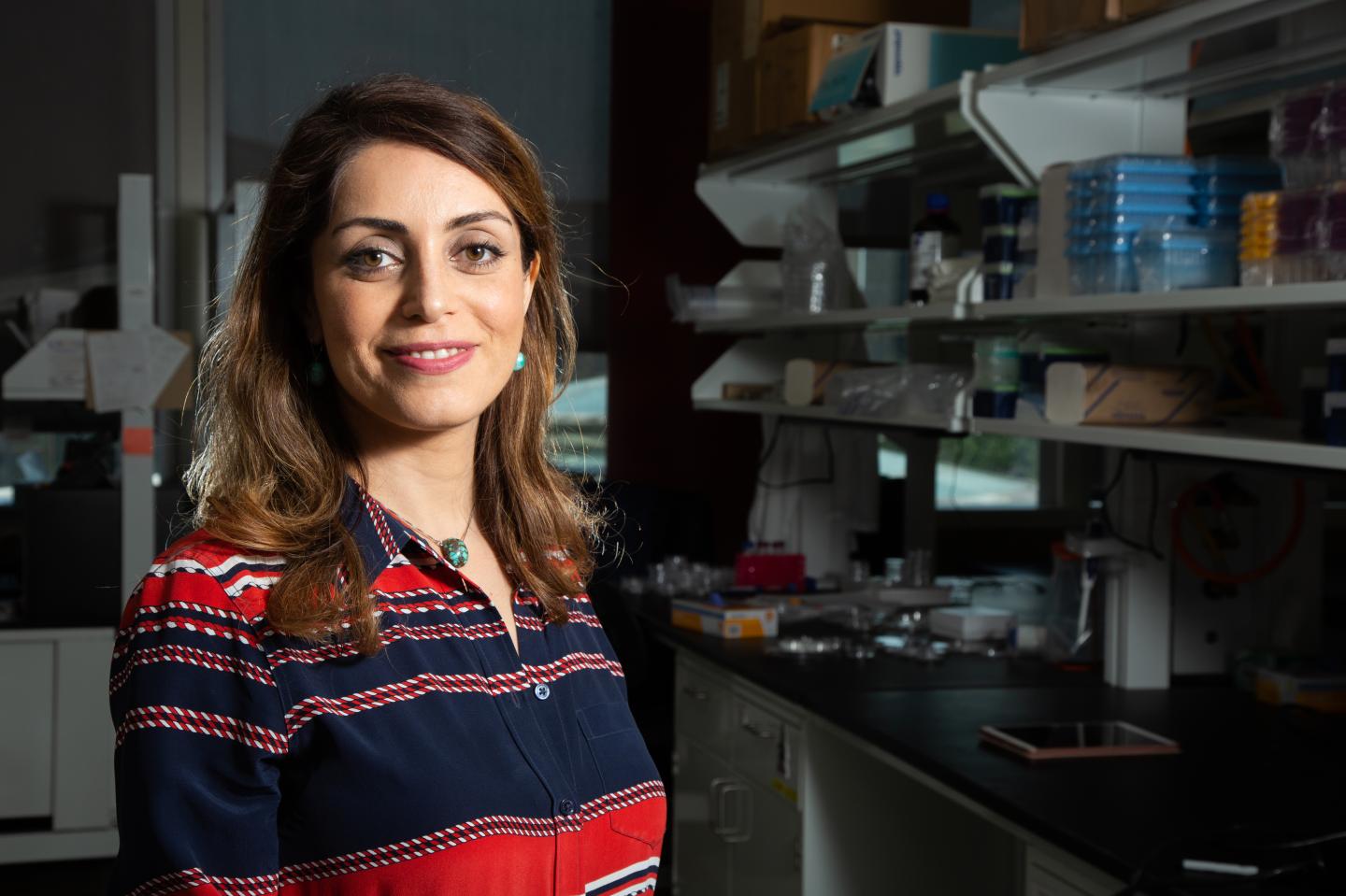
UH researcher develops, tests nano-carrier as potential treatment for glioblastomas
IMAGE

Credit: University of Houston

With a survival rate of only five years, the most common and aggressive form of primary brain tumor, glioblastoma multiforme, is notoriously hard to treat using current regimens that rely on surgery, radiation, chemotherapy and their combinations.

“Two of the major challenges in the treatment of gliomas include poor transport of chemotherapeutics across the blood brain barrier and undesired side effects of these therapeutics on healthy tissues,” said Sheereen Majd, assistant professor of biomedical engineering at the University of Houston. “To get enough medicine across the blood brain barrier, a high dosage of medication is required, but that introduces more toxicity into the body and can cause more problems.”

In an article published and featured on the cover of a January issue of Advanced Healthcare Materials, Majd reports a new glioma-targeted nano-therapeutic that will only address tumor cells offering increased effectiveness and reduced side effects.

An iron chelator known as Dp44mT (Di-2-pyridylketone-4,4-dimethyl-3-thiosemicarbazone) is an effective medication known to inhibit the progression of tumors but had not been used against brain tumors prior to this study. The chelator works to pull out the overabundance of iron needed by cancer cells, thus starving them.

Using clues from the tumors themselves, Majd developed a Dp44mT-loaded nano-carrier that would be drawn to glioma tumors, which present many IL13 (Interluken) receptors. Because the IL13 receptors are abundant, she added IL13 ligands onto her FDA-approved biodegradable polymer carrier (with the Dp44mT inside) so the receptors would lure the ligands, thus receiving the medicine.

Prior to her new carrier, the Dp44mT drug would be administered, but could go anywhere in the body, even places it is not meant to go.

“It’s like an envelope with no address on it. It can land anywhere, and with toxins inside it could kill anything. Now, with our targeted delivery, we put an address on the package and it goes directly to the cancer cells,” said Majd.

Aggressive brain tumors also develop high levels of multidrug resistance making them nearly impervious to common chemotherapeutics such as temozolomide or doxorubicin.
“There is, hence, an urgent need for more effective therapeutic formulations with the ability to overcome drug resistance in aggressive glioma tumors and to kill these malignant cells without damaging the healthy tissues,” reports Majd.

Majd’s study, which tested the nano-therapeutic both in vivo and in vitro, is the first report on targeted delivery of Dp44mT to malignant tumors.

###

Media Contact
Laurie Fickman
[email protected]

Original Source

https://uh.edu/news-events/stories/2021/february-2021/02232021-sheereen-majd-glioblastoma-nano-carrier.php

Tags: Biomedical/Environmental/Chemical EngineeringBiotechnologycancerMedicine/HealthNanotechnology/MicromachinesneurobiologyNeurochemistryTechnology/Engineering/Computer Science
Share12Tweet8Share2ShareShareShare2

Related Posts

Strubbelig–NHL3 Receptor Complex Helps Arabidopsis Respond to Cellulose Deficiency

Strubbelig–NHL3 Receptor Complex Helps Arabidopsis Respond to Cellulose Deficiency

August 15, 2026
Bombyx mori Satellitome Analysis Reveals Evolutionary Stability, Dispersed Chromosomal Organization, Transposon Origins

Bombyx mori Satellitome Analysis Reveals Evolutionary Stability, Dispersed Chromosomal Organization, Transposon Origins

August 15, 2026

Synthetic pyrenoid reconstruction reveals EPYC1-driven carbon concentration mechanisms and evolution

August 15, 2026

Endophytic Flavobacterium boosts root hairs and drought tolerance through ERF–CEP5 signaling

August 15, 2026
Please login to join discussion

POPULAR NEWS

  • KAIST develops semiconductor neuron that harnesses noise to selectively process signals

    29 shares
    Share 12 Tweet 7
  • Imagining natural and extra robotic thumbs together strengthens kinesthetic sensorimotor networks

    29 shares
    Share 12 Tweet 7
  • PARP1 Drives Neuropathic Pain Through GPX4-Dependent Ferroptosis in Injured Mice’s Sensory Neurons

    29 shares
    Share 12 Tweet 7
  • Strubbelig–NHL3 Receptor Complex Helps Arabidopsis Respond to Cellulose Deficiency

    29 shares
    Share 12 Tweet 7

About

We bring you the latest biotechnology news from best research centers and universities around the world. Check our website.

Follow us

Recent News

KAIST develops semiconductor neuron that harnesses noise to selectively process signals

Imagining natural and extra robotic thumbs together strengthens kinesthetic sensorimotor networks

PARP1 Drives Neuropathic Pain Through GPX4-Dependent Ferroptosis in Injured Mice’s Sensory Neurons

Subscribe to Blog via Email

Success! An email was just sent to confirm your subscription. Please find the email now and click 'Confirm' to start subscribing.

Join 85 other subscribers
  • Contact Us

Bioengineer.org © Copyright 2023 All Rights Reserved.

Welcome Back!

Login to your account below

Forgotten Password?

Retrieve your password

Please enter your username or email address to reset your password.

Log In
No Result
View All Result
  • Homepages
    • Home Page 1
    • Home Page 2
  • News
  • National
  • Business
  • Health
  • Lifestyle
  • Science

Bioengineer.org © Copyright 2023 All Rights Reserved.