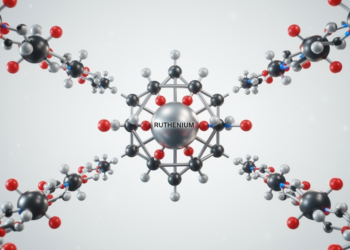
Ruthenium Catalysts Advance Efficient Carbon Dioxide Conversion to Value-Added Chemicals
This review analyzes the advancements in heterogeneous ruthenium-based catalysts for the hydrogenation of carbon dioxide into formic acid, formaldehyde, and ...
This review analyzes the advancements in heterogeneous ruthenium-based catalysts for the hydrogenation of carbon dioxide into formic acid, formaldehyde, and ...

A theoretical review reveals how underlying metallic, oxide, and semiconductor supports transform chemically inert graphene into an active interface by ...

A comprehensive review evaluates how engineering porous two-dimensional materials optimizes charge transport, intermediate adsorption, and mass diffusion across diverse electrocatalytic ...
A review evaluates structural and surface engineering strategies in two-dimensional transition metal dichalcogenides for advanced chemiresistive gas sensing.
Spectroscopic experiments and computational modeling reveal that low-coordinated palladium centers on a carbon nitride composite lower the activation energy for ...

A comprehensive scientific review reveals that while catalytic nanozymes show promise in cellular and rodent disease models, significant physiological disparities ...

Coupling atomically dispersed ruthenium with neighboring chromium sites suppresses metal overoxidation and reduces catalyst degradation during acidic water electrolysis.
Researchers have theoretically designed a two-dimensional hybrid honeycomb-kagome germanene monolayer that opens an intrinsic electronic bandgap and delivers efficient catalytic ...
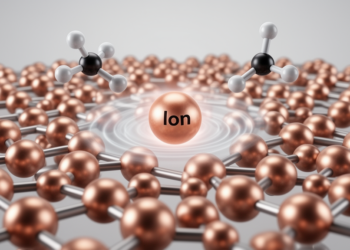
Researchers have developed a dual-single-atom catalyst using adjacent copper atoms to regulate iron spin states and accelerate oxygen reduction kinetics.

Scientists have engineered high-performance iron-carbon electrocatalysts for rechargeable zinc-air batteries by using precursor coordination chemistry to establish direct sulfur-to-iron electronic ...

A combined DFT and machine learning study maps how the carbon–fluorine bond in tetrafluoromethane breaks across transition metal surfaces, single-atom ...
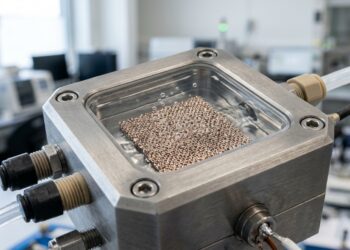
A new review details how electrocatalysts that convert nitrate pollution into ammonia are advancing from mechanistic insights toward practical single-cell ...
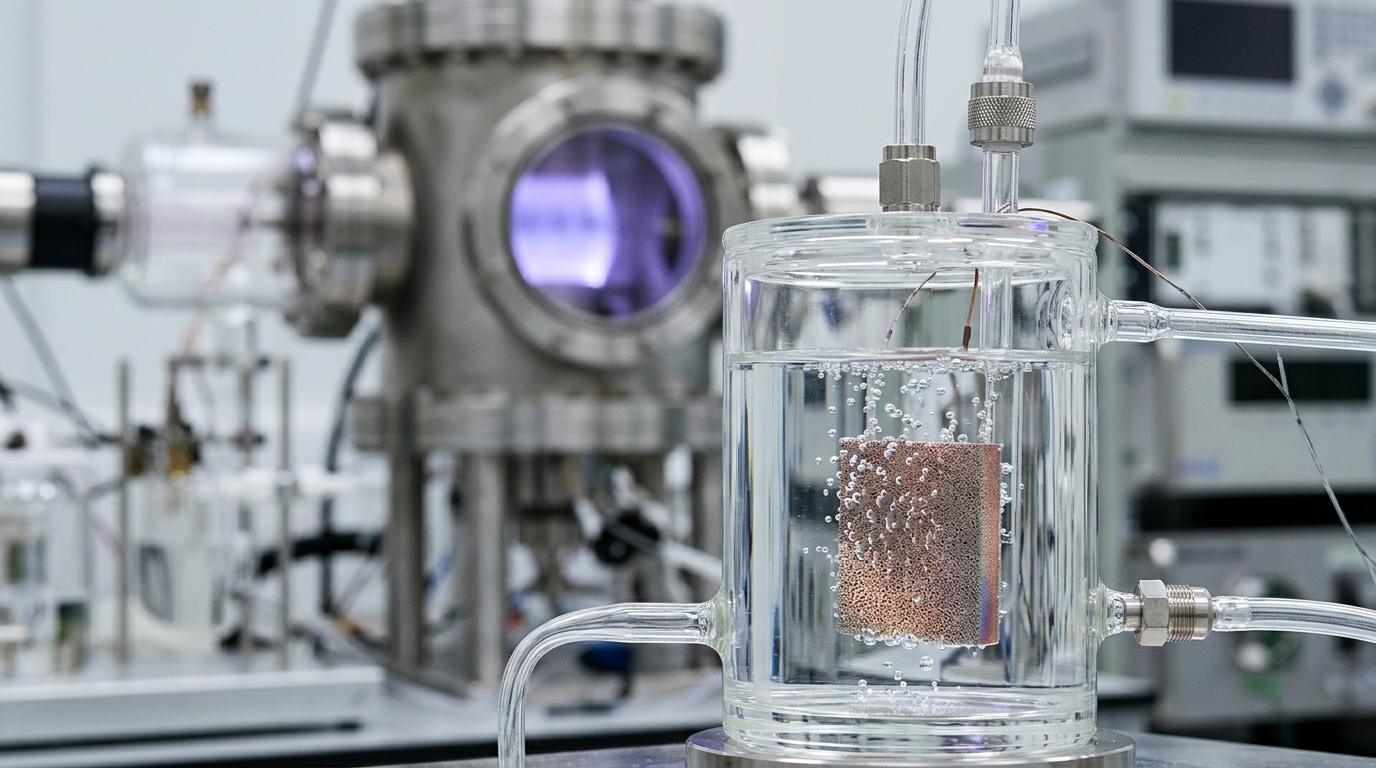
A one-step plasma method anchors copper single atoms on nitrogen-doped TiO2, achieving a hydrogen evolution rate of 7.82 mmol per ...

A new review details how dual-site catalysts and three-dimensional nanoreactors boost the activity, selectivity and stability of thermo-catalytic CO2 hydrogenation.
A new review details how doped, defective, and metal-decorated carbon catalysts selectively convert oxygen to hydrogen peroxide as a sustainable ...

A new review argues that trapping metal atoms, clusters and nanoparticles inside zeolite pores could overcome the limits of carbon ...

A new review details how self-regenerating catalysts that reversibly restructure their active metals could dramatically extend industrial catalyst lifetimes.

A reticular coordination strategy anchors single platinum atoms onto cerium-oxo clusters, yielding a 14.9 wt% atomically dispersed catalyst that resists ...
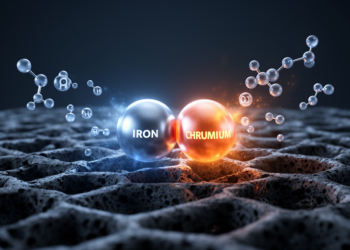
A neighboring iron-chromium dual-atom catalyst raises the intrinsic activity of iron sites 4.6-fold while suppressing the reactive oxygen species that ...
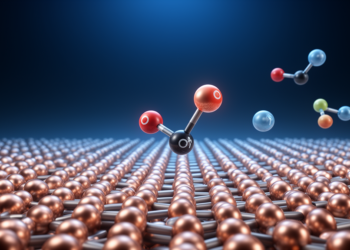
A new review outlines how atomically precise catalyst interfaces, from dopants and vacancies to curved surfaces and local electric fields, ...