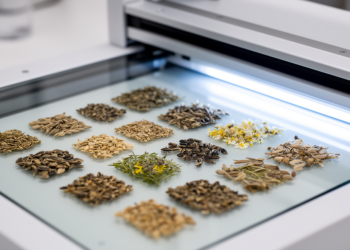
Flatbed Scanners and Machine Learning Accurately Classify Wildflower Seed Species
Researchers developed an automated computer vision and machine learning pipeline using domestic flatbed scanners to identify British wildflower seeds in ...
Researchers developed an automated computer vision and machine learning pipeline using domestic flatbed scanners to identify British wildflower seeds in ...
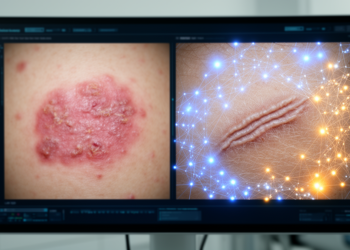
A multiregional dermatological image study evaluated five deep learning architectures for differentiating eczema from scabies, observing validation accuracies up to ...
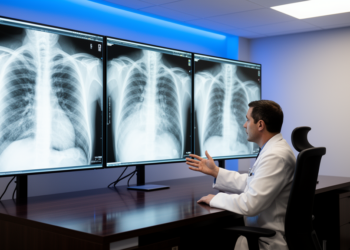
Researchers developed a mask-aware knowledge distillation method that trains lightweight MobileNetV3-Small neural networks to classify pneumothorax in chest radiographs with ...

Researchers have developed a lightweight neural network architecture that reduces computational complexity while accurately detecting building cracks and estimating their ...

A systematic evaluation of thirty-five deep learning workflows reveals how targeted image preprocessing strategies optimize healthy leaf classification across diverse ...

Researchers demonstrate that replacing BranchyNet classifier heads with trainable class reference vectors accelerates ResNet-50 inference by up to 1.67 times ...

A multicenter retrospective study demonstrates that combining deep transfer learning, handcrafted radiomics, and clinical variables can accurately predict esophageal fistula ...

Researchers have developed an enhanced ResNet-50 deep learning framework integrating squeeze-and-excitation attention and restraint-defined feature vectors to classify lung cancer ...

Researchers developed a discovery-stage pathology-omics framework connecting single-cell transcriptional programs with histopathological imaging to stratify patient prognosis in hepatocellular carcinoma.
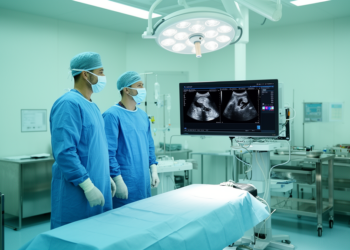
A retrospective single-center study found that a multimodal deep learning system combining intraoperative photography and indocyanine green fluorescence predicted non-salvage ...

A multicenter study demonstrates that an attention-based multiple-instance learning model analyzing routine pathology slides can predict progression-free survival in locally ...

A multicenter study demonstrates that deep learning and hybrid models analyzing preoperative magnetic resonance imaging can identify medulloblastoma molecular subgroups ...
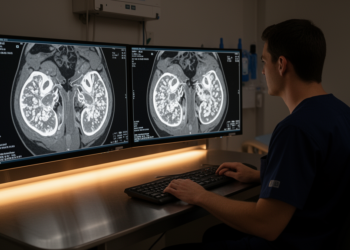
Researchers have developed StoneXAI-Net, an explainable and weakly supervised deep learning framework that classifies, localizes, and segments kidney stones on ...

Researchers have introduced Suppression-Absence-Competition eXplanations, a structured visual framework that isolates why neural network classifiers select a predicted class while ...

A comparative study demonstrates that hybrid machine learning classifiers match end-to-end deep learning on saturated steel defect benchmarks but diverge ...

Researchers have developed MGTF-Net, a multi-backbone transformer fusion network that achieved 98.73 percent accuracy in classifying diseases across mango and ...
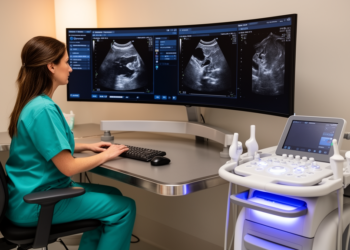
An attention-enhanced ResNet-50 deep learning model achieved an accuracy of 0.833 and an area under the curve of 0.855 when ...

Researchers have developed Fancy GNG, an image augmentation method that partitions color distributions to improve neural network classification on color-sensitive ...
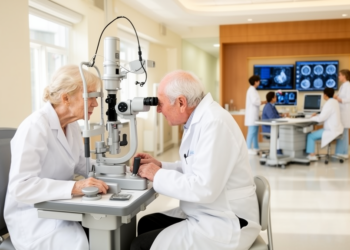
Researchers developed and deployed GlauHelper, an internet-based closed-loop platform integrating artificial intelligence modules for data acquisition, automated record processing, and ...

Evaluating lung adenocarcinoma whole-slide images revealed that mild JPEG2000 compression reduces storage requirements by approximately 90% while maintaining deep learning ...