
Self-Improving Catalyst Turns Polystyrene Waste into Benzoic Acid Using Light
Researchers report a visible-light photocatalytic system that converts polystyrene into high-purity benzoic acid at room temperature and ambient pressure, with ...
Researchers report a visible-light photocatalytic system that converts polystyrene into high-purity benzoic acid at room temperature and ambient pressure, with ...

Kyushu University researchers developed a Lewis-acidic counteranion, BBcat, that binds basic substrates near a ruthenium photocatalyst, keeping yields high even ...

A cellulose nanocrystal-supported TiO2 nanocomposite degraded about 98.6% of the antibiotic ofloxacin under direct sunlight in laboratory tests, driven mainly ...

A new review maps how ZnO and g-C3N4/ZnO nanocomposites could transform food safety through antimicrobial packaging, photocatalytic detoxification and biosensing, ...

A new silver-decorated MOF–COF photocatalyst reduces nitroarenes under visible light and converts them into polysubstituted pyrroles in one pot at ...

Green-synthesized magnesium oxide nanoparticles from Ecbolium ligustrinum extract degraded methylene blue and basic fuchsin under sunlight and inhibited two bacterial ...

Interfacial Cd–O bonds in S-scheme CdZnS/BiOI heterostructures act as charge transfer channels that raise hydrogen evolution to 1.22 mmol g−1 ...
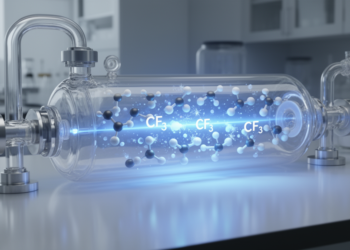
A laboratory study by Hokkaido University researchers used light, a ketone catalyst and a base to convert fluoroform into CF₃ ...

A sol–gel synthesized bismuth ferrite–activated carbon nanocomposite achieved a specific capacitance of 404.0 F/g with 81.38% retention over 5000 cycles ...

A laboratory study found that 5% iron-doped nickel zincate delivered high supercapacitor performance and faster pollutant degradation under ultraviolet light.
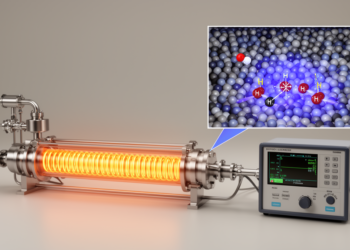
A continuous-flow photocatalytic reactor converts methanol into formaldehyde, methyl formate and hydrogen under mild conditions, beating thermodynamic limits by up ...
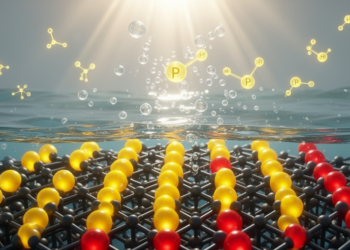
Researchers report that atomically correlated phosphorus–sulfur pairs in carbon nitride boost photocatalytic hydrogen peroxide production elevenfold in pure water without ...

Nitrogen-doped titanium oxide nanowires synthesized with ammonium nitrate showed a 2.2-fold increase in photocatalytic hydrogen evolution over undoped titanium oxide, ...

Sol–gel synthesized SrV2O6 nanoparticles achieved 3.14 Wh/kg energy density and degraded up to 94% of organic dyes under light, a ...
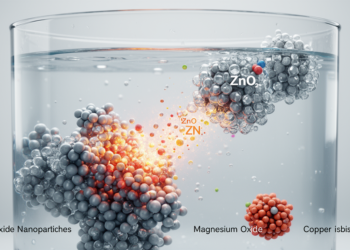
In a controlled comparison, zinc oxide nanoparticles degraded 85 percent of methyl red dye under xenon-lamp irradiation, outperforming magnesium oxide ...

A systematic comparison of Cu-, Ni-, Co-, and Mg-substituted zinc orthotitanate spinels shows nickel doping delivers the highest UV-driven methylene ...
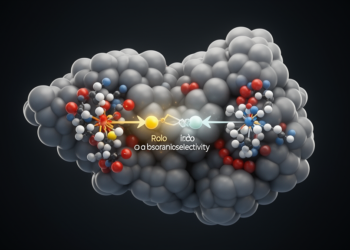
Generative protein design and directed evolution produced artificial metalloenzymes that support highly enantioselective light-driven reactions with synthetic metal photocatalysts.

A controlled PET-fabric study found that neutral, acidic and alkaline treatments produced different MXene interfaces, coating structures and multifunctional performance ...
An abstract-reported laboratory study found that a visible-light-responsive Sb2S3/BiOBr heterojunction produced 419.54 µmol L−1 of H2O2 while removing 84.50% of ...

KAIST chemists have built an automated platform that combines robots, continuous-flow chemistry and visible light to synthesize drug candidate compounds ...