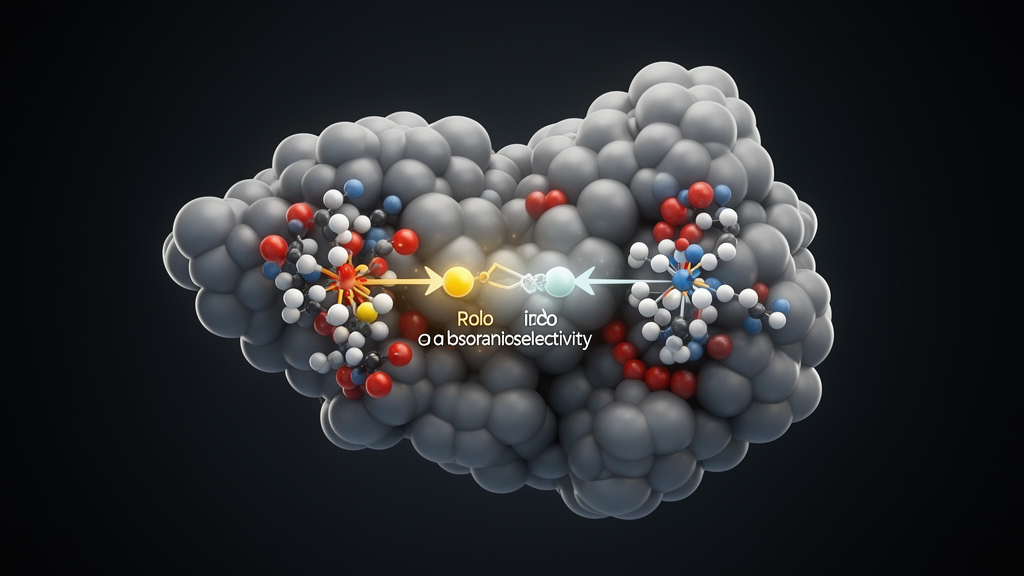
Researchers have combined generative protein design with laboratory evolution to build artificial metalloenzymes that use metal polypyridine photocatalysts to drive highly enantioselective light-driven reactions. The hybrid catalysts pair a synthetic metal cofactor with a purpose-built protein scaffold that binds the cofactor and helps control the reaction around it. The study reports efficient catalysis, high catalyst turnover, catalyst recycling and activity with commercially available racemic metal complexes, offering a strategy for controlling photocatalytic chemistry involving synthetic metal catalysts that lack natural protein partners.
Scaffold discovery has traditionally been constrained by trial-and-error screening and the functional limits of existing proteins. That problem is particularly pronounced for metal polypyridine photocatalysts, which are widely used in visible-light chemistry but had not previously been shown to support highly enantioselective photocatalysis within protein scaffolds. The researchers addressed the discovery problem by using generative protein-design methods to create de novo scaffolds that selectively bind the photocatalysts.
They then used directed evolution to refine these newly designed proteins into efficient and highly enantioselective catalytic systems. Generative design supplied protein scaffolds with the binding properties needed to accommodate a synthetic metal photocatalyst, while repeated mutation and selection improved catalytic activity and stereoselectivity. The resulting artificial metalloenzymes supported diverse light-driven reactions, reached high turnover and could be recycled.
Spectroscopic studies indicated that the protein scaffold was not simply a passive container for the metal complex. Its environment extended the photocatalyst’s excited-state lifetime and organized the substrate near the cofactor. These changes altered energy transfer and provided a structural basis for controlling stereoselectivity.
The findings therefore connect two functions within one engineered catalyst: the protein affects the photochemical behavior of the metal complex while also positioning the reacting substrate within a controlled local environment. The reported mechanism is specific to the designed systems and does not imply that every protein scaffold can control natural or engineered metal cofactors in the same way. This work is a proof-of-concept for a combined protein-design and directed-evolution strategy, rather than evidence that arbitrary proteins or metal complexes can be converted into efficient artificial metalloenzymes.
The reported scope focuses on metal polypyridine photocatalysts and on a process in which computationally generated binding scaffolds are subsequently optimized in the laboratory. Its significance lies in demonstrating that de novo design can provide scaffolds for synthetic metal complexes without natural protein partners, while directed evolution converts those initial scaffolds into functional, selective catalysts for non-natural photocatalytic chemistry.
Subject of Research: De novo protein scaffolds and directed evolution for enantioselective artificial metalloenzyme photocatalysts
Article Title: De novo design of enantioselective artificial metalloenzyme photocatalysts
Article References: Mishra, S., Payal, Evans, D., Bortey, K., Bootwala, H., Gonzalez-Gutierrez, G., Vázquez, R. J., Baker, D., & Lewis, J. C. (2026). De novo design of enantioselective artificial metalloenzyme photocatalysts. Nature. https://doi.org/10.1038/s41586-026-11317-6
Image Credits: AI Generated
DOI: 10.1038/s41586-026-11317-6
Keywords: artificial metalloenzymes, generative protein design, directed evolution, enantioselectivity, photocatalysis, metal polypyridine complexes, visible-light chemistry, excited-state lifetime, energy transfer, novo, design, enantioselective
News Source: Denise Maddox. (October 22, 2026). Designed proteins enable enantioselective artificial photocatalysts. Scienmag.