
Review Evaluates Machine Learning and Multimodal Data for Cardiac Arrest Prognostication
A comprehensive review evaluates machine learning and multimodal data fusion methods designed to forecast neurological recovery following cardiac arrest.
A comprehensive review evaluates machine learning and multimodal data fusion methods designed to forecast neurological recovery following cardiac arrest.

Researchers demonstrated that tabular generative modeling improves machine learning predictions of electrical conductivity in cementitious composites when experimental data are ...

A distributed streaming pipeline combining Zeek telemetry, Apache Kafka, and PySpark with hybrid machine learning detected network intrusions within forty ...

An evaluation of the DropoutShield deep learning framework on the EdNet dataset revealed that adding extended platform interaction records did ...
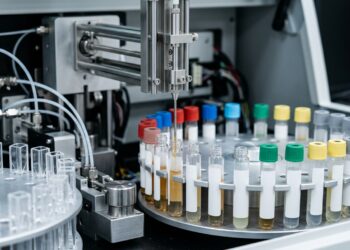
A comprehensive simulation benchmark reveals that unsupervised anomaly detection algorithms do not consistently surpass traditional multirules for clinical biochemistry quality ...

A systematic ablation study of enterprise behavior logs reveals that statistical feature construction outweighs architectural complexity in deep learning cybersecurity ...

A critical review of solar power forecasting literature from 2020 to 2025 reveals that many machine learning and hybrid models ...

A computational study reveals that lightweight machine learning models paired with trend-based fundamental feature engineering outperform complex deep learning architectures ...

A new machine learning framework pairs XGBoost and SHAP interpretability to automate real-time quality control across broadband seismic observation networks.

A deep learning framework combining bidirectional sequential modeling with attention mechanisms successfully classified student digital literacy behavioral proxies using online ...

A combined machine learning framework pairing weighted collaborative filtering with extreme gradient boosting predicts entrepreneurial survival and optimizes group investment ...

While machine learning models can accurately interpolate drug solubility in supercritical carbon dioxide for represented compounds, they fail to generalize ...

A comprehensive Python tutorial outlines an end-to-end framework enabling engineers without programming expertise to construct, evaluate, and explain machine learning ...
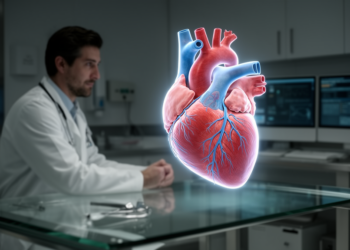
Researchers developed CardioTwin-AI, an adaptive digital twin framework that achieved 90.21 percent accuracy in predicting heart disease during internal validation.

Researchers evaluating robotic process automation discovery found that simple word-level text classifiers match complex neural representations while highlighting the generalization ...

A hybrid stacking ensemble of XGBoost, LightGBM and CatBoost with domain-informed features predicts concrete compressive strength with an R² of ...

A cross-validated evaluation of eight regression algorithms on an 18-disk continuum robot arm finds that geometric features alone yield near-zero ...

An AI framework using physics-informed features and Bayesian optimization predicted multiaxial fatigue life across 25 metals, with XGBoost reaching a ...

A study of the CICIDS2017 DDoS capture shows node-degree graph features fail under NAT identity collapse while edge-weight concentration separates ...

A machine learning pipeline trained on 192 FDA-approved compounds predicts human oral bioavailability with an R2 of 0.766, outperforming previous ...