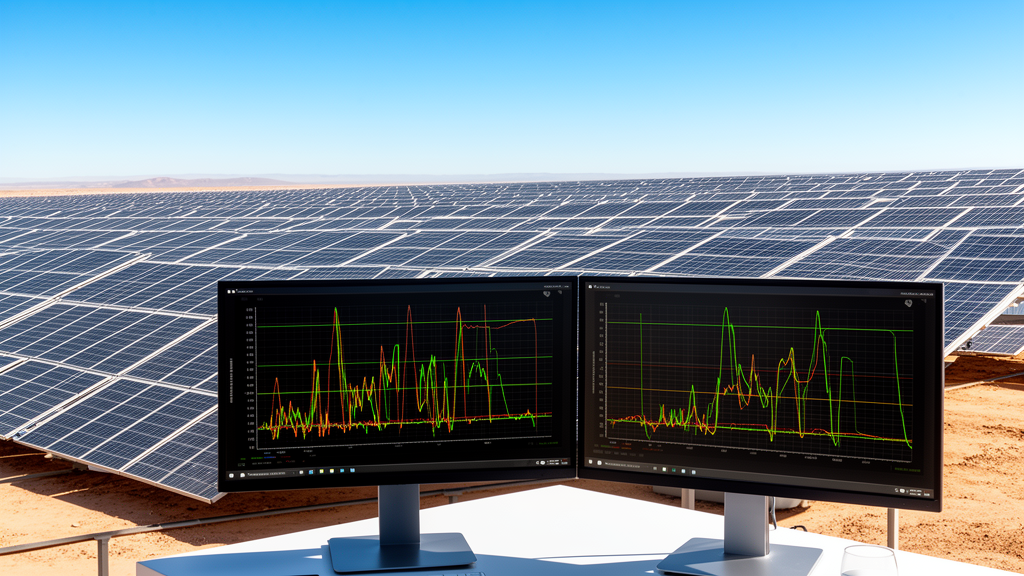
A critical analysis published in Neural Computing and Applications reports that many recent photovoltaic power forecasting studies suffer from significant methodological limitations that lead to biased results and artificially inflated performance claims. Researchers Mohannad Gyam and İlhan Ceylan conducted a critical evaluation of recent solar generation forecasting literature, finding that numerous published studies exhibit high model complexity, over-engineering, and inconsistent performance gains.
The critical assessment is motivated by the rapid worldwide expansion of photovoltaic systems, which has elevated the necessity of accurate and reliable photovoltaic power forecasting to ensure power grid stability, effective energy management, and the broader integration of renewable energy. As sustainability pressures have grown globally, the research literature has witnessed dramatic growth, documented by more than 12,000 Scopus-indexed publications on solar forecasting produced between 2013 and 2023. In response to this vast volume of literature, Gyam and Ceylan developed a scoping review paired with critical analysis that specifically focuses on research published between 2020 and 2025, proposing a structured hierarchical taxonomy to systematically organize photovoltaic power forecasting methodologies.
In their methodological evaluation, the authors examined the fundamental factors that influence photovoltaic power output, the operational forecasting horizons used across studies, and the various error metrics applied to quantify predictive accuracy. Their assessment provides a comprehensive critique of machine learning models and hybrid architectures, alongside common feature engineering strategies, weather classification approaches, and hyperparameter optimization algorithms. To resolve these ambiguities, the authors propose targeted evaluation frameworks specifically designed to isolate and evaluate the actual individual contributions of each technique used within hybrid forecasting pipelines.
The review emphasizes that current research suffers from major systemic gaps that substantially restrict meaningful comparisons across different published works. Specifically, the authors identify a pervasive lack of standardized forecasting horizons, an absence of unified error metrics, and inadequate transparent reporting throughout the existing literature. To overcome these limitations and eliminate biased performance estimates, the study highlights the critical need for rigorous validation procedures. These essential measures include conducting multiple independent runs, carrying out formal statistical significance testing, and benchmarking all newly developed models against complexity-matched baselines to ensure that performance gains are statistically verifiable and meaningful.
Beyond diagnosing existing methodological deficiencies, the review identifies several vital research directions necessary to advance the field toward dependable real-world implementation.
Subject of Research: Photovoltaic power forecasting methodologies and evaluation frameworks
Article Title: A critical review of photovoltaic power forecasting and optimization techniques
Article References: Gyam, M., & Ceylan, İ. (2026). A critical review of photovoltaic power forecasting and optimization techniques. Neural Computing and Applications, 38(22), Article 889. https://doi.org/10.1007/s00521-026-12609-8
Image Credits: AI Generated
DOI: 10.1007/s00521-026-12609-8
Keywords: photovoltaic power forecasting, solar forecasting, machine learning, hybrid models, grid stability, energy management, renewable energy, feature engineering, weather classification, hyperparameter optimization, forecasting horizons, error metrics, model complexity, statistical significance testing, physics-informed modeling, uncertainty-aware forecasting, cross-climate generalization, real-time forecasting
News Source: Denise Maddox. (November 16, 2026). Review Finds Solar Power Forecasting Studies Often Suffer From Inflated Performance. Scienmag.