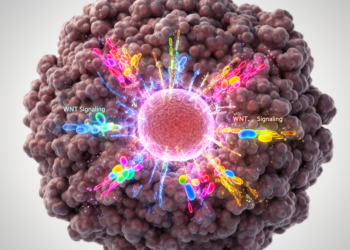
Smartphone Neural Rendering Resolves Entangled Crop and Weed Architectures in 3D
Researchers used consumer smartphone video and neural radiance fields to accurately reconstruct and quantify complex three-dimensional shoot and root structures ...
Researchers used consumer smartphone video and neural radiance fields to accurately reconstruct and quantify complex three-dimensional shoot and root structures ...
Researchers have developed a portable colorimetric sensor using disodium EDTA-functionalized gold nanoparticles on synthetic cotton fibers to rapidly detect toxic ...

A study in Cell Biology and Toxicology identifies GhECA8 as a key regulator of salt tolerance in cotton by maintaining ...

A single promoter SNP that boosts GaOFP17 expression reduces cotton boll and seed sizes by engaging the transcription factor NF-YC4 ...

A new review proposes that the histone marks H3K4me3 and H3K27me3 may keep cold-responsive genes in cotton poised for rapid ...
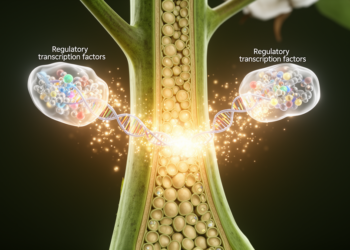
Researchers report that the transcription factor GhMYB63 activates the peptide gene GhIDL1 to promote boll abscission in cotton.
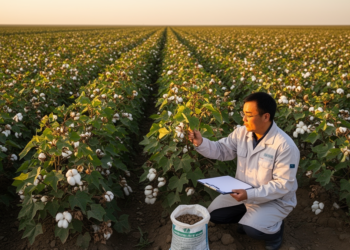
A one-year Xinjiang field trial found that organic fertilizer combined with a composite microbial inoculant raised cotton photosynthesis and seed ...
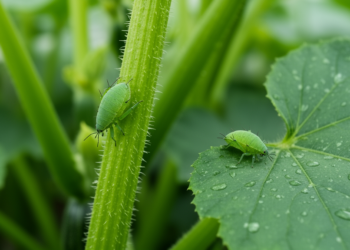
A new study finds zucchini's high amino acid content lowers the nutritional barrier for cotton-melon aphids moving from cotton to ...

A new study from Bahawalpur, Pakistan, finds that transformer models, led by the Swin Transformer, classify cotton leaf diseases more ...
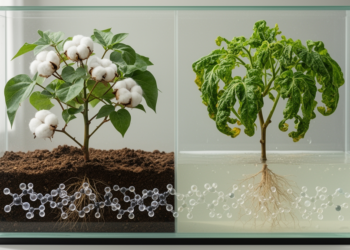
A genome-wide study of upland cotton identified six stay-green, or SGR, genes whose expression was associated with responses to salt ...

Researchers have identified 32 germin-like protein genes in upland cotton and pinpointed five that respond strongly to drought, heat, and ...

New field and pot trials show the herbicide pyrithiobac sodium can suppress more than 85 percent of key broadleaf weeds ...
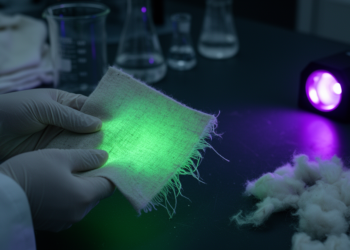
Scientists turned cotton stalk waste into green fluorescent carbon dots that travel from roots to fibers, labeling cotton in situ ...

A new Israeli field and greenhouse study reveals that Trichoderma-based and integrated management regimes reshape the fungal communities inside cotton ...
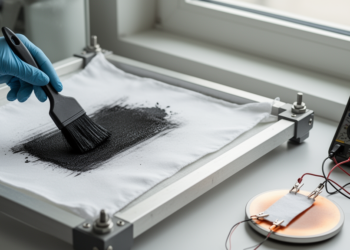
Dip coating cotton in water-based carbon nanofiber inks creates n-type thermoelectric textiles whose conductivity rises with temperature, offering a flexible ...
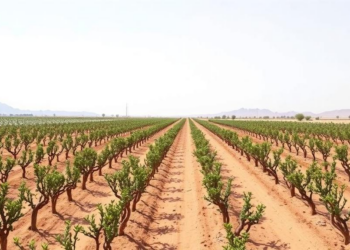
A two-year field experiment in Xinjiang shows that a moderate nitrogen rate of 280 kilograms per hectare minimizes the greenhouse ...
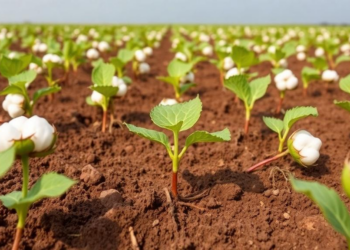
A nitrification inhibitor called DMPP shifts cotton root nitrogen assimilation, boosts root growth and exudation, and significantly raises seed cotton ...

A two-year field study in Xinjiang shows that moderate, multi-stage drip leaching nearly doubled cotton lint yield on saline-alkali soil ...
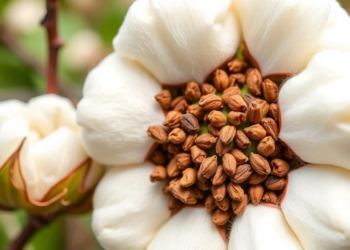
Chinese researchers have identified the GhRCD1-GhMYC3 protein module that governs cotton's long-standing trade-off between fiber quality and seed performance, offering ...