• HOME
  • NEWS
  • EXPLORE
    • CAREER
      • Companies
      • Jobs
    • EVENTS
    • iGEM
      • News
      • Team
    • PHOTOS
    • VIDEO
    • WIKI
  • BLOG
  • COMMUNITY
    • FACEBOOK
    • INSTAGRAM
    • TWITTER
Thursday, October 29, 2026
BIOENGINEER.ORG
No Result
View All Result
  • Login
  • HOME
  • NEWS
  • EXPLORE
    • CAREER
      • Companies
      • Jobs
        • Lecturer
        • PhD Studentship
        • Postdoc
        • Research Assistant
    • EVENTS
    • iGEM
      • News
      • Team
    • PHOTOS
    • VIDEO
    • WIKI
  • BLOG
  • COMMUNITY
    • FACEBOOK
    • INSTAGRAM
    • TWITTER
No Result
View All Result
Bioengineer.org
No Result
View All Result
Home NEWS Science News Chemistry

Zucchini’s amino acid riches help cotton aphids jump to cucumber

by
October 29, 2026
in Agriculture, Chemistry
Reading Time: 2 mins read
0
Zucchini's amino acid riches help cotton aphids jump to cucumber

Zucchini's amino acid riches help cotton aphids jump to cucumber

Share on FacebookShare on TwitterShare on LinkedinShare on RedditShare on Telegram

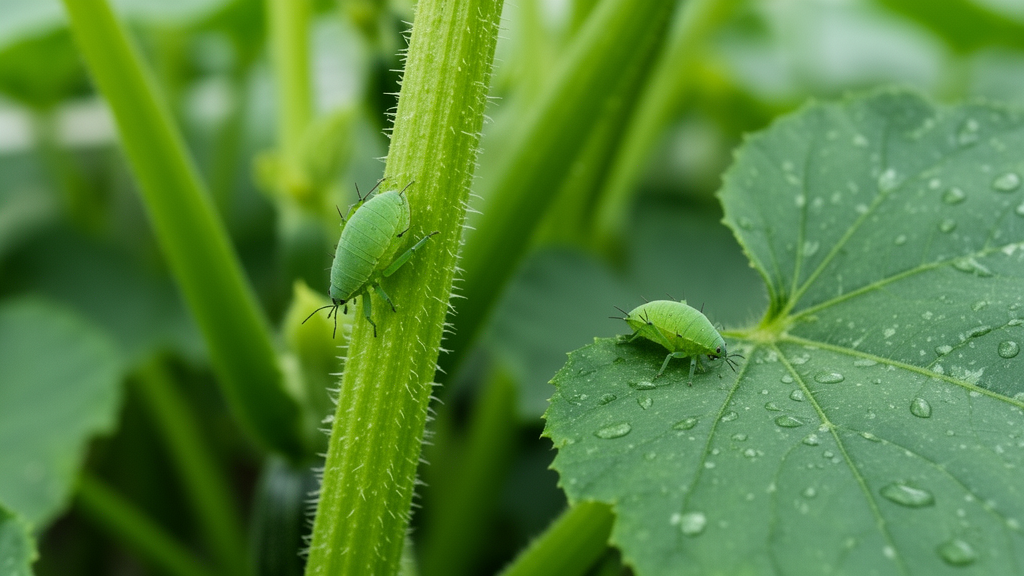
Aphis gossypii, the cotton-melon aphid, is a globally distributed pest whose population dynamics are strongly shaped by the host plants it feeds on. A new study published in Chemical and Biological Technologies in Agriculture examined how zucchini can act as a “bridge host” that helps the aphid move from cotton to cucumber, by comparing aphid growth and amino acid metabolism across the three crops.

The researchers reared aphids on cotton, zucchini and cucumber and found that host plant significantly affected both survival and morphology. Survival ranked highest on zucchini, followed by cotton and then cucumber. Aphids on zucchini and cucumber were larger than those on cotton, particularly in late adulthood, indicating that plant species leaves a measurable imprint on body size.

Chemical analysis of the plants showed that zucchini leaves contained the highest total amino acid content, 1.9 to 2.3 times higher than cotton and cucumber. Zucchini also contained unique compounds such as citrulline and beta-alanine that were absent from the other hosts. Principal component analysis of the aphid metabolite data revealed distinct metabolic profiles for insects reared on zucchini, separating them clearly from those on the other two plants.

The aphids themselves accumulated amino acids in different ways depending on their host. On cucumber, the insects showed dramatic accumulation, a 7.58-fold increase that the authors interpret as a sign of nutritional stress. On zucchini, accumulation was moderate and peaked in essential amino acids, while aphids on cotton showed a steady pattern consistent with adaptation to that plant.

Mantel tests, which compare the structure of ecological and metabolic data matrices, confirmed that host plant species exerted a stronger influence on the aphids’ metabolic networks than developmental stage did. In other words, what the aphid eats matters more for its internal chemistry than how old it is.

The authors conclude that zucchini facilitates host transfer by providing abundant nutritional substrates, effectively lowering the barrier for aphids shifting from cotton to cucumber. Because the study is an early-access, peer-reviewed accepted article, some details may be refined in the final version of record.

From a practical standpoint, the findings offer a theoretical basis for nutrition-based pest management.

Subject of Research: Nutritional mechanisms by which zucchini acts as a bridge host for Aphis gossypii transfer from cotton to cucumber

Article Title: Amino acid profiles reveal the role of zucchini as a bridge host for Aphis gossypii transfer from cotton to cucumber

Article References: Zhong, T., Wang, L., Zhang, K., Li, D., Ji, J., Zhu, X., Gao, X., Luo, J., & Cui, J. (2026). Amino acid profiles reveal the role of zucchini as a bridge host for Aphis gossypii transfer from cotton to cucumber. Chemical and Biological Technologies in Agriculture. https://doi.org/10.1186/s40538-026-01081-0

Image Credits: AI Generated

DOI: 10.1186/s40538-026-01081-0

Keywords: Aphis gossypii, cotton-melon aphid, zucchini, bridge host, amino acids, citrulline, host plant transfer, cotton, cucumber, pest management, metabolic profiling, nutritional ecology

News Source: Daisy Hatcher. (October 29, 2026). Zucchini’s amino acid riches help cotton aphids jump to cucumber. Scienmag.


Tags: amino acidsAphis gossypiibridge hostcitrullinecottoncotton-melon aphidcucumberhost plant transfermetabolic profilingnutritional ecologyPest Managementzucchini
Share12Tweet7Share2ShareShareShare1

Related Posts

A2 milk review links indigenous cattle genetics to premium rural dairy markets

A2 milk review links indigenous cattle genetics to premium rural dairy markets

October 29, 2026
Research report: Reactive compatibilization strategies for mixed polyolefin waste toward food packaging applications

Research report: Reactive compatibilization strategies for mixed polyolefin waste toward food packaging applications

October 29, 2026

Generalized Model Predicts Rice Bran Pellet Drying as Well as Machine Learning

October 29, 2026

Zeolite Cages Could Tame Metal Catalysts for Cleaner Electric Chemistry

October 29, 2026

POPULAR NEWS

  • A2 milk review links indigenous cattle genetics to premium rural dairy markets

    A2 milk review links indigenous cattle genetics to premium rural dairy markets

    29 shares
    Share 12 Tweet 7
  • New Algorithm Maps Every Optimal RNA Fold Across Branching Parameters

    29 shares
    Share 12 Tweet 7
  • Vaccination and Biosecurity Lead the Field in Cutting Livestock Antibiotic Dependence

    29 shares
    Share 12 Tweet 7
  • Chrome-free leather biodegrades faster in soil, reshaping microbial communities

    29 shares
    Share 12 Tweet 7

About

We bring you the latest biotechnology news from best research centers and universities around the world. Check our website.

Follow us

Recent News

A2 milk review links indigenous cattle genetics to premium rural dairy markets

New Algorithm Maps Every Optimal RNA Fold Across Branching Parameters

Vaccination and Biosecurity Lead the Field in Cutting Livestock Antibiotic Dependence

Subscribe to Blog via Email

Enter your email address to subscribe to this blog and receive notifications of new posts by email.

Join 85 other subscribers
  • Contact Us

Bioengineer.org © Copyright 2023 All Rights Reserved.

Welcome Back!

Login to your account below

Forgotten Password?

Retrieve your password

Please enter your username or email address to reset your password.

Log In
No Result
View All Result
  • Homepages
    • Home Page 1
    • Home Page 2
  • News
  • National
  • Business
  • Health
  • Lifestyle
  • Science

Bioengineer.org © Copyright 2023 All Rights Reserved.