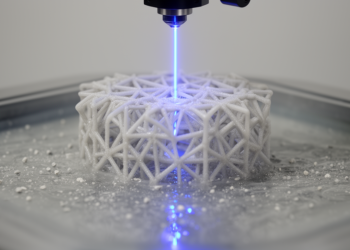
Ceramic Waste Additive Enhances Stereolithography 3D Printing Resins
Incorporating chamotte ceramic waste into photopolymer resins improves the dimensional accuracy and mechanical performance of stereolithography 3D printed components.
Incorporating chamotte ceramic waste into photopolymer resins improves the dimensional accuracy and mechanical performance of stereolithography 3D printed components.

A systematic review of mass timber structural applications reveals that while softwoods remain the market standard, integrating hardwoods and hybrid ...
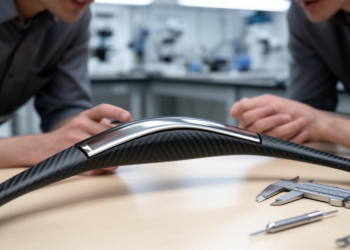
KAIST researchers have developed a flexible lithium-sulfur structural battery cathode grown directly on carbon cloth that conforms to curved drone ...

A deep learning architecture combining structural and texture modules achieved 89.30 percent accuracy in classifying microscopic plant fibers across 32 ...

A comprehensive review evaluates the effectiveness and limitations of multimodal nondestructive testing techniques for characterizing hidden damage in composite wind ...
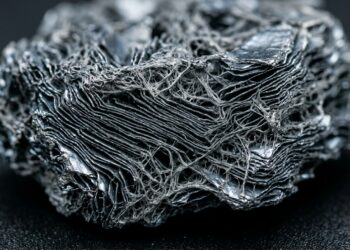
A recent review examines how structural engineering of conductive networks can enhance the electromagnetic shielding performance of MXene-polymer composites.

Field trials and numerical simulations in northern Henan demonstrate that concrete incorporating fine sixty-mesh modified rubber particles significantly improves deformation ...
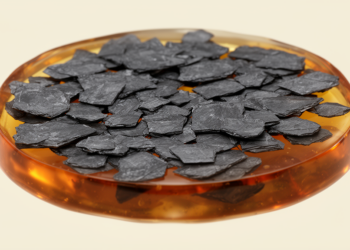
A novel nano-curing agent based on functionalized black phosphorus enhances the fire safety and mechanical properties of epoxy resins.
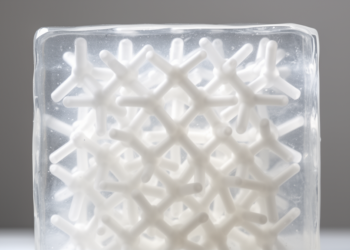
Materials scientists at Tampere University demonstrated that 3D-printed sub-millimetre architected fillers allow engineers to tune soft composite stiffness and compression ...
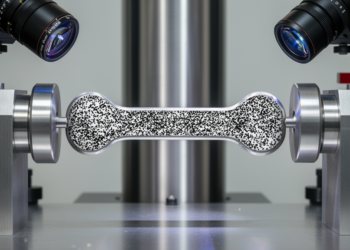
Researchers developed a two-field coupling framework uniting digital image correlation and finite element simulations to accurately capture localized strain and ...
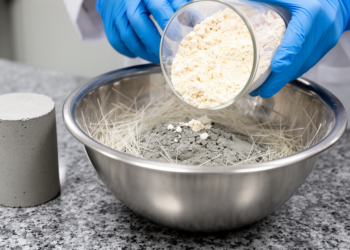
Partial replacement of cement with fifteen percent eggshell powder maintains over ninety percent of composite strength while decreasing density, binder ...
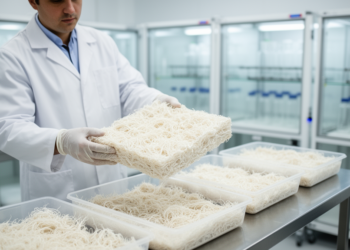
A systematic patent landscape analysis reveals that broad commercial claims over fungal mycelium composite materials may impede sustainable biotechnology development ...
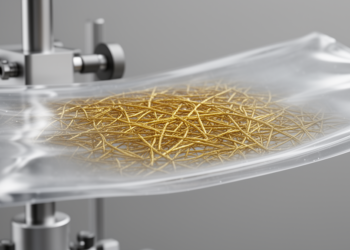
Researchers reinforced recycled polyethylene films using palm oil agro-industrial waste, finding that adding one weight percent cellulose nanofibrils increased impact ...

A deep learning framework predicts transverse stress evolution and Young's modulus in synthetic hemp fibers in under one second per ...

Researchers found that formulation-level validation is essential for reliably predicting the mechanical properties of multi-fiber hybrid epoxy composites using machine ...

Researchers developed and tested sustainable epoxy retrofit composites reinforced with chemically treated bamboo and banana fibers, demonstrating distinct trade-offs between ...
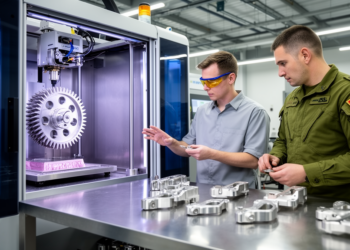
Under an expanded collaboration funded by up to $27 million, University of Tennessee researchers are partnering with the Army Research ...

A new CeO2-Fe2(SO4)3 composite catalyst maintains high NOx conversion efficiency even with significant potassium contamination, outperforming conventional materials that deactivate ...
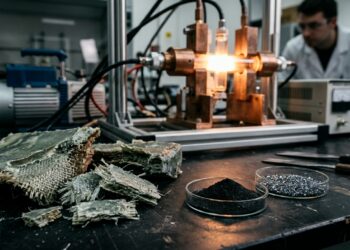
Researchers have developed a flash Joule heating method that transforms discarded wind turbine blades into valuable silicon carbide and graphene ...
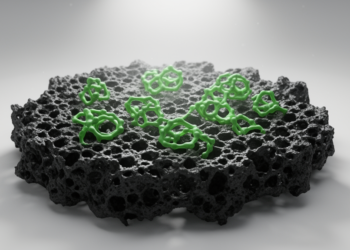
A composite photocatalyst combining copper-modified chlorophyll with graphitic carbon nitride achieved a 95 ± 2.5% degradation efficiency for tetracycline hydrochloride ...