Centrality-guided random walks improve classification accuracy for graph tail nodes
Centrality-guided random walks balance node exploration in graph embeddings to improve classification accuracy for sparsely connected tail nodes.
Centrality-guided random walks balance node exploration in graph embeddings to improve classification accuracy for sparsely connected tail nodes.

Researchers developed XenoScan1, an alignment-free machine learning tool that identifies horizontal gene transfer events by quantifying reference-relative genomic discordance.
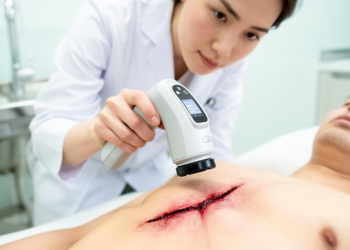
Researchers evaluated a hybrid computer-vision framework combining YOLOv3 localization, AlexNet feature extraction, and support vector machines for automated wound-severity classification ...

Age-specific machine learning models using sleep stage transition dynamics improve sleep disorder detection by up to 12 percent in older ...
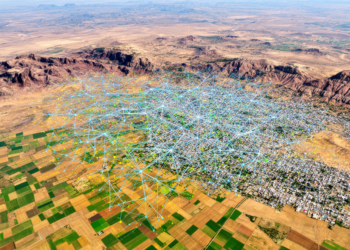
A satellite analysis in Rajasthan's Ajmer district showed Random Forest classifiers achieved higher accuracy than decision trees in tracking land ...

A hybrid feature-selection framework combining Fisher Score filtering with binary hippopotamus optimization achieved top classification accuracy across sixteen cancer gene-expression ...
A hybrid colonial competitive rule-based classifier enhanced with rule pruning and fuzzy inference achieved consistently higher accuracy across nine real-world ...
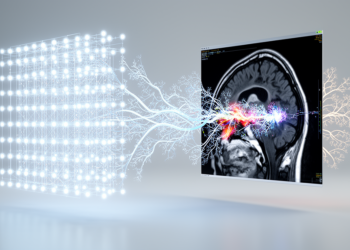
Researchers developed a two-stage medical image classification framework combining Vision Transformer feature extraction with an improved Genetic Algorithm, achieving up ...

Researchers have developed a dual centroid intuitionistic fuzzy twin kernel ridge regression classifier that solves linear equations to attain 93.92 ...

A pre-retrieval classification architecture reduces multimodal pipeline latency by 44.85 percent by screening queries before executing visual index searches.

Computer scientists have developed an ensemble machine learning framework combining Boruta feature selection and XGBoost that achieves 98.78 percent accuracy ...

A machine learning study evaluating UCI breast tumor data demonstrated that the XGBoost model achieved 97.3 percent accuracy, with SHAP ...
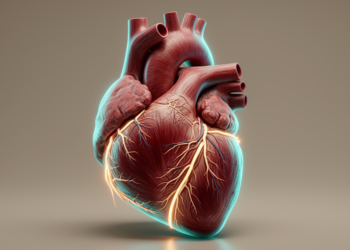
A deep learning pipeline combining cine magnetic resonance imaging and scar size accurately differentiated hypertrophic cardiomyopathy from hypertensive heart disease ...

A bio-inspired hybrid optimization algorithm incorporating White Shark Optimizer mechanics and quadratic interpolation into the Remora Optimization Algorithm enhances Support ...

A retrospective machine learning study of 155 patients identified three distinct Guillain-Barré syndrome subtypes with differing recovery trajectories after plasmapheresis.

A study reveals that artificial data balancing techniques distort probabilistic crash risk predictions and heavily overestimate traffic fatality hazards in ...

A combined local search and genetic algorithm improved cancer classification accuracy and reduced computational complexity across more than 30,000 patient ...
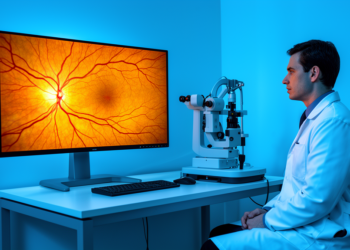
A new adaptive neural network framework achieves 98.53% accuracy in classifying multistage diabetic retinopathy using enhanced edge detection and adaptive ...

A new satellite study mapped 148 square kilometres of bamboo in eastern Nepal using Sentinel-2 imagery, finding that a Random ...

A hybrid ResNet50 and Transformer model achieved 89.7 percent accuracy on the FER2013 facial emotion benchmark, with an ablation study ...