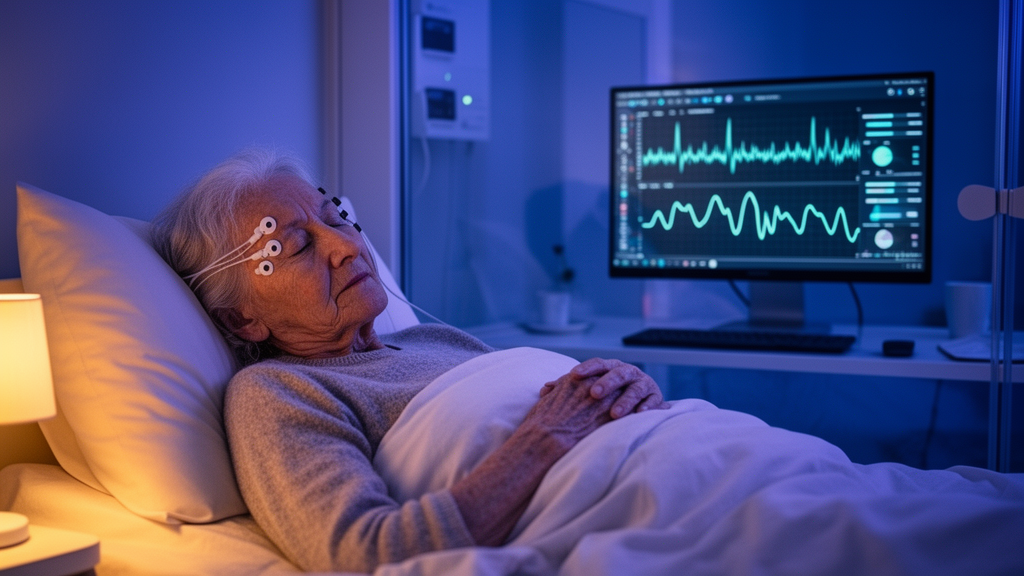
Age-specific machine learning models significantly enhance sleep disorder classification using single-night hypnograms, particularly for older adults aged 60 and above, according to a study analyzing sleep stage transition dynamics. Researchers Emran Ali, Alireza Daneshkhah, Fei He, Ahsan Habib, Maia Angelova, and Chandan Karmakar evaluated how chronological age alters the diagnostic utility of transition features across healthy and disordered sleep cohorts.
The investigative team extracted two-stage sleep stage transition probability (STP) features from single-night hypnograms across three distinct data groups. Physiological changes linked with ageing often intensify sleep fragmentation, presenting challenges for generalised diagnostic algorithms. To measure the impact of age, the researchers designed five experimental configurations comparing age-agnostic models, age-involved models that integrate age as an explicit feature, and age-stratified models.
Experimental evaluations revealed that baseline age-agnostic models achieved approximately 85 percent accuracy and F1-score. Incorporating chronological age as an input feature in age-involved frameworks delivered modest performance gains of approximately 2 to 4 percent. However, age-specific modelling demonstrated substantially greater diagnostic benefits, providing performance improvements of approximately 8 to 12 percent among individuals aged 60 and older.
Across all testing configurations, older cohorts generally attained 12 to 18 percent higher classification performance than younger cohorts, with XGBoost and other ensemble models producing the strongest results. In contrast, models trained specifically on younger age cohorts exhibited lower or more variable diagnostic performance, indicating reduced discriminability of two-stage STP metrics in younger populations.
Statistical validation comparing transition probability matrices revealed that healthy and disordered cohorts differed most prominently during non-rapid eye movement (NREM) transitions involving stages N2 and N3 among older subjects. Furthermore, age-threshold analysis indicated that transition discriminability began increasing in the 50s and peaked around 55 to 60 years. While these transition features demonstrate strong screening utility in older populations, the authors emphasize that independent external and prospective validation is essential prior to clinical deployment.
Subject of Research: Impact of chronological age on machine learning classification of sleep disorders
Article Title: Deciphering the impact of chronological age on sleep stage transition dynamics for disorder classification
Article References: Ali, E., Daneshkhah, A., He, F., Habib, A., Angelova, M., & Karmakar, C. (2026). Deciphering the impact of chronological age on sleep stage transition dynamics for disorder classification. PLOS Digital Health, 5(11), e0001800. https://doi.org/10.1371/journal.pdig.0001800
Image Credits: AI Generated
DOI: 10.1371/journal.pdig.0001800
Keywords: sleep disorders, chronological age, sleep stage transitions, transition probability matrix, hypnogram analysis, machine learning, age-specific modelling, older adults, sleep fragmentation, XGBoost, ensemble models, NREM transitions, stage N2, stage N3, F1-score, classification accuracy, sleep disorder screening
News Source: Teresa Odom. (November 16, 2026). Age-Specific Machine Learning Models Improve Sleep Disorder Detection in Older Adults. Scienmag.