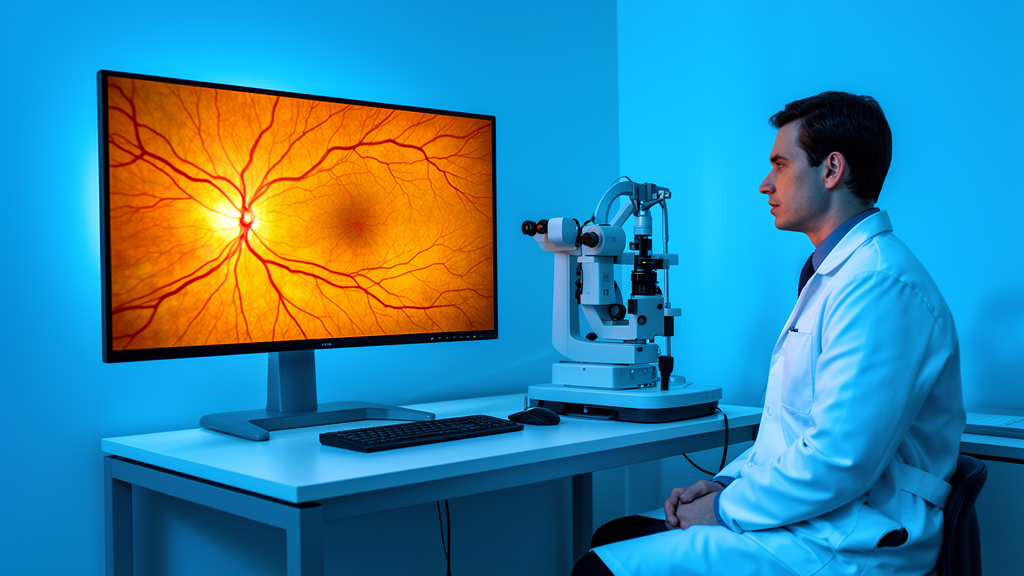
Researchers have developed a specialized neural network framework designed to automate the diagnosis and stage classification of diabetic retinopathy using color fundus retinal images. The study, published in the journal Neural Computing and Applications, introduces a system named Adaptive Neural Network (SEDAN) that aims to address the significant challenges posed by the modest evolution of retinal lesions and the common class imbalance found in clinical datasets.
The core innovation of the proposed framework lies in its use of second-order derivative edge diagnosis to enhance the visibility of vascular and lesion-level details in retinal images. The system utilizes Laplacian edge enhancement, adaptive thresholding, and noise removal techniques to improve the quality of the input data before it is processed by the neural network.
Following the image enhancement, the framework employs an adaptive neural network that captures both global retinal context and localized disease information. To further optimize the training process, the researchers introduced a technique called Adaptive Skipping Training (AST). This method dynamically skips confidently learned samples during training to increase efficiency and classification performance.
The performance of the SEDAN framework was evaluated using the Diabetic Retinopathy (DR) 2015 dataset. This dataset includes No, Mild, Moderate, Severe and Proliferative DR.
The experimental results demonstrated that the proposed approach achieved a classification accuracy of 98.53%. In addition to this primary metric, the model recorded a weighted F1-score of 0.9859. The study also reported a Cohen’s Kappa coefficient of 0.981 and a Matthews Correlation Coefficient of 0.981. These measures indicate strong agreement and balanced performance under class imbalance.
Further analysis of the model’s discriminative power revealed ROC-AUC values above 0.98 across all classes. This indicates that the model is highly effective at distinguishing between the different stages of diabetic retinopathy. To provide insight into how the model makes its decisions, the researchers conducted Grad-CAM and t-SNE analyses. These visualization techniques showed that the model concentrated on clinically important retinal regions and learned discriminative feature representations associated with disease development.
Ablation investigations were also performed to corroborate the contributions of individual preprocessing and architectural components. The findings suggest that the SEDAN framework is successful for multistage diabetic retinopathy classification and holds potential for use in automated retinal screening systems.
Subject of Research: Automated multistage diabetic retinopathy classification using an adaptive edge-enhanced neural network
Article Title: An adaptive edge enhanced neural network for multistage diabetic retinopathy classification
Article References: Nithya, R., Keerthika, P., Manjula Devi, R., & Suresh, P. (2026). An adaptive edge enhanced neural network for multistage diabetic retinopathy classification. Neural Computing and Applications, 38(21), Article 859. https://doi.org/10.1007/s00521-026-12541-x
Image Credits: AI Generated
DOI: 10.1007/s00521-026-12541-x
Keywords: diabetic retinopathy, neural network, medical imaging, edge enhancement, automated diagnosis, deep learning, retinal screening, classification accuracy, adaptive, edge, enhanced, neural
News Source: Blake Davidson. (November 10, 2026). Neural network classifies diabetic retinopathy stages with 98.53% accuracy. Scienmag.