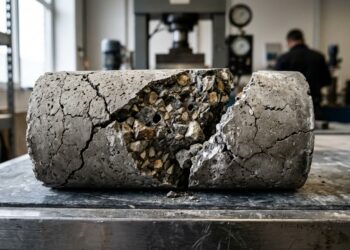
Corn Cob Ash Reduces Concrete Strength Through Dilution and Alkali Disruption
A study reveals that corn cob ash lowers concrete compressive strength because its physical filler effect cannot offset binder dilution ...
A study reveals that corn cob ash lowers concrete compressive strength because its physical filler effect cannot offset binder dilution ...
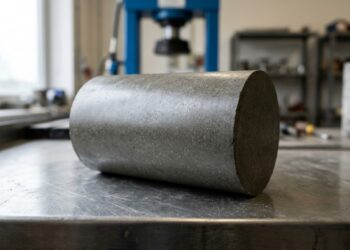
A comprehensive review published in the Asian Journal of Civil Engineering reveals that integrating magnetized water into concrete mixes enhances ...

Researchers used terbium-activated nanodiamond defects to perform direct optically detected magnetic resonance, uncovering the rapid early-stage hydration kinetics and microstructural ...
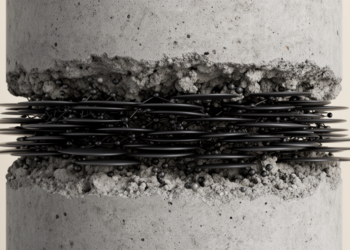
Civil engineering researchers found adding 0.06 percent graphene oxide enhances concrete compressive strength by over twenty-two percent under unconfined conditions.
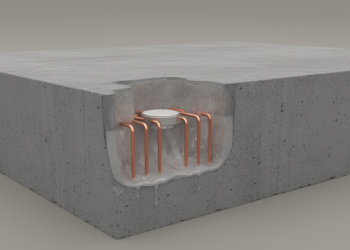
Researchers developed a dielectric constant-strength model to evaluate how early surface moisture loss during lift-surface exposure impairs later-age concrete compressive ...
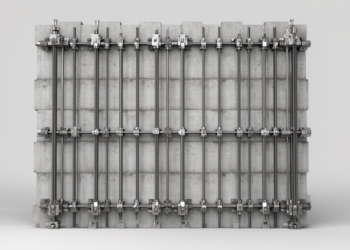
A full-scale field monitoring investigation of a prestressed reaction wall and pedestal system demonstrated stable compressive behavior, with concrete strains ...
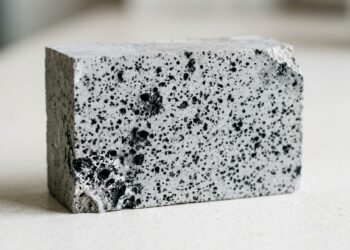
Researchers developed an indirect mineralization method using carbide slag to deposit calcium carbonate within biochar pores, producing carbon-negative cement pastes ...
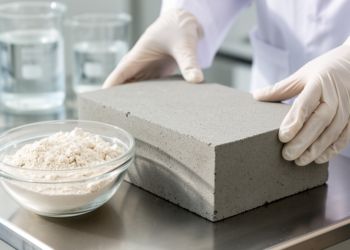
Civil engineering researchers demonstrated that substituting up to 15 percent uncalcined snail shell powder into Portland cement mortar reduces capillary ...
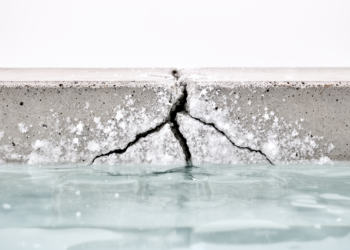
A study finds that concrete mixed and cured in hypersaline water suffers up to a 64 percent drop in compressive ...
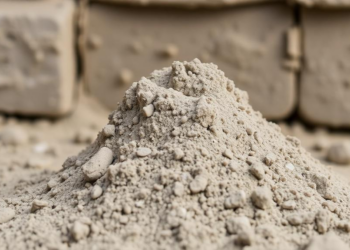
A systematic study of thirteen styrene-acrylate latex dispersions at 2 weight percent dosage finds mostly small strength reductions in cement ...
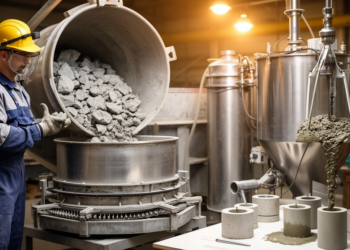
Researchers transformed tunnel excavation muck into fine-particle high-density concrete, showing that a coupled vacuum and vibration mixing process boosts compressive ...
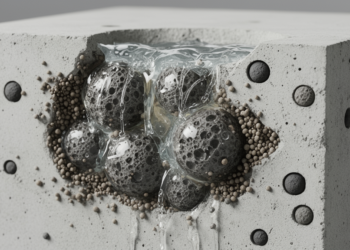
Laboratory tests found that sodium-hydroxide conditioning improved fly ash aggregate strength, concrete compressive capacity, interfacial bonding, and water resistance, while ...
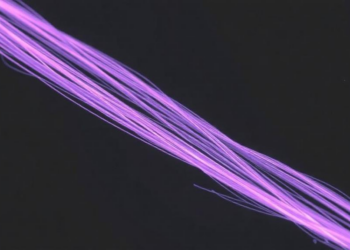
Brazilian researchers used HMDSO plasma coatings on cellulose fibers and found that an intermediate treatment, not the most hydrophobic one, ...
New research shows that trace doses of L-(+)-tartaric acid delay cement setting yet ultimately produce denser pore networks and significantly ...

A new study shows that self-protected underwater mortar, cast in polymer-treated water, loses significant freeze-thaw durability when sulfate-rich environments accelerate ...