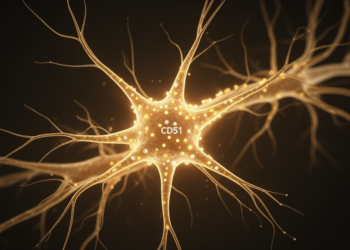
Astrocyte Subtype Marked by CD51 Drives Synapse Formation and Stroke Recovery in Mice
A new mouse tool reveals that CD51-positive astrocytes are a functionally distinct subpopulation that promotes cortical synapse formation, hippocampal circuit ...
A new mouse tool reveals that CD51-positive astrocytes are a functionally distinct subpopulation that promotes cortical synapse formation, hippocampal circuit ...
Researchers at Japan's National Institute of Genetics developed an orthogonal Cro/OR3 gene expression system that, combined with Gal4/UAS, independently controls ...
A mouse study shows that CD51-positive and CD51-negative astrocytes have distinct roles in synapse formation, memory-circuit adaptation and recovery from ...
A selective, brain-penetrant CD38 inhibitor raised NAD+ levels in rodent brain, protected dopaminergic neurons from alpha-synuclein toxicity in vitro, and ...
An integrative transcriptomic study has identified an extracellular matrix and perineuronal net-high astrocyte state in major depressive disorder, along with ...
A new review argues that inflammatory signaling between microglia and astrocytes may help initiate and maintain the central sensitization underlying ...
Single-nucleus RNA sequencing of postmortem brains reveals that carriers of the rare MAPT A152T variant show distinct cell type-specific gene-expression ...
A targeted lipidomic study in engineered human astrocytoma cells found that Alexander disease-associated GFAP mutations caused distinct, extensive changes in ...

A 2026 review proposes that reactive astrocytes in hypothalamic and brainstem circuits may contribute to obesity-associated hypertension through glutamate disruption, ...
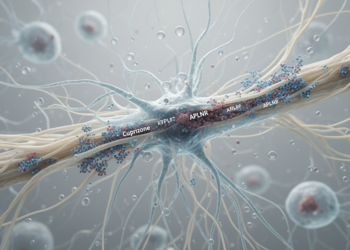
A controlled mouse study found that APLNR was associated with region- and phase-dependent astrocytic responses during cuprizone-induced demyelination and partial ...
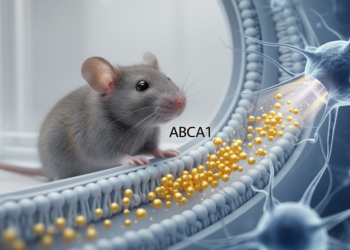
Human postmortem tissue, cultured cells and mouse experiments implicated abnormal ABCA1-dependent cholesterol trafficking in Parkinson’s-related neurodegeneration.
A new review proposes that age-related remodeling of the sugar layer lining brain blood vessels could converge with galectin-3 inflammatory ...
Brazilian researchers found that ellagic acid, a polyphenol from pomegranates and berries, reduced oxidative stress and selectively rebalanced inflammatory signalling ...
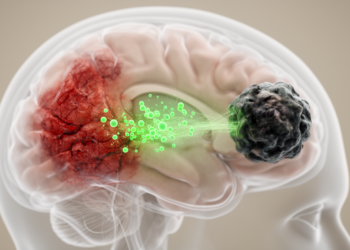
A new Nature Cancer study shows that stroke remodels the brain's tumor microenvironment, creating tumor-associated astrocytes and macrophages that drive ...
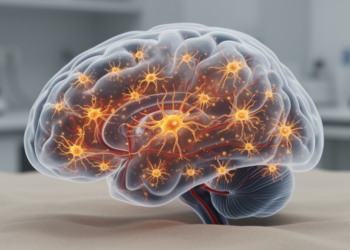
Stanford researchers used a CRISPR screen in expanded blood stem cells to identify Elp1 as an essential regulator of myeloid ...
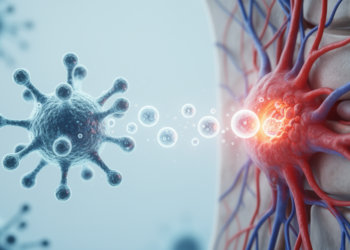
A comprehensive review maps how MSC-derived extracellular vesicles modulate the inflammatory microenvironment after spinal cord injury across acute, subacute, and ...
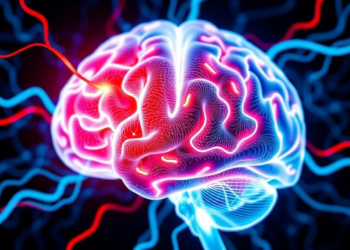
Researchers have demonstrated for the first time in human brain tissue that blocking glutamate transporters elicits a sustained NMDA receptor-dependent ...
New research shows that Caveolin-1, the core protein of mechanosensitive caveolae, is concentrated in optic nerve head astrocytes and rises ...
New research shows that the Parkinson's-linked gene ATP13A2 keeps astrocytic mitochondria in balance, and that its loss triggers excessive mitochondrial ...
A new review in Results in Chemistry details how programmable DNA nanobiosensors combined with artificial intelligence could enable early detection ...