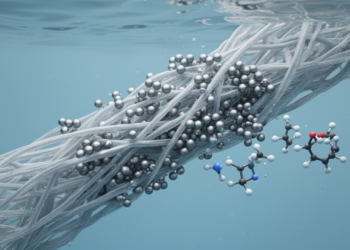
Modified Collagen Fibers Use Iron Chelation to Remove Tetracycline From Water
Researchers have developed a stable biosorbent from cattle hide collagen and plant tannins that captures tetracycline contamination across a wide ...
Researchers have developed a stable biosorbent from cattle hide collagen and plant tannins that captures tetracycline contamination across a wide ...
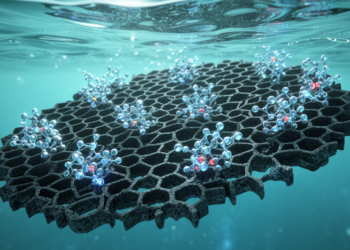
Researchers synthesized carbon nanomaterial from polystyrene waste and paired artificial intelligence with mathematical modeling to evaluate tetracycline antibiotic removal from ...

Researchers combined waste cotton stalks and eggshells into a microwave-grafted, calcium-rich biochar that removes tetracycline from water with a maximum ...
A study of Swedish hospitals shows that ciprofloxacin and cefotaxime in hospital wastewater actively select for antibiotic-resistant bacteria in sewer ...
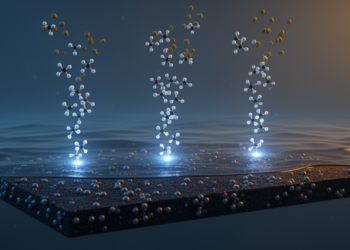
An asymmetrically coordinated zinc single-atom catalyst degrades antibiotics in water while converting the pollutants' own electrons into hydrogen peroxide.
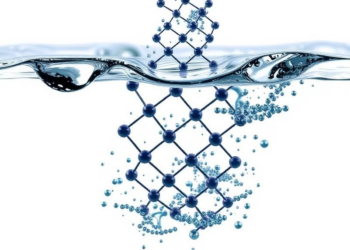
A new ternary ZIF-8/NiFe2O4/magnetic graphene oxide nanocomposite removes up to 96 percent of tetracycline from water, recovers magnetically and retains ...
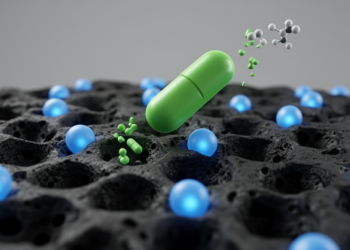
A metal-free carbon catalyst derived from covalent organic frameworks destroys the antibiotic levofloxacin with near-perfect efficiency, and researchers have now ...
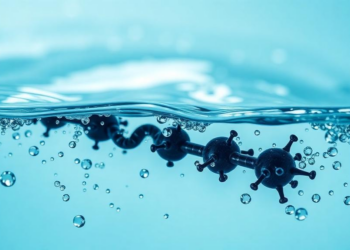
Researchers in China built a boron-doped graphitic carbon nitride homojunction that, with persulfate and visible light, degrades 98.6 percent of ...