Machine Learning Meets Design of Experiments to Predict Hydrochar Properties at Scale
A new review shows how combining design of experiments with machine learning can transform hydrothermal carbonization from empirical tuning into ...
A new review shows how combining design of experiments with machine learning can transform hydrothermal carbonization from empirical tuning into ...
An amine-terminated zirconium metal-organic framework removed 99.86 percent of lanthanum from water and showed strong selectivity even in seawater, according ...
A new systematic review of 83 adsorbents proposes a five-criteria screening framework that identifies hydrogels, biochars, and alginate composites as ...
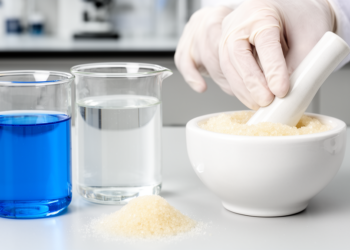
Nigerian chemists used a solvent-free mortar-and-pestle synthesis to create a zinc-based metal–organic framework that removes 99.35 percent of methylene blue ...
Researchers in India have developed an electrospun PVDF membrane loaded with carbon quantum dots and titanium dioxide that removes 74.4 ...
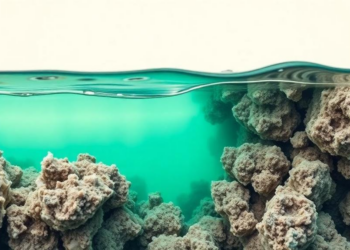
Researchers have created a porous geopolymer adsorbent from metakaolin and silica fume, using hydrogen peroxide foaming and oil templating, that ...
A major review finds that nitrogen-doped biochar made from agricultural waste can outperform commercial activated carbon in capturing antibiotics, dyes, ...
Researchers have engineered leach-resistant graphene oxide-metal oxide coatings on sand that remove pharmaceutical pollutants from water with long-term stability and ...
Researchers transformed waste corn silk into a magnetically recoverable Fe3O4 composite that removes up to nearly 99 percent of hexavalent ...
Researchers have derived the first closed-form analytical solution combining a Neumann flux boundary, two-dimensional line sources, adsorption, and decay, revealing ...
Researchers transformed waste tyre biochar with hydrogen peroxide into a material that removes 99 percent of phosphorus from wastewater and ...
Researchers have developed a green-synthesized gallic acid, tin oxide and activated carbon nanocomposite that removes up to 98.64 percent of ...
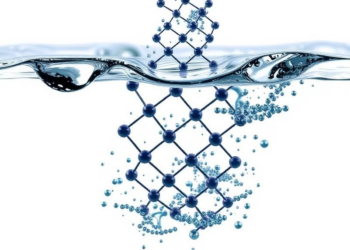
A new ternary ZIF-8/NiFe2O4/magnetic graphene oxide nanocomposite removes up to 96 percent of tetracycline from water, recovers magnetically and retains ...
Researchers have developed a solvent-free, one-minute mechanochemical synthesis of bimetallic Cu/Zn-MOF-74 that removes 98.26 percent of strontium ions from radioactive ...
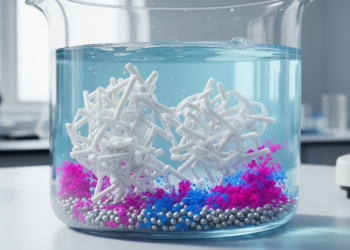
Researchers have created a ZIF-8/chitosan/ZnO nanocomposite that adsorbs up to 490 milligrams of azo dye per gram and then degrades ...
Thai researchers have turned invasive water hyacinth into pelletized diatomite-based geopolymer adsorbents that remove up to 77 percent of methylene ...
Researchers at Henan University used machine learning models, led by CatBoost, to predict and validate cadmium adsorption on biochar with ...
Researchers in Thailand transformed rice husk ash and diatomite into reusable porous ceramic granules that remove up to 97.7% of ...
Researchers converted discarded bean husks into a low-cost biochar that removed up to 94.7% of lead and 91.5% of hexavalent ...
Computational simulations show that the common dye quinizarin binds lithium ions strongly, spontaneously and exothermically in water, making it a ...