


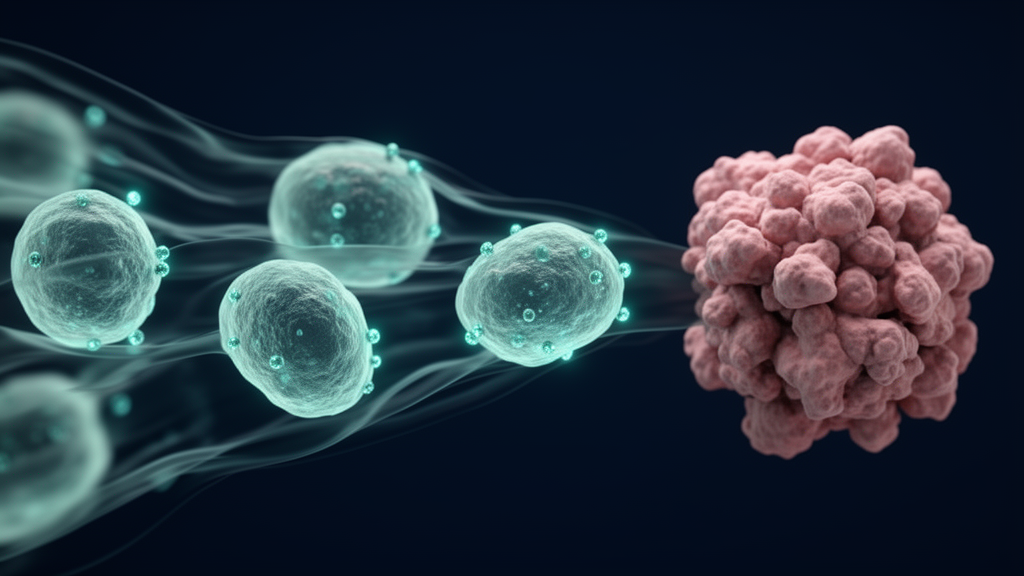
Two molecular markers on T cells — the RNA-sensing protein DHX58/LGP2 and the surface molecule L-selectin, also known as CD62L — appear to flag a stem-like, less-differentiated T-cell state that tracks with responsiveness to immune checkpoint blockade in gastric cancer, according to a study published in Clinical and Experimental Medicine. The work, shared early as a peer-reviewed accepted manuscript with a permanent DOI, combined laboratory organoid models with clinical single-cell and tissue analyses. Its authors emphasise that the findings describe a molecular association rather than a direct regulatory relationship and call for prospective and mechanistic validation.
The laboratory core of the study used nine autologous gastric cancer patient-derived organoid–tumour-infiltrating lymphocyte models, in which tumour organoids from individual patients were cultured with their own T cells under defined single or combined immune checkpoint inhibitor conditions. The researchers measured organoid growth, T-cell phenotypes, cytokine secretion, and paired bulk RNA sequencing of both T cells and tumour cells. Across these experiments, the abundance of CD62L-positive T cells was inversely associated with organoid growth, with a Spearman correlation of −0.70, and rose after effective coculture.
To test whether these cells behaved differently, the team isolated CD62L-positive T cells after effective coculture and rechallenged them with previously untreated matched organoids. In head-to-head comparisons with CD62L-negative and unsorted total CD3-positive T cells, the CD62L-positive population showed the greatest short-term expansion, tumour control, and effector release. The isolated cells retained cytotoxic activity against untreated matched organoids and secreted increased amounts of interferon-gamma, tumour necrosis factor-alpha, and granzyme B upon rechallenge — a pattern consistent with durable, functional antitumour activity rather than exhausted states.
Effective coculture conditions were also accompanied by increased expression of SELL, the gene encoding CD62L, together with TCF7, LEF1, and BACH2, and reduced IRF4 expression. This transcriptional signature is consistent with a less-differentiated, persistence-associated T-cell programme of the kind often described as stem-like. The authors note that DHX58/LGP2 and L-selectin/CD62L represent complementary features of this functionally active state, one intracellular and one on the cell surface.
External validation drew on an independent clinical single-cell RNA-sequencing dataset, GSE315928, and on post-treatment gastric cancer tissues. In the clinical dataset, SELL-positive stem-like T cells were enriched in post-treatment responders and showed higher DHX58 expression. Multiplex immunohistochemistry further supported a greater representation of DHX58-positive, CD62L-positive T cells in responder tissues. Inferred ligand–receptor analysis additionally suggested communication between CD44-positive tumour cells and SELL-positive stem-like T cells, hinting at a tumour-side interaction worth testing directly.
The study’s scope and limitations deserve emphasis. The organoid experiments involved nine models, a small sample, and the clinical validation relied on a single external dataset plus tissue staining rather than a prospective trial. Because immune checkpoint inhibitors have expanded gastric cancer treatment options but the molecular features supporting persistent antitumour T-cell activity remain incompletely defined, the results are best read as hypothesis-generating: they identify markers that associate with response and warrant confirmation in larger, prospectively designed studies before any clinical use.
Subject of Research: Stem-like T-cell markers associated with immune checkpoint inhibitor responsiveness in gastric cancer
Article Title: DHX58/LGP2 and L-selectin/CD62L mark a stem-like T-cell state associated with immune checkpoint blockade responsiveness in gastric cancer
Article References: Ou, Y., Cui, Q., & Wang, X. (2026). DHX58/LGP2 and L-selectin/CD62L mark a stem-like T-cell state associated with immune checkpoint blockade responsiveness in gastric cancer. Clinical and Experimental Medicine. https://doi.org/10.1007/s10238-026-02349-3
Image Credits: AI Generated
DOI: 10.1007/s10238-026-02349-3
Keywords: gastric cancer, immune checkpoint inhibitors, DHX58, LGP2, CD62L, L-selectin, stem-like T cells, tumour-infiltrating lymphocytes, patient-derived organoids, single-cell RNA sequencing, TCF7, tumour immunology
News Source: Nathaniel Bowman. (October 29, 2026). T-cell markers DHX58 and CD62L track checkpoint inhibitor response in gastric cancer. Scienmag.



