Combining predictive mathematical models and laboratory experiments, a study by SISSA has shed light on several mechanisms behind this phenomenon
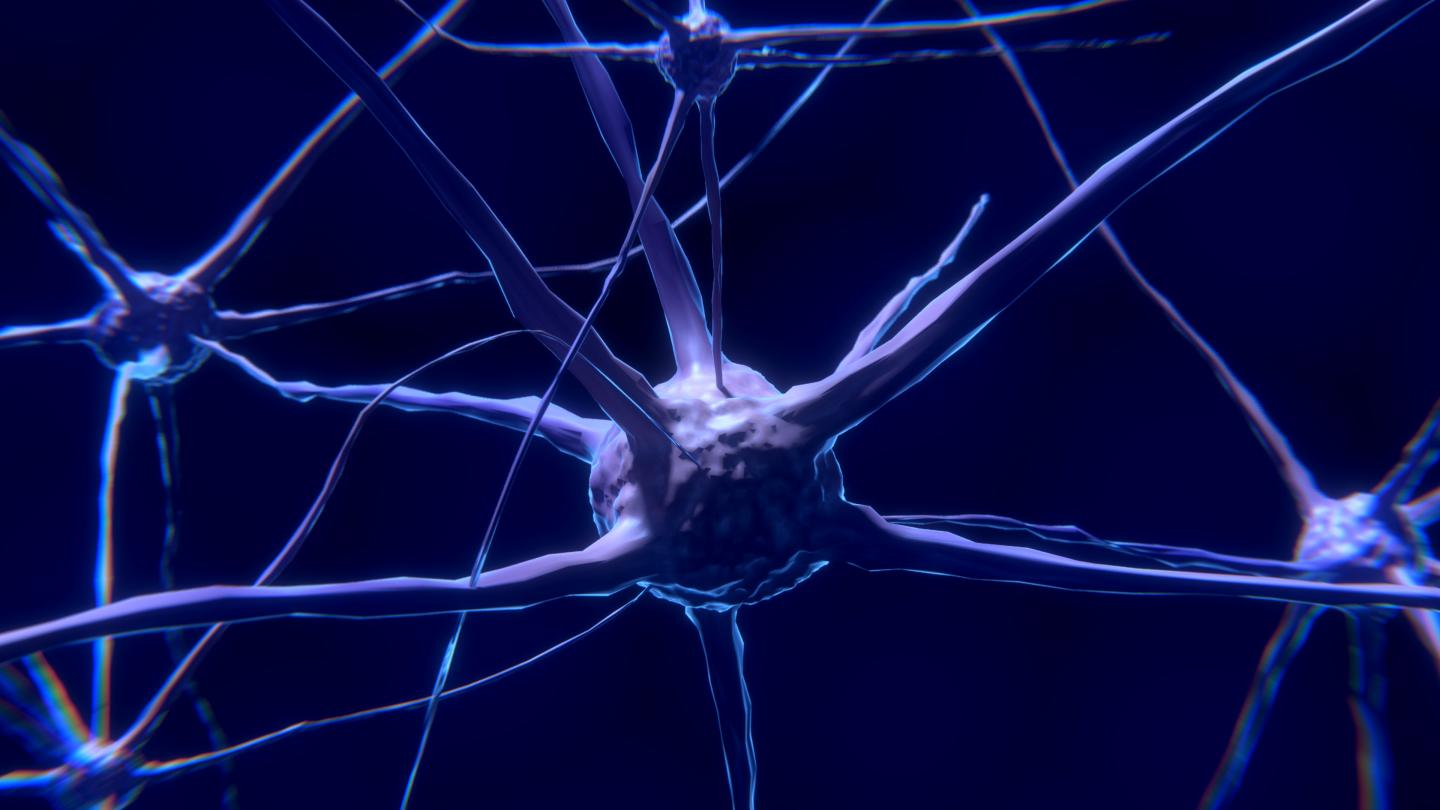
Credit: Colin Behrens on Pixabay
“Like a book in which the single pages are not all different but carry small portions of common text, or like a group of people who whistle a very similar tune”: this is how our brain cells work, say scientists. It is the phenomenon of “co-relation”, in which individual neurons do not always act as independent units in receiving and transmitting information but as a group of individuals with similar and simultaneous actions. Observing the electrical activity of these cells in the laboratory, together with the use of computerized mathematical models, a group of researchers led by Professor Michele Giugliano of SISSA has shed light for the first time on the cellular mechanisms behind these correlations. In the study, the scientists examined excitatory neurons, those intended to promote the electrical activity of other neurons, and inhibitory neurons, intended to suppress their activity. “Our discovery tells us that excitatory cells tend to prefer individuality and to reduce the redundancy of their own messages, while the inhibitory cells act together as one. This allows us to add a new piece to the understanding of how neurons organize information in the brain. The information is always represented by the electrical activity of groups of cells “explains Professor Giugliano. The study, which has seen the involvement of SISSA of Trieste and the University of Antwerp, Belgium, and of Pittsburgh, USA, has just been published in The Journal of Neuroscience.
Predicting the function of neurons with mathematics
The study, explain the authors, has been carried out with a combination of mathematical models designed to predict the electric behaviour of neurons and of direct observations made on neurons in the laboratory. It is a very interesting integrated approach for different reasons. Giugliano explains, “Accompanying an experimental discovery by a theory, makes its impact stronger. Furthermore, as our models are the simplest possible, we can focus our understanding to the biological mechanisms rather than describing only their effect. This approach is behind the current progress in Neuroscience and opens up very interesting research fronts in brain research”.
Understanding the neural code used by the brain
The redundancy in the electrical activity of the neurons of the cerebral cortex, also called co-variability, has been known for some time. The similarity in the behaviour regards both the input exchanged among neurons and their output, namely the response following the incoming message. What is not fully known “is how similar inputs generate similar outputs, in terms of cellular mechanisms. Therefore clarifying these mechanisms and exploring how different types of cells participate in this phenomenon is a fundamental step in fully understanding the complex circuits of the brain”. Giugliano continues, “studying the biophysical characteristics of this phenomenon, we have noticed that the excitatory neurons tend to discourage the redundancy of their outputs, perhaps because their action must be unambiguous and more informative, considering that their messages are outgoing from the cortex. Instead, the inhibitory neurons do the opposite. These cells tend to work together using this redundancy to synchronise and amplify their effects.
The most accurate experimental validation of a mathematical theory
“We are still unable to fully explain the role of correlations in the brain, but we have certainly discovered that these two categories of neurons must be seen in a new light: they are not identical.” However, there is more. Giugliano concludes, “This research is the most accurate experimental validation of a simple mathematical theory, which describes how the electrical activity of neurons emerges and varies over time. This also represents a significant achievement of this study”.
###
Media Contact
Donato Ramani
[email protected]
Original Source
https:/
Related Journal Article
http://dx.