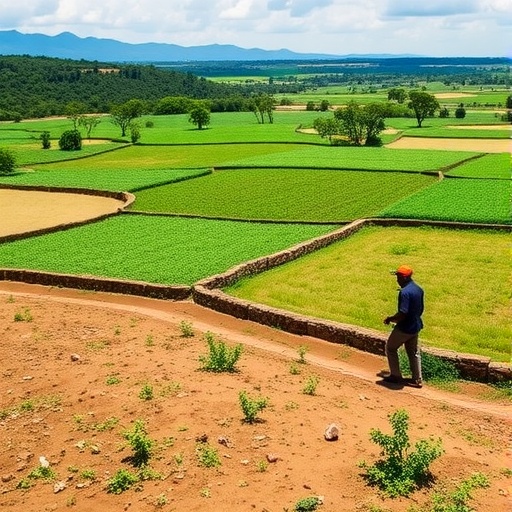
In Central Ethiopia, a pivotal shift towards sustainable land management practices is being observed, particularly in the rural landscapes dominated by smallholder farmers. These farmers, facing myriad challenges from climate change to economic instability, have begun to adopt innovations that promise not only to sustain their livelihoods but also to enhance the ecological integrity of their lands. A comprehensive study has unveiled the critical linkages and determinants that influence these investments, shedding light on the intricate dynamics at play within this community.
At the heart of this investigation lies the recognition that smallholder farmers are often the stewards of a vast majority of agricultural land in Ethiopia. The authors, Gebremikael and Shamalo, argue that these farmers play a crucial role in implementing sustainable practices that can address the ongoing threats posed by environmental degradation. Their research delves into the factors that motivate farmers to invest in sustainable land management innovations, highlighting how such decisions are influenced by both personal aspirations and broader social frameworks.
One of the primary findings of the research indicates that access to information is paramount for the successful adoption of sustainable land practices. Farmers who are better informed about the benefits of sustainable agriculture are more likely to invest in innovations that improve soil health, conserve water, and enhance biodiversity. This suggests that educational initiatives and resources dissemination are essential for empowering smallholders to make informed decisions regarding their land management practices.
The economic aspect of sustainable investments cannot be overlooked. The study reveals that while many farmers recognize the long-term benefits of adopting sustainable practices, the initial financial burden often deters them. However, it was observed that those who had access to microfinance and supportive interventions from governmental and non-governmental organizations were better positioned to make these necessary investments. Consequently, the researchers advocate for enhanced financial support systems tailored to the unique circumstances of smallholder farmers.
Moreover, the role of social networks emerges as a significant determinant of investment decisions. The research demonstrates that farmers who engage with their peers and local communities are more likely to adopt innovations that promote sustainable land practices. This sense of community and shared learning fosters an environment where farmers can exchange knowledge and experiences, ultimately leading to greater overall investment in sustainable innovations.
Cultural beliefs and practices also significantly influence the adoption of sustainable land management techniques. The study surprisingly found that traditional practices, which often emphasize the harmony between human activity and nature, have a determined impact on farmers’ willingness to embrace new technologies. Farmers who perceive sustainable practices as aligned with their cultural values are more likely to invest in them, which underscores the importance of integrating local customs into sustainability initiatives.
Additionally, the findings highlight the significance of government policies and institutional frameworks in shaping the landscape of sustainable agriculture. The authors point out that effective policies that promote sustainable land management can create an enabling environment for smallholders. Regulations that provide incentives for environmentally friendly practices can motivate farmers to shift from conventional methods to sustainable innovations, ultimately leading to improved agricultural productivity and resilience against climate shocks.
In this context, the concept of resilience is vital for smallholder farmers who are increasingly facing the brunt of climate change. The study underscores that investments in sustainable land management are not just about environmental conservation; they are intrinsically tied to the farmers’ abilities to withstand economic and climatic fluctuations. By adopting sustainable practices, farmers build resilience, ensuring their capacity to cope with adverse conditions while maintaining their livelihoods.
The potential of technology as a catalyst for change cannot be overstated. The authors explore how the integration of modern technology, such as precision agriculture and remote sensing, can significantly enhance sustainable land management. Farmers equipped with technological tools can optimize resources, monitor soil health, and track weather patterns, allowing them to make data-driven decisions. The researchers emphasize that education and access to technology must go hand in hand to ensure that smallholders fully leverage these advancements.
Furthermore, environmental awareness campaigns that target both farmers and consumers can play a pivotal role in driving the adoption of sustainable practices. Educating the wider population about the value of sustainably produced food can create market demand that encourages farmers to invest in eco-friendly methods. Consumer willingness to pay a premium for sustainably grown produce can serve as a powerful motivator for smallholders to transition to sustainable practices.
Another critical element highlighted in the study is the importance of collaborative partnerships among stakeholders in the agricultural sector. By uniting governmental bodies, NGOs, and the private sector, there exists a tremendous opportunity to pool resources and expertise, creating a more robust support system for smallholder farmers. These collaborations can enhance access to training, finance, and technology, ultimately leading to a more sustainable agricultural future.
Furthermore, the implications of the researchers’ findings extend beyond the immediate context of Central Ethiopia. As global concerns over food security and environmental degradation continue to mount, the lessons learned from this study can be applied in various agricultural systems across the globe. By understanding the determinants of sustainable land management investments among smallholder farmers, policymakers and practitioners can devise tailored interventions that encourage sustainability worldwide.
In conclusion, the study by Gebremikael and Shamalo opens new avenues for understanding the intricate web of factors influencing investments in sustainable land management among smallholder farmers in Central Ethiopia. Through a nuanced examination of information access, financial support, social networks, cultural values, and institutional frameworks, the researchers paint a comprehensive picture of the challenges and opportunities that lie ahead. As the world grapples with environmental challenges, the insights gleaned from this research can guide efforts to promote sustainable agriculture and enhance the resilience of smallholder farmers globally.
Subject of Research: Determinants of Investments in Sustainable Land Management among Smallholder Farmers in Central Ethiopia
Article Title: Linkages and determinants of investments in sustainable land management innovations among smallholder farmers in Central Ethiopia
Article References:
Gebremikael, A.T., Shamalo, A.A. Linkages and determinants of investments in sustainable land management innovations among smallholder farmers in Central Ethiopia.
Discov Agric 3, 200 (2025). https://doi.org/10.1007/s44279-025-00353-x
Image Credits: AI Generated
DOI: 10.1007/s44279-025-00353-x
Keywords: Sustainable land management, smallholder farmers, climate change, Ethiopia, agricultural innovations, resilience, economic determinants, social networks, government policies, technology in agriculture.
Tags: access to information in agricultureclimate change and agriculturecommunity dynamics in farmingecological integrity in farmingeconomic instability and farmingenvironmental degradation solutionsfactors influencing agricultural investmentsinnovations in sustainable agriculturemotivations for sustainable farming practicesrural landscapes and sustainabilitysmallholder farmers in Ethiopiasustainable land management practices