• HOME
  • NEWS
  • EXPLORE
    • CAREER
      • Companies
      • Jobs
    • EVENTS
    • iGEM
      • News
      • Team
    • PHOTOS
    • VIDEO
    • WIKI
  • BLOG
  • COMMUNITY
    • FACEBOOK
    • INSTAGRAM
    • TWITTER
Saturday, February 7, 2026
BIOENGINEER.ORG
No Result
View All Result
  • Login
  • HOME
  • NEWS
  • EXPLORE
    • CAREER
      • Companies
      • Jobs
        • Lecturer
        • PhD Studentship
        • Postdoc
        • Research Assistant
    • EVENTS
    • iGEM
      • News
      • Team
    • PHOTOS
    • VIDEO
    • WIKI
  • BLOG
  • COMMUNITY
    • FACEBOOK
    • INSTAGRAM
    • TWITTER
  • HOME
  • NEWS
  • EXPLORE
    • CAREER
      • Companies
      • Jobs
        • Lecturer
        • PhD Studentship
        • Postdoc
        • Research Assistant
    • EVENTS
    • iGEM
      • News
      • Team
    • PHOTOS
    • VIDEO
    • WIKI
  • BLOG
  • COMMUNITY
    • FACEBOOK
    • INSTAGRAM
    • TWITTER
No Result
View All Result
Bioengineer.org
No Result
View All Result
Home NEWS Science News

Superior ‘bio-ink’ for 3D printing pioneered

Bioengineer by Bioengineer
February 10, 2020
in Science News
Reading Time: 2 mins read
0
IMAGE
Share on FacebookShare on TwitterShare on LinkedinShare on RedditShare on Telegram

Rutgers researchers are developing materials to help grow human tissues
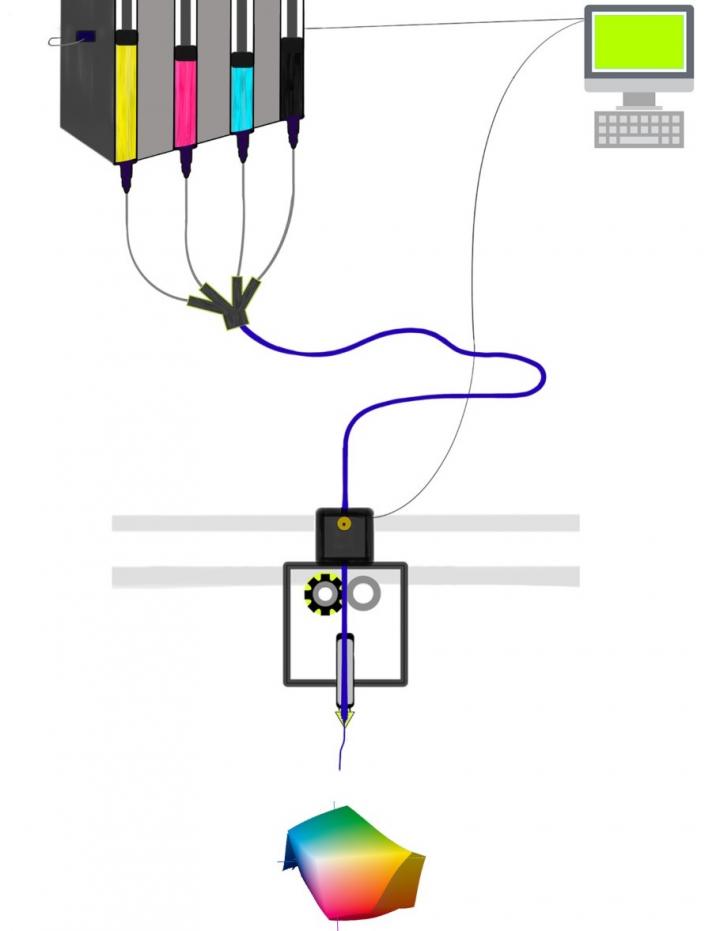
IMAGE

Credit: Madison Madison Godesky


Rutgers biomedical engineers have developed a “bio-ink” for 3D printed materials that could serve as scaffolds for growing human tissues to repair or replace damaged ones in the body.

The study was published in the journal Biointerphases.

Bioengineered tissues show promise in regenerative, precision and personalized medicine; product development; and basic research, especially with the advent of 3D printing of biomaterials that could serve as scaffolds, or temporary structures to grow tissues.

Hyaluronic acid, a natural molecule found in many tissues throughout the body, has many properties ideal for creating customized scaffolds, but lacks the durability required. The Rutgers engineers use modified versions of hyaluronic acid and polyethylene glycol to form a gel that is strengthened via chemical reactions and would serve as a scaffold.

“Instead of an ink color for an inkjet printer, we want the mixture to have properties that are right for specific cells to multiply, differentiate and remodel the scaffold into the appropriate tissue,” said senior author David I. Shreiber, a professor who chairs the Department of Biomedical Engineering in the School of Engineering at Rutgers University-New Brunswick. “We focus on the stiffness of the gel and scaffold binding sites that cells can latch onto.”

Groups of cells in the body generally make their own support structures, or scaffolds, but scientists can build them from proteins, plastics and other sources, according to the National Institutes of Health.

Shreiber and lead author Madison D. Godesky, who earned a doctorate at Rutgers, envisioned a system where hyaluronic acid and polyethylene glycol serve as the basic “ink cartridges” for 3D printing. The system would also have other ink cartridges featuring different cells and ligands, which serve as binding sites for cells. The system would print gel scaffolds with the right stiffness, cells and ligands, based on the type of tissue desired.

“Both the stiffness and the binding sites provide important signals to cells,” Godesky said. “What especially distinguishes our work from previous studies is the potential to control the stiffness and ligands independently through combinations of inks.”

###

Media Contact
Todd Bates
[email protected]
848-932-0550

Original Source

https://news.rutgers.edu/superior-%E2%80%9Cbio-ink%E2%80%9D-3d-printing-pioneered/20200207#.Xj2gU2hKi70

Related Journal Article

http://dx.doi.org/10.1063/1.5126493

Tags: Biomedical/Environmental/Chemical EngineeringMaterialsMedicine/HealthPublic HealthResearch/DevelopmentTransplantation
Share12Tweet8Share2ShareShareShare2

Related Posts

Oxygen-Enhanced Dual-Section Microneedle Patch Improves Drug Delivery and Boosts Photodynamic and Anti-Inflammatory Treatment for Psoriasis

February 7, 2026

Scientists Identify SARS-CoV-2 PLpro and RIPK1 Inhibitors Showing Potent Synergistic Antiviral Effects in Mouse COVID-19 Model

February 7, 2026

Neg-Entropy: The Key Therapeutic Target for Chronic Diseases

February 7, 2026

Multidisciplinary Evidence-Based Guidelines for Therapeutic Drug Monitoring of Biologics in Inflammatory Bowel Disease

February 7, 2026
Please login to join discussion

POPULAR NEWS

  • Robotic Ureteral Reconstruction: A Novel Approach

    Robotic Ureteral Reconstruction: A Novel Approach

    82 shares
    Share 33 Tweet 21
  • Digital Privacy: Health Data Control in Incarceration

    63 shares
    Share 25 Tweet 16
  • Study Reveals Lipid Accumulation in ME/CFS Cells

    57 shares
    Share 23 Tweet 14
  • Breakthrough in RNA Research Accelerates Medical Innovations Timeline

    53 shares
    Share 21 Tweet 13

About

We bring you the latest biotechnology news from best research centers and universities around the world. Check our website.

Follow us

Recent News

Oxygen-Enhanced Dual-Section Microneedle Patch Improves Drug Delivery and Boosts Photodynamic and Anti-Inflammatory Treatment for Psoriasis

Scientists Identify SARS-CoV-2 PLpro and RIPK1 Inhibitors Showing Potent Synergistic Antiviral Effects in Mouse COVID-19 Model

Neg-Entropy: The Key Therapeutic Target for Chronic Diseases

Subscribe to Blog via Email

Enter your email address to subscribe to this blog and receive notifications of new posts by email.

Join 73 other subscribers
  • Contact Us

Bioengineer.org © Copyright 2023 All Rights Reserved.

Welcome Back!

Login to your account below

Forgotten Password?

Retrieve your password

Please enter your username or email address to reset your password.

Log In
No Result
View All Result
  • Homepages
    • Home Page 1
    • Home Page 2
  • News
  • National
  • Business
  • Health
  • Lifestyle
  • Science

Bioengineer.org © Copyright 2023 All Rights Reserved.