• HOME
  • NEWS
  • EXPLORE
    • CAREER
      • Companies
      • Jobs
    • EVENTS
    • iGEM
      • News
      • Team
    • PHOTOS
    • VIDEO
    • WIKI
  • BLOG
  • COMMUNITY
    • FACEBOOK
    • INSTAGRAM
    • TWITTER
Friday, May 15, 2026
BIOENGINEER.ORG
No Result
View All Result
  • Login
  • HOME
  • NEWS
  • EXPLORE
    • CAREER
      • Companies
      • Jobs
        • Lecturer
        • PhD Studentship
        • Postdoc
        • Research Assistant
    • EVENTS
    • iGEM
      • News
      • Team
    • PHOTOS
    • VIDEO
    • WIKI
  • BLOG
  • COMMUNITY
    • FACEBOOK
    • INSTAGRAM
    • TWITTER
  • HOME
  • NEWS
  • EXPLORE
    • CAREER
      • Companies
      • Jobs
        • Lecturer
        • PhD Studentship
        • Postdoc
        • Research Assistant
    • EVENTS
    • iGEM
      • News
      • Team
    • PHOTOS
    • VIDEO
    • WIKI
  • BLOG
  • COMMUNITY
    • FACEBOOK
    • INSTAGRAM
    • TWITTER
No Result
View All Result
Bioengineer.org
No Result
View All Result
Home NEWS Science News Cancer

Sun exposure gets personal with wearable UV sensors

Bioengineer by Bioengineer
September 25, 2018
in Cancer
Reading Time: 2 mins read
0
Share on FacebookShare on TwitterShare on LinkedinShare on RedditShare on Telegram
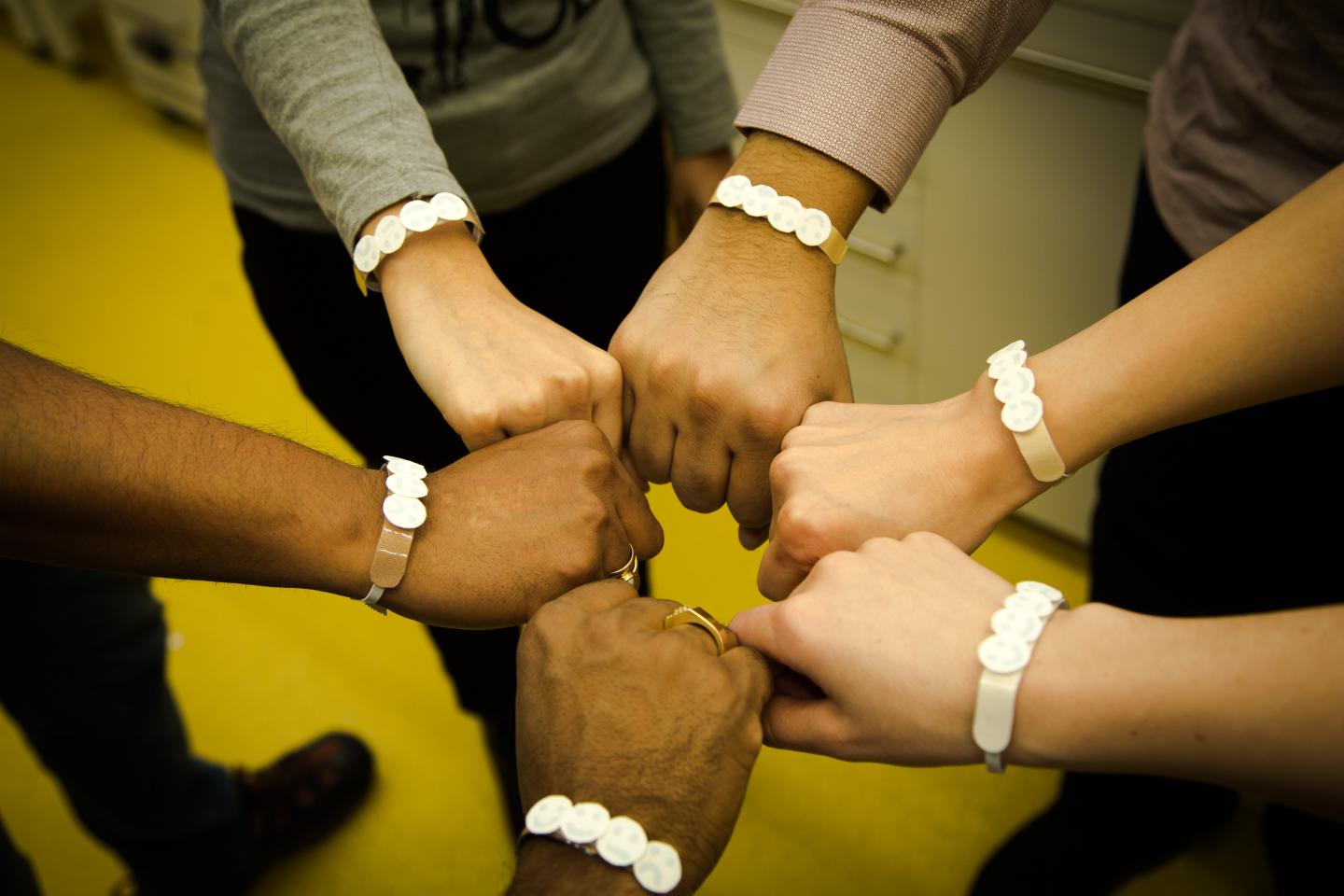
IMAGE

Credit: RMIT University

Keeping an eye on your personal ultraviolet (UV) exposure throughout the day could soon be as simple as wearing a sticker thanks to new wearable sensors that help people manage vitamin absorption and avoid sun damage.

A personal struggle with Vitamin D deficiency led Professor Vipul Bansal to develop the color-changing sensors that come in six variations to reflect the range in human skin tone.

Bansal said the discovery could help to provide people with an accurate and simple measure of their personal exposure levels throughout the day.

"We can print our ink on any paper-like surface to produce cheap wearable sensors in the form of wrist-bands, head bands or stickers for example," he said.

While humans do need some sun exposure to maintain healthy levels of Vitamin D, excessive exposure can cause sunburn, skin cancer, blindness, skin wrinkling and premature signs of aging.

Knowing what a healthy amount is for you depends on understanding your personal classification, from Type I to VI, as each has very different solar exposure needs.

Diseases such as Lupus and many medications increase the photosensitivity of our skin and reduce our ability to absorb Vitamins through diet, making monitoring our sun exposure thresholds highly individual.

"We are excited that our UV sensor technology allows the production of personalised sensors that can be matched to the specific needs of a particular individual," said Bansal.

"The low cost and child-friendly design of these UV sensors will facilitate their use as educational materials to increase awareness around sun safety."

Currently the only guide for managing sun exposure is UV index however this blunt tool only indicates the intensity of UV rays. It does not act as a precise tool to monitor each individual's daily exposure.

Fair skin (Type I) can only tolerate only one fifth of the UV exposure that dark skin (Type VI) can before damage occurs, while darker types require longer in the sun to absorb healthy amounts of Vitamin D.

The discovery also has application beyond the health sector as over time UV rays can have damaging effects on the lifetime of many industrial and consumer products.

Monitoring this exposure could help improve the safety and reliability of a range of items, including vehicles and military equipment, with huge potential cost savings.

###

The paper titled, "Skin color-specific and spectrally-selective naked-eye dosimetry of UVA, B and C radiations" by Bansal's team member, Vice-Chancellor's PhD scholar Wenyue Zou has been published in Nature Communications (DOI: 10.1038/s41467-018-06273-3).

Media Contact

Grace Taylor
[email protected]
61-499-515-097
@RMIT

http://www.rmit.edu.au

Related Journal Article

http://dx.doi.org/10.1038/s41467-018-06273-3
Share13Tweet7Share2ShareShareShare1

Related Posts

Bacteria Could Unlock New Clues for Cancer Treatment

May 15, 2026

Combined Genetic Risk and Lifestyle Factors Shape Upper Gastrointestinal Cancer Risk in Chinese Endoscopy-Screened Population

May 15, 2026

University of Cologne Secures Continued Funding for Two Collaborative Research Centres

May 15, 2026

Unlocking Hepatocellular Carcinoma Diagnosis: The Role of Neu5Gc-Linked Serum IgG Glycosylation

May 15, 2026
Please login to join discussion

POPULAR NEWS

  • Research Indicates Potential Connection Between Prenatal Medication Exposure and Elevated Autism Risk

    843 shares
    Share 337 Tweet 211
  • New Study Reveals Plants Can Detect the Sound of Rain

    729 shares
    Share 291 Tweet 182
  • Salmonella Haem Blocks Macrophages, Boosts Infection

    62 shares
    Share 25 Tweet 16
  • Breastmilk Balances E. coli and Beneficial Bacteria in Infant Gut Microbiomes

    58 shares
    Share 23 Tweet 15

About

We bring you the latest biotechnology news from best research centers and universities around the world. Check our website.

Follow us

Recent News

Genetics and Immunity Linked to Bipolar Disorder

Satellite Reveals Offshore Wind Farm Wake Patterns

High-Dimensional Study Reveals Immune Drivers of Severe Pediatric ARDS

Subscribe to Blog via Email

Enter your email address to subscribe to this blog and receive notifications of new posts by email.

Join 82 other subscribers
  • Contact Us

Bioengineer.org © Copyright 2023 All Rights Reserved.

Welcome Back!

Login to your account below

Forgotten Password?

Retrieve your password

Please enter your username or email address to reset your password.

Log In
No Result
View All Result
  • Homepages
    • Home Page 1
    • Home Page 2
  • News
  • National
  • Business
  • Health
  • Lifestyle
  • Science

Bioengineer.org © Copyright 2023 All Rights Reserved.