• HOME
  • NEWS
  • EXPLORE
    • CAREER
      • Companies
      • Jobs
    • EVENTS
    • iGEM
      • News
      • Team
    • PHOTOS
    • VIDEO
    • WIKI
  • BLOG
  • COMMUNITY
    • FACEBOOK
    • INSTAGRAM
    • TWITTER
Saturday, February 7, 2026
BIOENGINEER.ORG
No Result
View All Result
  • Login
  • HOME
  • NEWS
  • EXPLORE
    • CAREER
      • Companies
      • Jobs
        • Lecturer
        • PhD Studentship
        • Postdoc
        • Research Assistant
    • EVENTS
    • iGEM
      • News
      • Team
    • PHOTOS
    • VIDEO
    • WIKI
  • BLOG
  • COMMUNITY
    • FACEBOOK
    • INSTAGRAM
    • TWITTER
  • HOME
  • NEWS
  • EXPLORE
    • CAREER
      • Companies
      • Jobs
        • Lecturer
        • PhD Studentship
        • Postdoc
        • Research Assistant
    • EVENTS
    • iGEM
      • News
      • Team
    • PHOTOS
    • VIDEO
    • WIKI
  • BLOG
  • COMMUNITY
    • FACEBOOK
    • INSTAGRAM
    • TWITTER
No Result
View All Result
Bioengineer.org
No Result
View All Result
Home NEWS Science News Biology

Sugar-coating proteins can help understand brain disease

Bioengineer by Bioengineer
November 7, 2019
in Biology
Reading Time: 2 mins read
0
IMAGE
Share on FacebookShare on TwitterShare on LinkedinShare on RedditShare on Telegram

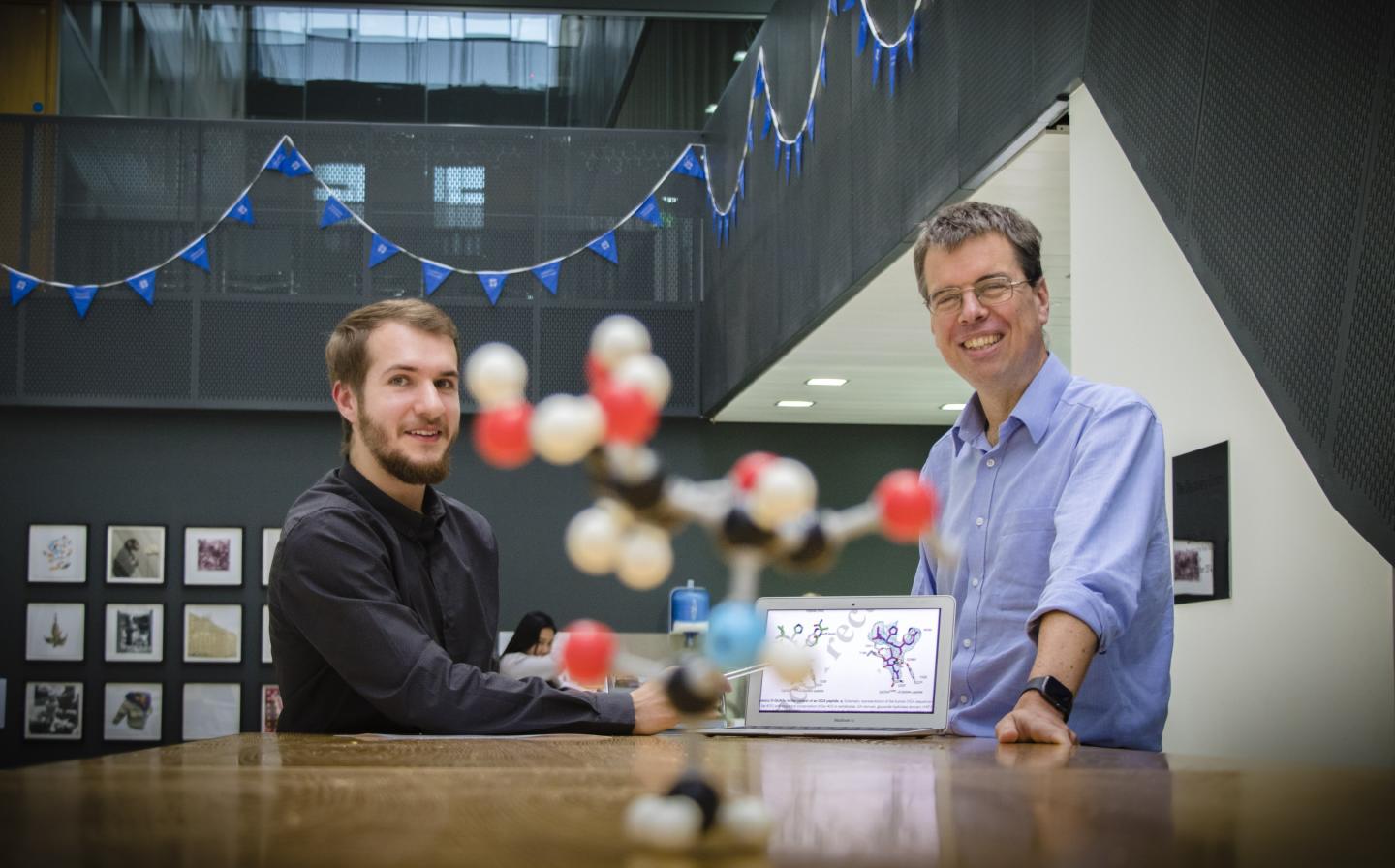
A University of Dundee discovery has the potential to help scientists better understand neurological diseases such as Alzheimer’s and Parkinson’s
IMAGE

Credit: University of Dundee

A University of Dundee discovery has the potential to help scientists better understand neurological diseases such as Alzheimer’s and Parkinson’s.

Researchers, led by Professor Daan van Aalten in the University’s School of Life Sciences, have developed a new way to tag proteins in human cells with a small sugar molecule called O-GlcNAc. There are over 20,000 proteins in every human cell and approximately 20% of these contain O-GlcNAc.

The exact role played by O-GlcNAc remains a mystery but the molecule is found on proteins related to Alzheimer’s, Parkinson’s, motor neurone disease and intellectual disability.

This has led scientists to hypothesise that O-GlcNAc disruption is linked to these diseases, and increasing the levels of O-GlcNAc appears to be of therapeutic benefit. The Dundee team have developed a technique that enables them to permanently fix the sugar onto proteins where it naturally occurs at only low levels, allowing them to explore exactly what it does.

The researchers believe their method, combined with rapidly developing gene editing technology, could help understand the causes of diseases in which this sugar modification is disrupted.

“It is likely that perturbation of the O-GlcNAc sugar on just a single protein could have deleterious effects on healthy neurons and other cells but until recently, the research field lacked methods to investigate this,” explained Professor van Aalten. “We have now created the tool that enables us to do this.

“This allows us to ask questions about the role of specific sugar modifications that are dysregulated in cases of intellectual disability, as well as other brain diseases. Our technique has great potential to advance knowledge of O-GlcNAc-related disorders and help develop novel therapeutics.”

Dr Andrii Gorelik, the lead author of the research, discovered that the carbohydrate-protein linkage can be genetically recoded (altered) to permanently fix the sugar and enable it to be studied. This technology allows the O-GlcNAc found on a single protein within human cells and model organisms to be investigated and can now be applied to models of various neurological diseases.

Dr Gorelik said, “I had been working on this problem for several years when a few unexpected observations led me to establish this new method.

“Because the approach is so simple, it can be used in virtually any biomedical research lab worldwide, and, hopefully, result in exciting findings regarding the role of O-GlcNAc in normal physiology and disease.”

###

The research was supported by Wellcome Trust funding for Professor van Aalten and Dr Gorelik. The findings were published today in the journal Nature Structural and Molecular Biology.

Media Contact
Grant Hill
[email protected]
01-382-384-768

Related Journal Article

http://dx.doi.org/10.1038/s41594-019-0325-8

Tags: AlzheimerBiochemistryBiologyCell BiologyMicrobiologyMolecular Biologyneurobiology
Share14Tweet9Share2ShareShareShare2

Related Posts

Florida Cane Toad: Complex Spread and Selective Evolution

Florida Cane Toad: Complex Spread and Selective Evolution

February 7, 2026
New Study Uncovers Mechanism Behind Burn Pit Particulate Matter–Induced Lung Inflammation

New Study Uncovers Mechanism Behind Burn Pit Particulate Matter–Induced Lung Inflammation

February 6, 2026

DeepBlastoid: Advancing Automated and Efficient Evaluation of Human Blastoids with Deep Learning

February 6, 2026

Navigating the Gut: The Role of Formic Acid in the Microbiome

February 6, 2026
Please login to join discussion

POPULAR NEWS

  • Robotic Ureteral Reconstruction: A Novel Approach

    Robotic Ureteral Reconstruction: A Novel Approach

    82 shares
    Share 33 Tweet 21
  • Digital Privacy: Health Data Control in Incarceration

    63 shares
    Share 25 Tweet 16
  • Study Reveals Lipid Accumulation in ME/CFS Cells

    57 shares
    Share 23 Tweet 14
  • Breakthrough in RNA Research Accelerates Medical Innovations Timeline

    53 shares
    Share 21 Tweet 13

About

We bring you the latest biotechnology news from best research centers and universities around the world. Check our website.

Follow us

Recent News

Decoding Prostate Cancer Origins via snFLARE-seq, mxFRIZNGRND

Digital Health Perspectives from Baltic Sea Experts

Florida Cane Toad: Complex Spread and Selective Evolution

Subscribe to Blog via Email

Enter your email address to subscribe to this blog and receive notifications of new posts by email.

Join 73 other subscribers
  • Contact Us

Bioengineer.org © Copyright 2023 All Rights Reserved.

Welcome Back!

Login to your account below

Forgotten Password?

Retrieve your password

Please enter your username or email address to reset your password.

Log In
No Result
View All Result
  • Homepages
    • Home Page 1
    • Home Page 2
  • News
  • National
  • Business
  • Health
  • Lifestyle
  • Science

Bioengineer.org © Copyright 2023 All Rights Reserved.