A large-scale review of prostate cancer in sub-Saharan Africa has found a substantial and often aggressive disease burden across the region, but no consistent evidence that cancer incidence rises in step with malaria endemicity. The analysis, published in BMC Cancer, assembled epidemiological data from 31 studies covering 15 countries and one multicountry cancer registry spanning 12 sub-Saharan African regions. Its findings challenge a tempting but unproven idea: that the intensity of malaria transmission might directly shape prostate cancer risk. Instead, the researchers report a far more complicated picture, marked by incomplete cancer surveillance, large differences between rural and urban populations, late diagnosis, limited treatment access and wide variation in the quality of available data. The study’s central message is urgent: prostate cancer is a major and undercounted health problem in sub-Saharan Africa, but stronger registries are needed before the relationship between malaria and cancer can be properly tested.
Prostate cancer develops when cells in the prostate acquire genetic and molecular changes that allow them to multiply uncontrollably, invade surrounding tissue or spread to distant organs. The disease is strongly influenced by age, inherited susceptibility, ancestry and environmental factors, but its observed impact in any population also depends on how often men are tested, how quickly symptoms lead to diagnosis and whether treatment is available. These distinctions are particularly important in sub-Saharan Africa. A low recorded incidence may indicate genuinely lower disease occurrence, but it may also reflect underdiagnosis, incomplete reporting or the absence of population-based cancer registries. Conversely, an apparent increase over time can result from improved detection as well as a true rise in disease. The review therefore examined multiple indicators rather than relying on incidence alone, including age-standardized incidence rates, temporal trends, tumor grade and stage at diagnosis, mortality and survival.
To conduct the study, the investigators followed the PRISMA 2020 framework, an internationally recognized standard for systematic reviews that promotes transparent searching, screening and reporting. They searched five major databases—PubMed/MEDLINE, Embase, Scopus, Web of Science and African Journals Online—and supplemented the database search with backward citation screening, in which the reference lists of relevant studies are examined for additional evidence. Eligible studies had to report on prostate cancer among men in sub-Saharan Africa and provide information on at least one major epidemiological outcome, such as incidence, changes over time, tumor grade or stage, survival or mortality. After the selection process, 31 studies met the inclusion criteria. The researchers then synthesized the results statistically where the data were sufficiently comparable, using a random-effects meta-analysis to account for genuine differences between studies as well as sampling uncertainty.
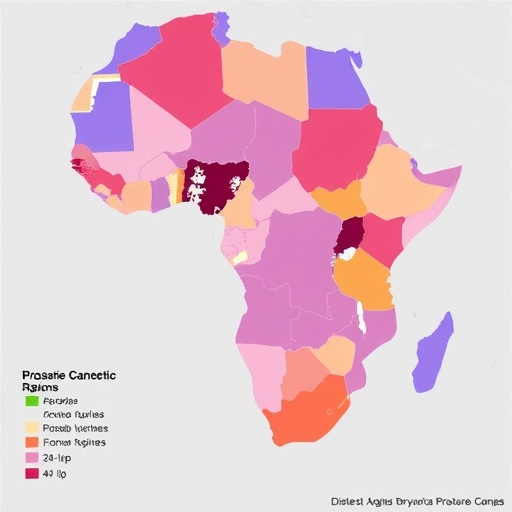
The incidence estimates revealed both the scale of the disease and the fragility of the regional evidence base. Eight studies, contributing 22 separate observations, provided age-standardized incidence rate or age-standardized incidence-rate data. Age standardization is a statistical adjustment that allows populations with different age structures to be compared fairly, since prostate cancer becomes much more common as men grow older. Across these observations, median age-standardized rates ranged from 6.3 cases per 100,000 men in a non-endemic rural registry to 58.5 per 100,000 in a seasonal malaria-endemic setting. Areas classified as highly endemic had a median rate of 50.8 per 100,000. Yet the statistical comparison did not identify significant differences between malaria-endemicity categories. In other words, the highest observed incidence occurred in an endemic setting, but the overall collection of studies did not show a reliable gradient in which increasingly intense malaria transmission corresponded to increasingly high prostate cancer incidence.
That result does not prove that malaria has no influence on prostate cancer biology. It means the available epidemiological data cannot establish a consistent population-level association. Malaria is caused by Plasmodium parasites transmitted by infected mosquitoes and can produce repeated cycles of inflammation, immune activation, anemia and tissue stress. Chronic inflammation and altered immune signaling have been investigated as possible contributors to several cancers, while infectious diseases can also affect cancer risk indirectly by changing nutrition, healthcare access or competing causes of death. However, demonstrating a malaria–cancer connection would require carefully designed studies that measure lifetime malaria exposure, parasite burden, immune responses, genetic background, age, socioeconomic conditions and access to screening. The review found that current regional data are too uneven to support such conclusions. Differences in study design, geographic coverage, case ascertainment and population characteristics can obscure a real association—or create the appearance of one where none exists.
The clearest warning sign in the analysis was the severity of disease at diagnosis. A random-effects meta-analysis of five studies involving 1,395 men estimated that 45 percent presented with high-grade prostate cancer. Tumor grade describes how abnormal cancer cells look under a microscope and provides an indication of how rapidly a tumor is likely to grow and spread. High-grade tumors generally carry a greater risk of aggressive behavior than low-grade tumors, although grade is interpreted alongside stage, prostate-specific antigen levels, imaging and other clinical findings. The researchers also emphasized that late-stage diagnosis is common in the region, where men may face limited awareness of symptoms, long distances to hospitals, shortages of specialists, diagnostic delays and the cost of tests or treatment. These barriers can allow tumors to progress before they are identified, turning a potentially manageable disease into one requiring complex and expensive care.
Survival figures illustrated how strongly outcomes depended on the type of health information system and clinical setting. Population-based cancer registries reported five-year observed survival of 39 percent and five-year relative survival of 60 percent. Observed survival measures the proportion of diagnosed patients still alive after a specified period, regardless of the cause of death. Relative survival compares survival among cancer patients with expected survival in a similar general population, helping to estimate the effect of the cancer without requiring complete cause-of-death data. Facility-based cohorts, however, sometimes reported much poorer outcomes. One Ethiopian cohort recorded survival of just 11 percent at 36 months. These figures should not be interpreted as a single definitive survival rate for the entire continent. Registry studies may capture a broader spectrum of patients, whereas hospital cohorts can be enriched for people with advanced disease who reach specialist care only after symptoms become severe. Nonetheless, the contrast highlights the consequences of delayed diagnosis and uneven access to effective therapy.
The review’s limitations are themselves a major finding. Only a fraction of the included studies contributed incidence estimates suitable for comparison, and the studies varied considerably in design and quality. Sub-Saharan Africa contains populations with enormous differences in age distribution, ancestry, urbanization, health infrastructure, environmental exposure and healthcare utilization. Malaria transmission also varies across a continuum rather than dividing neatly into simple categories, with some regions experiencing stable year-round transmission and others facing seasonal outbreaks. A registry based in one city or rural district cannot automatically represent an entire country, while hospital data may omit men who never receive a diagnosis. Statistical heterogeneity—the degree to which study results differ beyond what would be expected from chance—was substantial in the analysis of high-grade disease. Such heterogeneity reduces the precision of pooled estimates and cautions against treating a regional average as a direct description of every community.
Even with those uncertainties, the study points toward practical priorities for public health. Cancer registries that systematically record new diagnoses, tumor characteristics, treatment and outcomes are essential for identifying genuine trends. Population-based registries are particularly valuable because they aim to capture cases within a defined geographic population rather than only among patients attending selected hospitals. Standardizing definitions of incidence, grade, stage and survival would also make results from different countries more comparable. Better registration could reveal whether prostate cancer is rising because populations are aging, detection is improving, risk factors are changing or some combination of these forces is at work. It could also support research into biological differences between tumors, including molecular alterations that might influence aggressiveness or treatment response. Expanding diagnostic capacity, pathology services and access to surgery, radiotherapy and systemic therapies would be equally important, because surveillance alone cannot improve outcomes if patients cannot receive timely care.
The researchers conclude that prostate cancer represents a significant and aggressive health burden across sub-Saharan Africa, while the evidence does not support a consistent incidence pattern linked to malaria endemicity. That conclusion is likely to attract attention because it separates a provocative biological hypothesis from what the data can currently demonstrate. The next phase of research will need larger, better-connected cancer registries and studies that follow men over time, combining epidemiology with molecular biology and detailed measurements of malaria exposure. Until then, the most immediate story is not whether malaria explains prostate cancer in the region, but how much disease may remain hidden by weak surveillance and unequal access to diagnosis. Making that invisible burden measurable could be the first step toward preventing late presentations and improving survival for millions of men.
Subject of Research: Prostate cancer epidemiology and its relationship to malaria endemicity in sub-Saharan Africa
Subject of Research: Cancer
Article Title: Prostate cancer epidemiology across malaria-endemic settings in SSA: a systematic review and meta-analysis
Article References: Akinyosoye, A. D., Oranusi, S. U., Rotimi, S. O., Ogunlana, O. O., Iweala, E. E. J., & Akinnola, O. O. (2026). Prostate cancer epidemiology across malaria-endemic settings in SSA: a systematic review and meta-analysis. BMC Cancer. https://doi.org/10.1186/s12885-026-16881-8
Image Credits: AI Generated
DOI: 10.1186/s12885-026-16881-8
Keywords: prostate cancer, sub-Saharan Africa, malaria endemicity, epidemiology, incidence, survival, systematic review, meta-analysis
Cite this news
APA MLA Chicago
SCIENMAG. (August 28, 2026). Study Maps Prostate Cancer Patterns Across Malaria-Endemic Regions of Sub-Saharan Africa. https://scienmag.com/study-maps-prostate-cancer-patterns-across-malaria-endemic-regions-of-sub-saharan-africa/
SCIENMAG. “Study Maps Prostate Cancer Patterns Across Malaria-Endemic Regions of Sub-Saharan Africa.” Scienmag, 28 August 2026, https://scienmag.com/study-maps-prostate-cancer-patterns-across-malaria-endemic-regions-of-sub-saharan-africa/. Accessed 28 August 2026.
SCIENMAG. “Study Maps Prostate Cancer Patterns Across Malaria-Endemic Regions of Sub-Saharan Africa.” Scienmag. August 28, 2026. https://scienmag.com/study-maps-prostate-cancer-patterns-across-malaria-endemic-regions-of-sub-saharan-africa/
Copy citation Download RIS
Tags: aggressive prostate cancer patterns in Africachallenges in cancer surveillance in Africagenetic and environmental factors in prostate cancergenetic and environmental risk factors for prostate cancerimpact of incomplete cancer registriesimportance of cancer registry improvementsimportance of cancer registry quality and data accuracyinfluence of urban vs rural populations on prostate cancerlate diagnosis and treatment access in sub-Saharan Africamalaria endemicity and cancer riskneed for improved cancer data collection and registry developmentProstate cancer epidemiology in sub-Saharan Africapublic health implications of prostate cancer underreportingregional cancer surveillance challenges in Africaregional disparities in prostate cancer diagnosisregional variations in prostate cancer incidencerelationship between malaria transmission and cancer developmentrelationship between malaria transmission and cancer incidencerural vs urban prostate cancer disparitiesunderreporting of prostate cancer cases in Africa