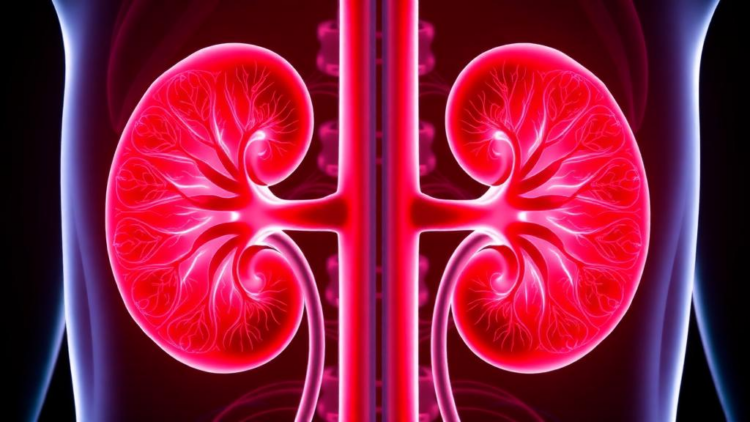
When patients are diagnosed with lymphoma or leukemia, much of the conversation understandably centers on curing or controlling the cancer itself. Yet the kidneys, those quiet filters working around the clock to clear drugs, waste products, and the debris of dying tumor cells, often become silent casualties of both the disease and its treatment. A new large-scale comparison suggests that two of the most common blood cancers in adults impose strikingly different renal burdens, and that difference could reshape how oncologists and nephrologists monitor patients over the long arc of care.
The study, published in Supportive Care in Cancer, was led by Syed E. Pasha of the University of Houston and HCA Houston Healthcare Kingwood, together with colleagues from MountainView Hospital and Texas Oncology centers. The team set out to answer a deceptively simple question: do patients with diffuse large B-cell lymphoma, an aggressive and rapidly treated lymphoma, experience different kidney outcomes than patients with chronic lymphocytic leukemia or small lymphocytic lymphoma, an indolent disease that often smolders for years before requiring therapy? Comparative renal data between these two populations had been scarce, despite the fact that both cancers are common and both are treated with regimens known to stress the kidneys.
To answer the question, the researchers turned to the TriNetX Global Collaborative Network, a federated database drawing de-identified electronic health records from 143 healthcare organizations. Data were extracted on May 9, 2025. Adults with a coded diagnosis of diffuse large B-cell lymphoma or of chronic lymphocytic leukemia and small lymphocytic lymphoma were identified using standard ICD-10 diagnostic codes. To make the two groups as comparable as possible, the investigators used a statistical technique called propensity score matching, pairing each patient with a counterpart from the other cohort who shared the same age, sex, race, and ethnicity. This one-to-one matching produced two demographically indistinguishable groups, with standardized mean differences between them ranging from just 0.001 to 0.038, values so small they indicate near-perfect balance.
The final analysis included 19,438 patients, evenly split with 9,719 in each cohort. Kidney outcomes were tracked from the first day after the index diagnosis through each patient’s available follow-up, an open-ended window rather than a fixed observation period. The researchers looked for two distinct conditions: acute kidney injury, the sudden loss of renal function that can develop within hours or days, and chronic kidney disease, the gradual, often irreversible decline in filtration capacity that unfolds over months and years. Statistical comparisons relied on two-proportion z-tests, generating risk differences, risk ratios, and odds ratios with 95 percent confidence intervals.
The results revealed a fascinating split. Acute kidney injury struck 22.9 percent of the diffuse large B-cell lymphoma patients compared with 20.9 percent of the chronic lymphocytic leukemia and small lymphocytic lymphoma group. That two-percentage-point gap was statistically significant, with a risk ratio of 1.094 and an odds ratio of 1.122, and a p-value of 0.001. In other words, the aggressive lymphoma carried a modestly higher risk of sudden renal failure. The pattern flipped for chronic kidney disease. Here, 18.8 percent of the lymphoma patients developed the condition versus 22.7 percent of the leukemia and indolent lymphoma group, a negative risk difference of 4.0 percent, with a risk ratio of 0.825 and an odds ratio of 0.785, and a p-value below 0.001. The slower cancer, paradoxically, left a heavier mark on long-term kidney health.
The biology behind this divergence makes intuitive sense when one considers how each disease and its treatment unfold. Diffuse large B-cell lymphoma grows quickly and is typically treated with intensive chemoimmunotherapy, most commonly regimens built around rituximab combined with cyclophosphamide, doxorubicin, vincristine, and prednisone. Rapid tumor cell death can trigger tumor lysis syndrome, a cascade in which potassium, phosphate, and uric acid flood the bloodstream and crystallize in renal tubules, a well-documented cause of acute kidney injury. High-dose chemotherapy agents themselves, along with the infections, dehydration, and intensive care admissions that can accompany aggressive treatment, all add to the short-term renal assault.
Chronic lymphocytic leukemia, by contrast, is a disease of accumulation and time. Patients frequently live with it for a decade or more, and even those who never require treatment face aging kidneys, cumulative exposure to nephrotoxic drugs across successive lines of therapy, and immune complications. Modern targeted therapies such as ibrutinib, which has transformed outcomes in this disease, carry their own renal baggage; real-world analyses of hundreds of treated patients have documented a spectrum of toxicities that can include hypertension and kidney dysfunction. Over years of surveillance, treatment, and comorbidity, the indolent disease’s patient population gradually accrues the chronic damage that shows up as chronic kidney disease. The new data, showing a 22.7 percent chronic kidney disease rate in this group, align with that clinical picture.
The authors are careful to frame their findings as hypothesis-generating rather than definitive. The matching algorithm balanced demographics but did not capture comorbidities such as diabetes, hypertension, or pre-existing renal impairment, all of which are powerful drivers of kidney disease and may differ systematically between the two cancer populations. Follow-up duration was also not matched, and the open-ended observation window means patients in one group may simply have been watched longer. Absolute differences between the cohorts were small, in the range of two to four percentage points, and the study relied on administrative diagnostic codes rather than laboratory-verified kidney function measures. The research was supported in whole or in part by HCA Healthcare, though the authors declare no competing interests, and the views expressed are those of the authors alone.
Even with those caveats, the study carries practical weight for the growing field of onco-nephrology, the discipline that sits at the intersection of cancer care and kidney medicine. Acute kidney injury in patients with hematological malignancies is known to worsen remission rates and survival, and chronic kidney disease constrains which cancer therapies a patient can safely receive, since many agents require dose adjustment or are contraindicated in renal impairment. If the pattern observed here holds up, supportive care pathways might reasonably emphasize vigilant short-term renal monitoring, hydration protocols, and uric acid management around the intensive treatment phases of aggressive lymphoma, while building durable long-term nephrology follow-up into the care of chronic lymphocytic leukemia survivors, whose kidneys face a marathon rather than a sprint.
What comes next is confirmation. The authors themselves call for comorbidity-adjusted analyses and prospective studies to verify whether the renal risk differences survive when diabetes, hypertension, baseline kidney function, and treatment exposure are properly accounted for. Until then, the message for clinicians is one of heightened awareness rather than alarm: both cancer subtypes deserve deliberate attention to the kidneys, but the timing and nature of that attention may need to differ. A single dataset of nearly twenty thousand matched patients cannot settle every question, but it has usefully drawn a map, pointing oncologists toward the moments in each disease trajectory where the kidneys are most vulnerable, and reminding the wider medical community that surviving cancer is only half the story, with protecting the organs that carry patients through survivorship being the other half.
Subject of Research: Comparative renal outcomes of acute kidney injury and chronic kidney disease in diffuse large B-cell lymphoma versus chronic lymphocytic leukemia/small lymphocytic lymphoma
Article Title: Renal risk differences between diffuse large B-cell lymphoma and chronic lymphocytic leukemia/small lymphocytic lymphoma: implications for supportive oncology care
Article References: Pasha, S. E., Khalique, S., Haddadin, R., Mazharuddin, S., & Khoury, P. N. (2026). Renal risk differences between diffuse large B-cell lymphoma and chronic lymphocytic leukemia/small lymphocytic lymphoma: implications for supportive oncology care. Supportive Care in Cancer, 34(10), Article 1029. https://doi.org/10.1007/s00520-026-11256-y
Image Credits: AI Generated
DOI: 10.1007/s00520-026-11256-y
Keywords: diffuse large B-cell lymphoma, chronic lymphocytic leukemia, small lymphocytic lymphoma, acute kidney injury, chronic kidney disease, supportive oncology, onco-nephrology, nephrotoxicity, TriNetX, propensity score matching, real-world data, tumor lysis syndrome
Cite Scienmag News
APA
MLA
Chicago
Nathaniel Bowman. (October 4, 2026). Kidney Risks Diverge Between Two Common Blood Cancers, Massive Data Study Finds. Scienmag. https://scienmag.com/kidney-risks-diverge-between-two-common-blood-cancers-massive-data-study-finds/
Nathaniel Bowman. “Kidney Risks Diverge Between Two Common Blood Cancers, Massive Data Study Finds.” Scienmag, 4 October 2026, https://scienmag.com/kidney-risks-diverge-between-two-common-blood-cancers-massive-data-study-finds/. Accessed 4 October 2026.
Nathaniel Bowman. “Kidney Risks Diverge Between Two Common Blood Cancers, Massive Data Study Finds.” Scienmag. October 4, 2026. https://scienmag.com/kidney-risks-diverge-between-two-common-blood-cancers-massive-data-study-finds/
Copy citation
Download RIS
Tags: acute kidney injuryblood cancer kidney riskscancer therapies and kidney toxicitycancer treatment kidney damageChronic kidney diseasechronic lymphocytic leukemiadiffuse large B-cell lymphomaimpact of lymphoma vs leukemia on kidneyskidney healthlarge-scale kidney health study in oncologyleukemia renal complicationslong-term kidney monitoring in cancer patientslymphoma and kidney functionnephrology in cancer carenephrotoxicityonco-nephrologypropensity score matchingreal-world datarenal burden of blood cancersrenal outcomes in blood cancerssmall lymphocytic lymphomasupportive oncologyTriNetXtumor lysis syndrome