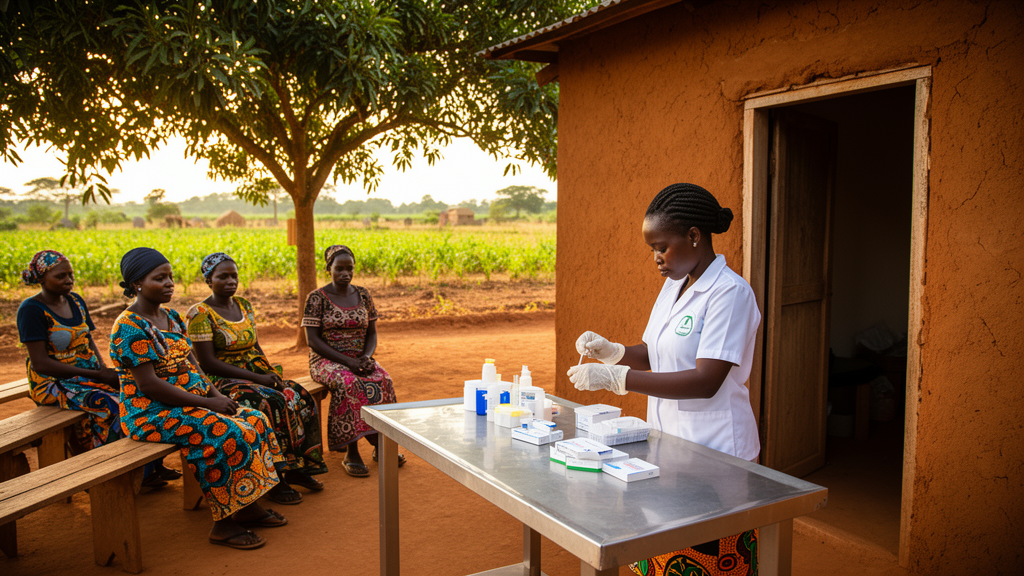
A community-based cross-sectional study of 418 women aged 18 years and older in four sub-counties of Rubanda District, Uganda, identified reproductive history, clarity about screening costs, waiting time, procedure duration and provider attitudes as the factors most strongly associated with cervical cancer screening uptake after adjustment for multiple individual, social, economic and health-system characteristics. The analysis found that women who knew payment was required for screening had markedly higher adjusted odds of reporting uptake than women who were unsure about the cost, while women with no children had lower odds than women with one to four children. These are statistical associations from one district, not evidence that the factors caused women to undergo or avoid screening.
Investigators used multi-stage sampling to select the four sub-counties and enrolled women aged 18 years and above through a community-based study. They collected data on individual, social, economic and health-system characteristics with a structured questionnaire. In univariable logistic regression analyses, education, parity, cost awareness and waiting time were significantly associated with screening uptake.
Variables meeting the study’s p < 0.05 threshold were then entered into one multivariable logistic regression model that adjusted across all four domains, allowing the researchers to assess which factors remained independently associated with reported uptake. Reproductive history was one of the associations that survived the multivariable adjustment. Women with no children had 20% the odds of reporting screening uptake compared with women who had one to four children, corresponding to an adjusted odds ratio of 0.20.
Cost awareness produced the largest contrast in the model: women who knew that payment was required for screening had 12.34 times the adjusted odds of uptake compared with women who were unsure about the cost. Women who believed screening was free did not have a significant association after adjustment, showing that the unadjusted pattern did not remain independent of the other factors included in the model. Health-system conditions showed a complex relationship with screening participation.
A wait of one hour was associated with substantially higher odds of uptake, with an adjusted odds ratio of 6.96 relative to the model’s reference category, whereas a wait longer than two hours was associated with sharply lower odds, with an adjusted odds ratio of 0.08. The researchers characterized this pattern as a threshold effect rather than a simple relationship in which every additional minute of waiting increased or decreased uptake. A longer or unspecified procedure duration was also associated with lower uptake, at an adjusted odds ratio of 0.23.
Because the study was cross-sectional and relied on questionnaire data, these estimates describe associations rather than causal effects or changes in screening behavior over time. Provider attitudes were among the most prominent correlates. Compared with reporting a bad provider attitude, women who described the attitude as fair had 7.64 times the adjusted odds of reporting screening uptake, while women who rated it good had 10.78 times the adjusted odds.
No other factor retained independent statistical significance after the multivariable adjustment. Education and perceived cervical cancer risk had been associated with uptake in the univariable analysis but were no longer significant once economic and health-system factors were accounted for. Religious affiliation showed no association at any stage.
Subject of Research: Correlates of cervical cancer screening uptake among women in Rubanda District, Uganda
Article Title: Individual, social, economic, and health system determinants of cervical cancer screening uptake among women in Rubanda District, Uganda
Article References: Centinary, G., Olikira Baine, S., Masembe, S., & Kibonire Arineitwe, R. (2026). Individual, social, economic, and health system determinants of cervical cancer screening uptake among women in Rubanda District, Uganda. BMC Cancer. https://doi.org/10.1186/s12885-026-17222-5
Image Credits: AI Generated
DOI: 10.1186/s12885-026-17222-5
Keywords: cervical cancer screening, Uganda, Rubanda District, screening uptake, health-system barriers, cost awareness, waiting time, provider attitudes, cross-sectional study, Individual, social, economic
News Source: Nathaniel Bowman. (October 22, 2026). Study identifies correlates of cervical screening uptake in rural Uganda. Scienmag.