• HOME
  • NEWS
  • EXPLORE
    • CAREER
      • Companies
      • Jobs
    • EVENTS
    • iGEM
      • News
      • Team
    • PHOTOS
    • VIDEO
    • WIKI
  • BLOG
  • COMMUNITY
    • FACEBOOK
    • INSTAGRAM
    • TWITTER
Thursday, June 25, 2026
BIOENGINEER.ORG
No Result
View All Result
  • Login
  • HOME
  • NEWS
  • EXPLORE
    • CAREER
      • Companies
      • Jobs
        • Lecturer
        • PhD Studentship
        • Postdoc
        • Research Assistant
    • EVENTS
    • iGEM
      • News
      • Team
    • PHOTOS
    • VIDEO
    • WIKI
  • BLOG
  • COMMUNITY
    • FACEBOOK
    • INSTAGRAM
    • TWITTER
  • HOME
  • NEWS
  • EXPLORE
    • CAREER
      • Companies
      • Jobs
        • Lecturer
        • PhD Studentship
        • Postdoc
        • Research Assistant
    • EVENTS
    • iGEM
      • News
      • Team
    • PHOTOS
    • VIDEO
    • WIKI
  • BLOG
  • COMMUNITY
    • FACEBOOK
    • INSTAGRAM
    • TWITTER
No Result
View All Result
Bioengineer.org
No Result
View All Result
Home NEWS Science News Biology

Study confirms banded iron formations originated from oxidized iron

Bioengineer by Bioengineer
June 6, 2019
in Biology
Reading Time: 2 mins read
0
IMAGE
Share on FacebookShare on TwitterShare on LinkedinShare on RedditShare on Telegram

New research from University of Alberta scientists dispels misconceptions about origins of banded iron formations
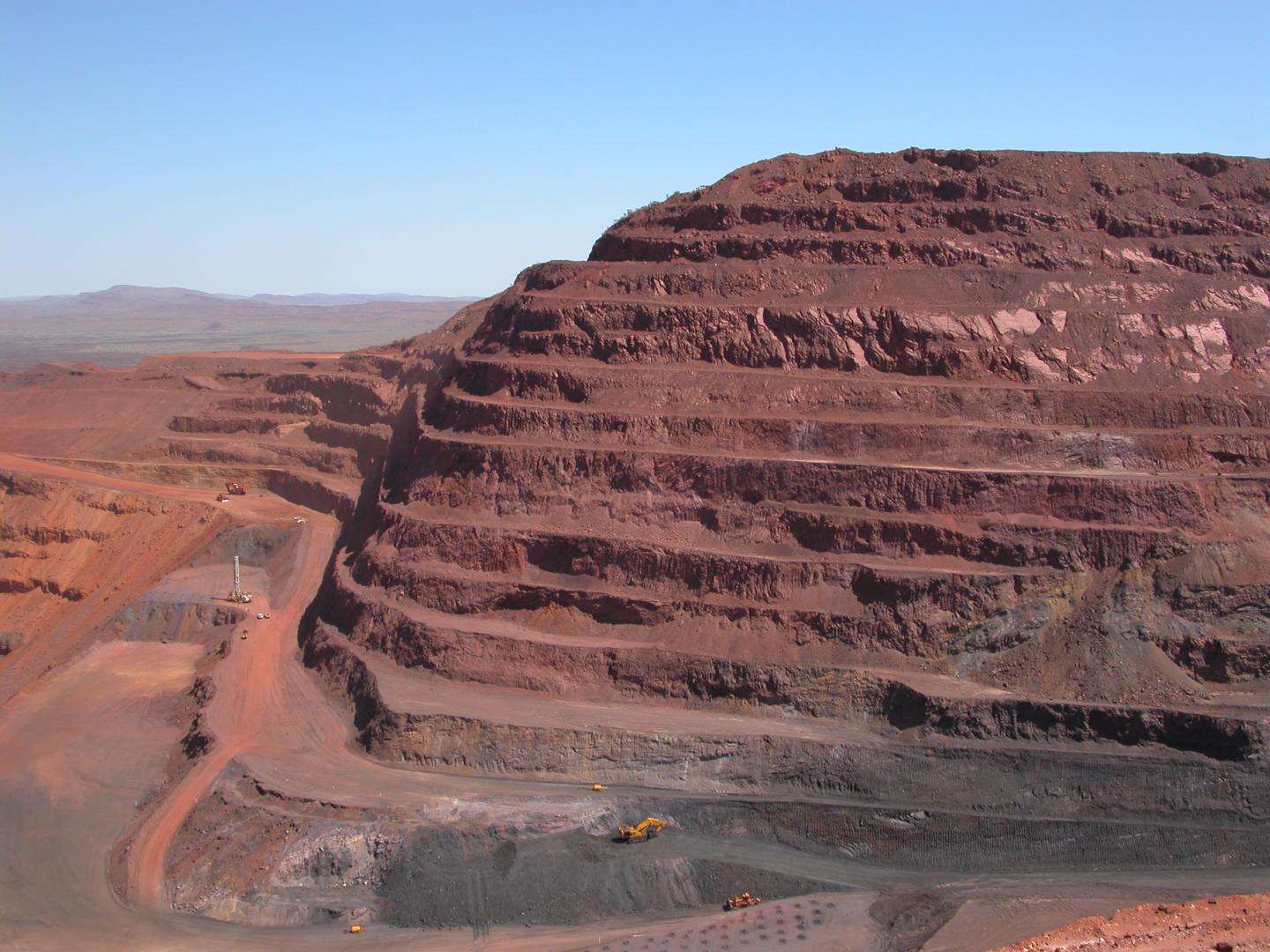
IMAGE

Credit: Tom Price

A new study by University of Alberta scientists shows that banded iron formations originated from oxidized iron, confirming the relevance and accuracy of existing models–a finding of great importance to the geological community.

Banded iron formations are a distinct type of sedimentary rock with layers of iron deposited as horizontal bands. The majority of these formations formed over the last 2.5 billion years and are a major source of iron today. “We’ve been using banded iron formations with great success to track the evolution of seawater chemistry and evolution of the biosphere,” explained Kurt Konhauser, professor in the Department of Earth and Atmospheric Sciences and co-author on the paper. “But these experiments are based on the assumption that we understand the primary minerals that compose these rocks.”

In the last decade, a new model was proposed, suggesting that the formations began as ferrous iron that was later oxidized by oxygen in the environment–a model that, if correct, would require a major paradigm shift in this area of study.

To examine this possibility, a group of researchers led by Konhauser’s PhD student Leslie Robbins tested the theory using a hydrogeological model, designed to determine how long it would take oxygen to oxidize such a formation. The research team included Professor Ben Roston, Assistant Professor Daniel Alessi, and Professor Larry Heaman.

“Essentially, we found that this would be possible in only one per cent of cases in the suggested time frame of 250 million years,” said Konhauser. “Moreover, we had to create unrealistic conditions in order to make the new proposed model work–for instance, an extremely steep slope, or rock that was actually sand, or a great deal of oxygen.”

These results confirmed that the newly proposed model is inaccurate, indicating that existing models and our current understanding remains the most effective method of studying banded iron formations.

“This is a powerful result that stems from the simple question about whether recently proposed models for banded iron formations are plausible when extrapolated to the size of a depositional basin,” said Robbins, now a postdoctoral fellow at Yale University in New Haven, United States. “This result has fundamental implications for the formation of these deposits, and this work benefited greatly from strong collaborations both within Earth and Atmospheric Sciences and with our external collaborators.”

###

The paper, “Hydrogeological constraints on the formation of Palaeoproterozoic banded iron formations,” was published in Nature Geoscience (doi: 10.1038/s41561-019-0372-0).

Media Contact
Katie Willis
[email protected]

Original Source

https://www.ualberta.ca/science/science-news/2019/june/banded-iron-formations-origin

Related Journal Article

http://dx.doi.org/10.1038/s41561-019-0372-0

Tags: Earth ScienceEvolutionGeographyPlate Tectonics
Share14Tweet8Share2ShareShareShare2

Related Posts

This Famous Butterfly Revealed: Three Distinct Species Hidden in One

June 25, 2026

Scientists Attack Soybean Cyst Nematode by Starving Its Food Source

June 25, 2026

Decoding the Secret Code of a Crucial Immune Sensor

June 24, 2026

Decades of Data Reveal Which Orcas Call Puget Sound Home

June 24, 2026
Please login to join discussion

POPULAR NEWS

  • Saying Goodbye to PGY-6: Pediatric Fellowship Realities

    103 shares
    Share 41 Tweet 26
  • Multi-Hospital Study Reveals Long Covid Burden Is Twice as High as Current Estimates

    92 shares
    Share 36 Tweet 23
  • Detection of EDCs in Breast Milk and Infant Urine Up to Six Months Highlights Early Exposure Risks

    77 shares
    Share 31 Tweet 19
  • New Drug Candidate Developed at McMaster Shows Potential for Treating Brain Cancer

    58 shares
    Share 23 Tweet 15

About

We bring you the latest biotechnology news from best research centers and universities around the world. Check our website.

Follow us

Recent News

Energy-Saving Membrane Technology Developed by KAIST and Georgia Tech Enables Crude Oil Separation Without Boiling

Cracking the Code: How Cancer Evades Antibody-Drug Conjugates and New Strategies to Overcome Resistance

Chiral Laser Gyroscopes Surpass Lock-In Limit

Subscribe to Blog via Email

Enter your email address to subscribe to this blog and receive notifications of new posts by email.

Join 82 other subscribers
  • Contact Us

Bioengineer.org © Copyright 2023 All Rights Reserved.

Welcome Back!

Login to your account below

Forgotten Password?

Retrieve your password

Please enter your username or email address to reset your password.

Log In
No Result
View All Result
  • Homepages
    • Home Page 1
    • Home Page 2
  • News
  • National
  • Business
  • Health
  • Lifestyle
  • Science

Bioengineer.org © Copyright 2023 All Rights Reserved.