• HOME
  • NEWS
  • EXPLORE
    • CAREER
      • Companies
      • Jobs
    • EVENTS
    • iGEM
      • News
      • Team
    • PHOTOS
    • VIDEO
    • WIKI
  • BLOG
  • COMMUNITY
    • FACEBOOK
    • INSTAGRAM
    • TWITTER
Wednesday, May 27, 2026
BIOENGINEER.ORG
No Result
View All Result
  • Login
  • HOME
  • NEWS
  • EXPLORE
    • CAREER
      • Companies
      • Jobs
        • Lecturer
        • PhD Studentship
        • Postdoc
        • Research Assistant
    • EVENTS
    • iGEM
      • News
      • Team
    • PHOTOS
    • VIDEO
    • WIKI
  • BLOG
  • COMMUNITY
    • FACEBOOK
    • INSTAGRAM
    • TWITTER
  • HOME
  • NEWS
  • EXPLORE
    • CAREER
      • Companies
      • Jobs
        • Lecturer
        • PhD Studentship
        • Postdoc
        • Research Assistant
    • EVENTS
    • iGEM
      • News
      • Team
    • PHOTOS
    • VIDEO
    • WIKI
  • BLOG
  • COMMUNITY
    • FACEBOOK
    • INSTAGRAM
    • TWITTER
No Result
View All Result
Bioengineer.org
No Result
View All Result
Home NEWS Science News Health

Structure of S. agalactiae toxin identified by USTC biologists

Bioengineer by Bioengineer
June 25, 2018
in Health
Reading Time: 2 mins read
0
Share on FacebookShare on TwitterShare on LinkedinShare on RedditShare on Telegram
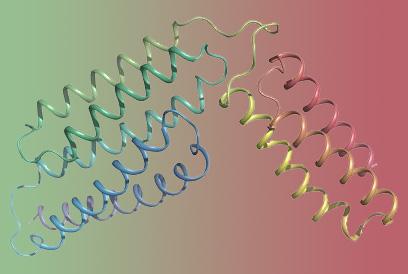
IMAGE

Credit: JIN Tengchuan

Streptococcus (S.) agalactiae (contains the CAMP factor) is a round bacterium that could cause severe invasive infections. Biologists team led by Prof. JIN Tengchuan from University of Science and Technology of China of Chinese Academy of Sciences and Dr. Eric Brefo-Mensah from University of Waterloo revealed the structure of S. agalactiae CAMP factor and the mechanism behind for the first time. Research article was published in the Journal of Biological Chemistry on June 8th.

By utilizing X-ray diffraction technique, researchers reported the structural fold of S. agalactiae CAMP factor is composed of 5+3 helix bundles, where the N-terminal 5 helix bundle is believed to be responsible for membrane permeabilization and the C-terminal 3 helix bundle is likely responsible for host receptor binding. Besides, the C-terminal domain is revealed to inhibit the activity of both full-length toxin and its N-terminal domain.

The researchers also observed that the linker region has a conserved DLxxxDxAT sequence motif, which is required for CAMP factor's co-hemolytic activity. The results helped clarify the molecular mechanism of S. agalactiae's co-hemolytic activity.

What the researchers illustrated may assist to the screening of anti-CAMP virulent factor drugs and inspire more to reveal the nature of the interaction between proteins and biofilms.

###

This research was supported by several funds and programs of the Chinese Academy of Sciences and the Canadian Natural Sciences and Engineering Research Council.

Media Contact

FAN Qiong
[email protected]
86-636-07280

http://en.ustc.edu.cn

Related Journal Article

http://dx.doi.org/10.1074/jbc.RA118.002336

Share12Tweet7Share2ShareShareShare1

Related Posts

Regular Guava Juice Intake May Reduce Anemia Risk in Women: New Findings

May 27, 2026

Brazilian Medical Students Boost Public Confidence in Vaccination

May 27, 2026

Advanced Access Scheduling Cuts Primary Care Wait Times, Boosts Patient-Physician Continuity

May 27, 2026

Adults with Intellectual and Developmental Disabilities or Cerebral Palsy Face Increased Fall-Injury Risk Earlier in Life

May 26, 2026
Please login to join discussion

POPULAR NEWS

  • ESMO 2025: mRNA COVID Vaccines Enhance Efficacy of Cancer Immunotherapy

    317 shares
    Share 127 Tweet 79
  • New Study Reveals Plants Can Detect the Sound of Rain

    735 shares
    Share 293 Tweet 183
  • Common Food Preservatives Associated with Elevated Blood Pressure and Increased Heart Disease Risk

    56 shares
    Share 22 Tweet 14
  • AI-Powered Atlas Uncovers Extensive Whole-Body Damage Linked to Obesity

    53 shares
    Share 21 Tweet 13

About

We bring you the latest biotechnology news from best research centers and universities around the world. Check our website.

Follow us

Recent News

Regular Guava Juice Intake May Reduce Anemia Risk in Women: New Findings

Brazilian Medical Students Boost Public Confidence in Vaccination

Synthetic Microbial Communities Boost Hydroponic Tomato Growth

Subscribe to Blog via Email

Enter your email address to subscribe to this blog and receive notifications of new posts by email.

Join 82 other subscribers
  • Contact Us

Bioengineer.org © Copyright 2023 All Rights Reserved.

Welcome Back!

Login to your account below

Forgotten Password?

Retrieve your password

Please enter your username or email address to reset your password.

Log In
No Result
View All Result
  • Homepages
    • Home Page 1
    • Home Page 2
  • News
  • National
  • Business
  • Health
  • Lifestyle
  • Science

Bioengineer.org © Copyright 2023 All Rights Reserved.