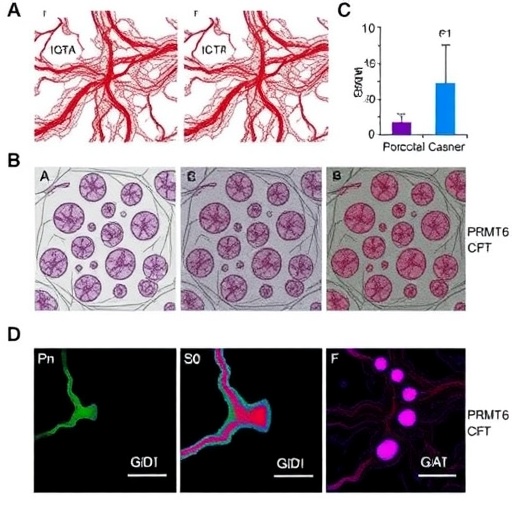
In a groundbreaking new study published in Cell Death Discovery, researchers have uncovered a pivotal role for PRMT6, a protein arginine methyltransferase, in promoting angiogenesis within colorectal cancer. This discovery sheds light on the molecular underpinnings that drive tumor vascularization, a process essential for tumor growth and metastasis, potentially opening up novel therapeutic avenues against one of the deadliest forms of cancer worldwide.
Angiogenesis, the formation of new blood vessels from existing vasculature, is a critical mechanism tumors exploit to secure nutrient and oxygen supply, enabling unchecked proliferation. While multiple factors influencing angiogenesis have been extensively studied, the identification of PRMT6 as a pro-angiogenic agent in colorectal cancer presents an unexpected twist in the complex regulation of this process.
PRMT6 is known for catalyzing methylation on arginine residues of histones and other proteins, modulating gene expression and cellular signaling pathways. Prior to this study, PRMT6’s involvement in cancer biology was mostly associated with its epigenetic regulatory functions. However, Han and colleagues demonstrate that PRMT6 plays a more direct role in angiogenesis, by enhancing the expression of key angiogenic factors such as vascular endothelial growth factor (VEGF) and fibroblast growth factor (FGF).
Using in vitro and in vivo models, the researchers showed that elevated PRMT6 levels correlated with increased endothelial cell proliferation and tube formation, a hallmark of angiogenesis. Further mechanistic investigations revealed that PRMT6 augments angiogenic signaling by methylating transcriptional regulators, thereby amplifying the transcriptional activation of pro-angiogenic genes. These findings underscore a multifaceted role for PRMT6 in tumor biology, extending beyond its traditional epigenetic functions.
Colorectal cancer, ranked among the top causes of cancer mortality globally, often exhibits robust vascular networks that contribute to its aggressive behavior and resistance to standard treatments. Targeting angiogenesis has been a mainstay strategy; yet, therapeutic resistance remains a significant hurdle. The discovery of PRMT6’s pro-angiogenic activity suggests that this enzyme could serve as a novel molecular target, potentially improving the efficacy of anti-angiogenic therapies.
Moreover, the study details how inhibition of PRMT6 diminishes angiogenesis and tumor growth in colorectal cancer models, highlighting the therapeutic promise of PRMT6 inhibitors. These results pave the way for drug development aimed at modulating protein methylation to stymie tumor vascularization and progression.
As cancer research shifts toward precision medicine, the integration of epigenetic modifiers like PRMT6 into the landscape of pro-angiogenic factors offers fresh perspectives. This research not only deepens our understanding of colorectal cancer pathogenesis but also encourages exploration of combined therapeutic regimens that inhibit both classical angiogenic pathways and epigenetic regulators.
In summary, Han et al.’s study positions PRMT6 as a critical driver of angiogenesis in colorectal cancer, marking it as a potential biomarker and target for future anti-cancer strategies. This advance highlights the intricate crosstalk between epigenetics and tumor microenvironment dynamics, heralding a new frontier in cancer treatment.
Subject of Research: PRMT6’s role in colorectal cancer angiogenesis
Article Title: PRMT6 acts as a pro-angiogenic factor in colorectal cancer
Article References: Han, H., Zhang, X., Jin, M. et al. PRMT6 acts as a pro-angiogenic factor in colorectal cancer. Cell Death Discov. (2026). https://doi.org/10.1038/s41420-026-03256-y
Image Credits: AI Generated
DOI: https://doi.org/10.1038/s41420-026-03256-y
Tags: angiogenesis in cancer progressionhistone methylation and gene expressionin vitro and in vivo cancer modelsmolecular pathways of tumor angiogenesismolecular targets for colorectal cancer therapynovel insights into tumor microenvironmentPRMT6 in colorectal cancer angiogenesisPRMT6-mediated VEGF and FGF expressionrole of epigenetic regulation in cancertherapeutic potential of targeting PRMT6tumor growth and metastasis in colorectal cancertumor vascularization mechanisms