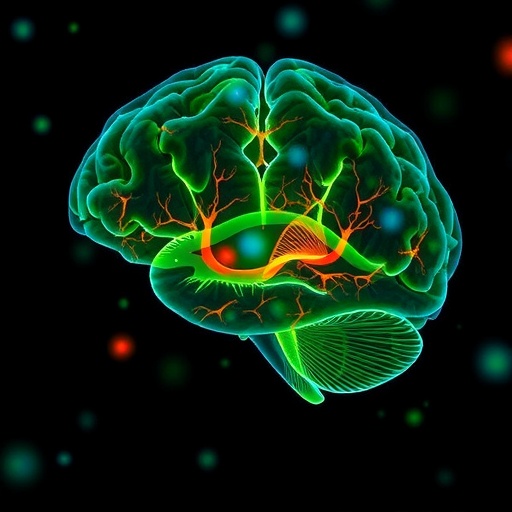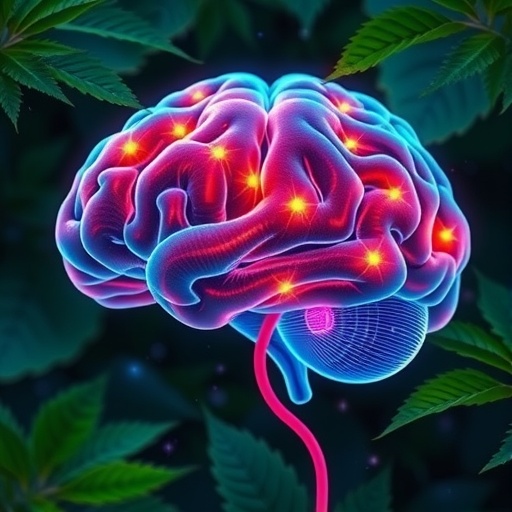
A single emotionally significant experience can sometimes reshape behavior almost instantly. A new study published in Nature Neuroscience reports that this remarkable form of “one-shot learning” is powered by endocannabinoids released in the striatum, a deep-brain region that helps animals evaluate rewards, select actions and update future behavior. The findings suggest that the brain’s own cannabis-like signaling system can rapidly convert one memorable event into a lasting change in decision-making.
Most learning is thought to require repetition. Repeatedly receiving a reward after an action gradually strengthens the neural circuits that predict desirable outcomes, while negative consequences weaken competing choices. One-shot learning is different: a single encounter can be enough to establish a durable association. This capacity is essential for survival, allowing animals to remember a dangerous location, recognize an unexpectedly valuable resource or quickly adapt when circumstances change. Until now, however, the biological mechanisms that make such rapid learning possible have remained incompletely understood.
The research by Cécile Piette, Aurélie Hubert, Sarah Perez and colleagues focuses on the striatum, a major component of the brain’s basal ganglia. The striatum integrates information about sensory events, actions and outcomes, helping determine whether a behavior should be repeated. It receives extensive signals from the cerebral cortex and midbrain, including dopamine pathways associated with reward prediction and motivation. The new work indicates that these circuits do not operate alone: endocannabinoid molecules act as fast, local regulators that can alter the strength of communication between neurons at precisely the moment an important outcome occurs.
Endocannabinoids are lipid-based messenger molecules produced by neurons when particular patterns of activity take place. Unlike conventional neurotransmitters, which are generally released from the transmitting, or presynaptic, neuron, endocannabinoids often travel backward across the synapse. They bind to cannabinoid receptors—especially CB1 receptors—on incoming nerve terminals and reduce the release of neurotransmitters. This retrograde signaling can temporarily or persistently modify synaptic transmission, giving active neural circuits a mechanism for marking which connections were engaged during a significant experience.
According to the study, this signaling system is crucial when learning takes place after a single outcome rather than after many repeated trials. The striatal endocannabinoid response appears to identify and reinforce the neural pathways involved in a newly valuable action. In effect, the system may function as a biochemical “priority tag,” telling the brain that the current combination of context, behavior and consequence deserves rapid storage. Such a mechanism would allow the striatum to update action values without waiting for the slow accumulation of evidence normally associated with incremental learning.
The findings are particularly important because the striatum contains several interacting populations of neurons, including medium spiny neurons that form the principal output of the region. These cells are influenced by cortical inputs, dopamine, local inhibitory networks and neuromodulators such as endocannabinoids. By changing synaptic release at selected connections, endocannabinoid signaling could help separate an action that unexpectedly produced a meaningful result from actions that did not. The result would be a more selective form of plasticity: not every active synapse is strengthened, but the connections linked to a consequential event receive a rapid adjustment.
This mechanism may also explain why emotionally powerful or surprising experiences are remembered so efficiently. Learning systems are designed to pay attention to prediction errors—the difference between what the brain expects and what actually happens. A larger-than-expected reward, or an abrupt change in the consequences of an action, generates a strong teaching signal. Endocannabinoids in the striatum may translate that signal into changes in local synaptic function, working alongside dopamine to determine which behaviors should become more likely in the future.
The research could have implications beyond basic neuroscience. Abnormally rapid learning and unusually persistent associations are features of several psychiatric and neurological conditions, including addiction, compulsive behavior and some forms of anxiety. Drugs that activate or block cannabinoid receptors can alter motivation, memory and reward processing, but their effects are broad because cannabinoid receptors are distributed throughout the brain. A more precise understanding of how striatal endocannabinoids support one-shot learning could eventually help researchers design treatments that target maladaptive learning while preserving the brain’s ability to respond quickly to genuinely important experiences.
The study also highlights a wider principle in neuroscience: memory is not created by a single universal mechanism. Different experiences may recruit different forms of plasticity depending on their urgency, emotional value and behavioral consequences. Repetition-based learning and one-shot learning may therefore rely on overlapping circuits but distinct molecular rules. By identifying endocannabinoid signaling as a driver of rapid striatal learning, Piette, Hubert, Perez and their colleagues provide a clearer picture of how the brain can turn one consequential moment into a lasting behavioral strategy—a process that may be among the most efficient computations performed by the nervous system.
Subject of Research: Striatal endocannabinoid signaling and the neural mechanisms underlying one-shot learning.
Article Title: Striatal endocannabinoids drive one-shot learning.
Article References: Piette, C., Hubert, A., Perez, S. et al. Striatal endocannabinoids drive one-shot learning. Nature Neuroscience (2026). https://doi.org/10.1038/s41593-026-02392-z
Image Credits: AI Generated
DOI: https://doi.org/10.1038/s41593-026-02392-z
Keywords: one-shot learning, endocannabinoids, striatum, synaptic plasticity, CB1 receptors, reward learning, neuroscience, memory, behavioral adaptation
Tags: basal ganglia neural circuitscannabis-like signaling in the braindecision-making and neural plasticityemotion-driven memory formationEndocannabinoid signalingmemory consolidation in deep-brain regionsneural mechanisms of survival instinctsneurobiological basis of rapid learningone-shot learning mechanismsrapid behavioral adaptationreward evaluation and action selectionstriatum and reward processing