• HOME
  • NEWS
  • EXPLORE
    • CAREER
      • Companies
      • Jobs
    • EVENTS
    • iGEM
      • News
      • Team
    • PHOTOS
    • VIDEO
    • WIKI
  • BLOG
  • COMMUNITY
    • FACEBOOK
    • INSTAGRAM
    • TWITTER
Thursday, October 29, 2026
BIOENGINEER.ORG
No Result
View All Result
  • Login
  • HOME
  • NEWS
  • EXPLORE
    • CAREER
      • Companies
      • Jobs
        • Lecturer
        • PhD Studentship
        • Postdoc
        • Research Assistant
    • EVENTS
    • iGEM
      • News
      • Team
    • PHOTOS
    • VIDEO
    • WIKI
  • BLOG
  • COMMUNITY
    • FACEBOOK
    • INSTAGRAM
    • TWITTER
No Result
View All Result
Bioengineer.org
No Result
View All Result
Home NEWS Science News Health

Stepwise technique for parasellar carotid artery exposure in endoscopic endonasal surgery

by
October 28, 2026
in Health
Reading Time: 2 mins read
0
Stepwise technique for parasellar carotid artery exposure in endoscopic endonasal surgery

Stepwise technique for parasellar carotid artery exposure in endoscopic endonasal surgery

Share on FacebookShare on TwitterShare on LinkedinShare on RedditShare on Telegram

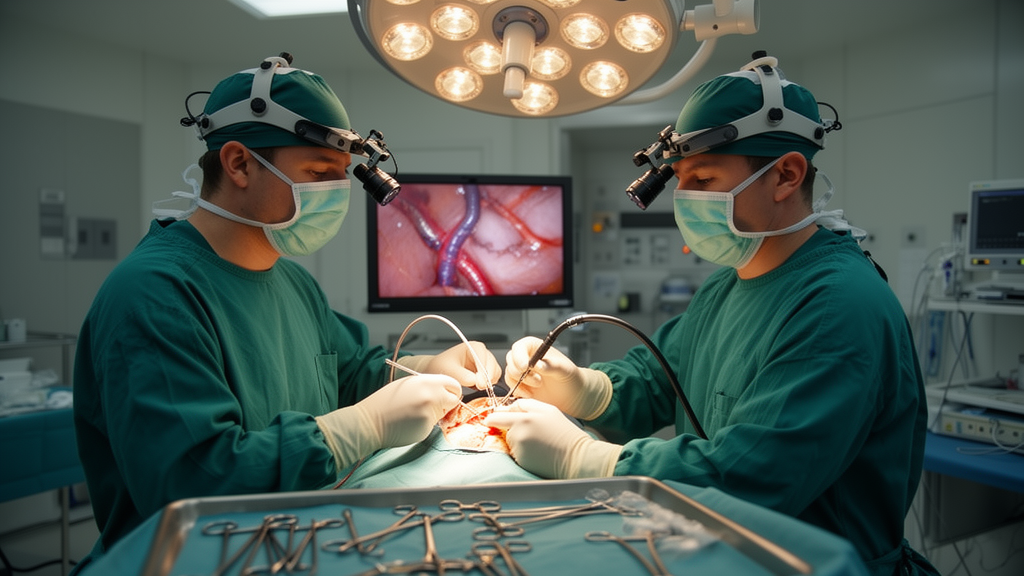
Exposure of the parasellar internal carotid artery (ICA) is one of the most critical and high-risk steps in endoscopic endonasal skull base surgery, yet detailed technical descriptions of controlled ICA skeletonization remain limited. A team led by Gökberk Erol and Joao Paulo Almeida has now published a stepwise demonstration of how the parasellar ICA can be exposed safely, presented through an illustrative surgical video and cadaveric dissections in Acta Neurochirurgica.

The core of the technique is a controlled “brush” method using a diamond burr. The surgeons describe drilling with tangential movements rather than direct pressure, progressively thinning the overlying bone in an egg-shell fashion until it can be safely separated from the arterial wall.

According to the authors, the framework is intended to improve drilling precision, enhance surgeon control, and reduce the risk of vascular injury during parasellar ICA exposure. The technique is presented as a reproducible technical demonstration rather than a study of outcomes; the published work describes the method and its rationale, and does not report comparative safety data or clinical results.

The article is published open access, and the version released on 28 October 2026 is an early, citable version that remains subject to further edits before the final Version of Record appears.

Subject of Research: A technical description of parasellar internal carotid artery exposure in endoscopic endonasal skull base surgery

Article Title: How I do it: parasellar internal carotid artery exposure in endoscopic endonasal surgery

Article References: Erol, G., Kabakcı, A. İ., Sreeenath, S. B., & Almeida, J. P. (2026). How I do it: parasellar internal carotid artery exposure in endoscopic endonasal surgery. Acta Neurochirurgica. https://doi.org/10.1007/s00701-026-07068-y

Image Credits: AI Generated

DOI: 10.1007/s00701-026-07068-y

Keywords: endoscopic endonasal surgery, skull base surgery, internal carotid artery, parasellar ICA, diamond burr, drilling technique, cadaveric dissection, surgical technique, vascular injury prevention, neurosurgery, parasellar, internal

News Source: Ophelia Keating. (October 28, 2026). Stepwise technique for parasellar carotid artery exposure in endoscopic endonasal surgery. Scienmag.


Tags: cadaveric dissectiondiamond burrdrilling techniqueEndoscopic Endonasal Surgeryinternalinternal carotid arteryneurosurgeryparasellarparasellar ICAskull base surgerysurgical techniquevascular injury prevention
Share12Tweet7Share2ShareShareShare1

Related Posts

Rare eye cancer case: orbital exenteration keeps patient recurrence-free at 34 months

Rare eye cancer case: orbital exenteration keeps patient recurrence-free at 34 months

October 29, 2026
Deep Learning Reshapes Underwater Image and Video Enhancement, Review Finds

Deep Learning Reshapes Underwater Image and Video Enhancement, Review Finds

October 29, 2026

Umrah’s Year-Round Flow Demands a Standing Infectious-Disease Defense

October 29, 2026

Hidden RNA Molecules Emerge as Master Regulators of Type 2 Diabetes

October 29, 2026

POPULAR NEWS

  • Springer Nature Launches Open-Access Journal Discover Pediatrics

    Springer Nature Launches Open-Access Journal Discover Pediatrics

    29 shares
    Share 12 Tweet 7
  • Combined Cataract and Glaucoma Surgery Shows Strong One-Year Pressure Control

    29 shares
    Share 12 Tweet 7
  • PBS-PBAT Blend Films Tune Strength, Moisture Barrier and UV Shielding for Biodegradable Packaging

    29 shares
    Share 12 Tweet 7
  • Fruit Fly Eggshell Gene Reveals Purifying Selection with Episodes of Positive Evolution

    29 shares
    Share 12 Tweet 7

About

We bring you the latest biotechnology news from best research centers and universities around the world. Check our website.

Follow us

Recent News

Rare eye cancer case: orbital exenteration keeps patient recurrence-free at 34 months

Deep Learning Reshapes Underwater Image and Video Enhancement, Review Finds

Umrah’s Year-Round Flow Demands a Standing Infectious-Disease Defense

Subscribe to Blog via Email

Enter your email address to subscribe to this blog and receive notifications of new posts by email.

Join 85 other subscribers
  • Contact Us

Bioengineer.org © Copyright 2023 All Rights Reserved.

Welcome Back!

Login to your account below

Forgotten Password?

Retrieve your password

Please enter your username or email address to reset your password.

Log In
No Result
View All Result
  • Homepages
    • Home Page 1
    • Home Page 2
  • News
  • National
  • Business
  • Health
  • Lifestyle
  • Science

Bioengineer.org © Copyright 2023 All Rights Reserved.