• HOME
  • NEWS
  • EXPLORE
    • CAREER
      • Companies
      • Jobs
    • EVENTS
    • iGEM
      • News
      • Team
    • PHOTOS
    • VIDEO
    • WIKI
  • BLOG
  • COMMUNITY
    • FACEBOOK
    • INSTAGRAM
    • TWITTER
Friday, November 13, 2026
BIOENGINEER.ORG
No Result
View All Result
  • Login
  • HOME
  • NEWS
  • EXPLORE
    • CAREER
      • Companies
      • Jobs
        • Lecturer
        • PhD Studentship
        • Postdoc
        • Research Assistant
    • EVENTS
    • iGEM
      • News
      • Team
    • PHOTOS
    • VIDEO
    • WIKI
  • BLOG
  • COMMUNITY
    • FACEBOOK
    • INSTAGRAM
    • TWITTER
No Result
View All Result
Bioengineer.org
No Result
View All Result
Home NEWS Science News Chemistry

Standardized workflow extracts sterile textile particles for cell studies

by
November 12, 2026
in Chemistry
Reading Time: 2 mins read
0
Standardized workflow extracts sterile textile particles for cell studies

Standardized workflow extracts sterile textile particles for cell studies

Share on FacebookShare on TwitterShare on LinkedinShare on RedditShare on Telegram

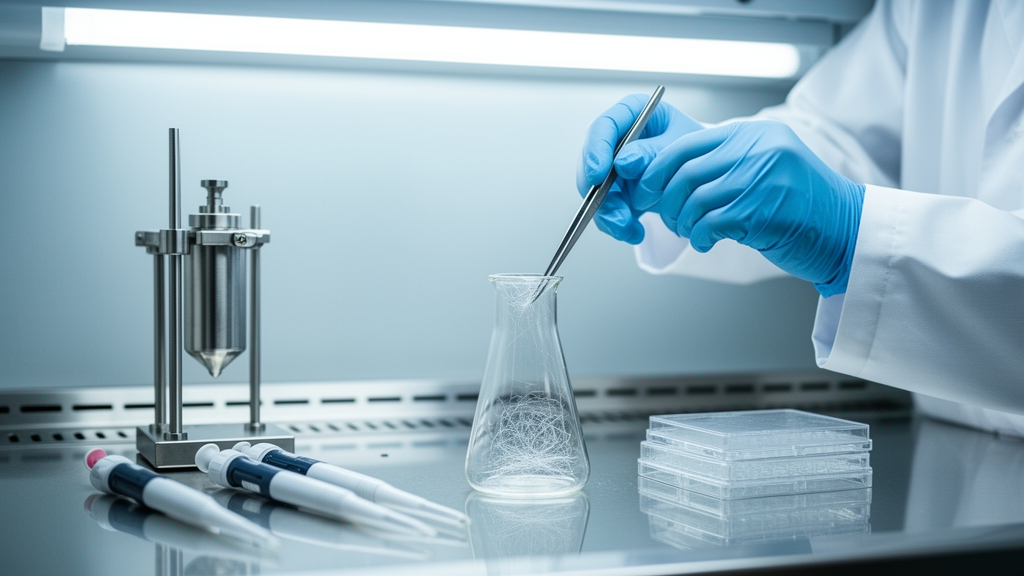
Researchers have developed a standardized, water-based extraction workflow designed to generate representative and cell-culture compatible materials released from textiles for in vitro studies. The study, published in the journal Microplastics and Nanoplastics, addresses a significant gap in current toxicological research, where existing in vitro studies often lack environmental relevance because they rely on simplified, size-standardized, or pristine test materials that fail to mimic the complexity of real-world textile emissions.

The team, led by Stephanie Eitner and Peter Wick, established a protocol using a Gyrowash extraction method to obtain sterile and environmentally relevant particle suspensions directly derived from textiles. This approach is critical because textile-derived fibers and particles are increasingly recognized as an important source of human and environmental exposure. While synthetic textile particles have been intensively studied as a major source of micro- and nanoplastic pollution, the researchers noted that textile emissions in real-world environments are far more diverse, including synthetic, natural, and biobased materials. These materials release highly complex particulate mixtures that vary widely in size, shape, and chemical composition, exhibiting diverse fibrous and non-fibrous morphologies.

The new workflow was specifically optimized to preserve fiber integrity while providing sterile, cell-culture-compatible samples that can be accurately quantified.

To validate the workflow, the team optimized the protocol to enable a reproducible assessment of material-driven effects in the Calu-3 lung epithelial cell model. The study demonstrated that the workflow supports more realistic and comparable investigations of these health effects by providing a robust and standardized platform for obtaining representative textile-derived particle samples.

The protocol also includes optional steps for advanced physiochemical characterization, which facilitate comprehensive material analysis and help identify potential contamination sources.

Subject of Research: Standardized extraction of textile-derived particles for in vitro toxicology

Article Title: A novel workflow for generating representative and cell-culture compatible materials released from textiles for in vitro studies

Article References: Eitner, S., Zimmermann, E. J., Kissling, V. M., Buerki-Thurnherr, T., Nowack, B., & Wick, P. (2026). A novel workflow for generating representative and cell-culture compatible materials released from textiles for in vitro studies. Microplastics and Nanoplastics. https://doi.org/10.1186/s43591-026-00244-y

Image Credits: AI Generated

DOI: 10.1186/s43591-026-00244-y

Keywords: textile emissions, microplastics, nanoplastics, in vitro studies, Gyrowash extraction, Calu-3 cells, cell culture compatibility, particle morphology, toxicology, standardized workflow, physiochemical characterization, lung epithelial cells, environmental exposure, synthetic fibers, natural fibers, biobased materials, research methodology, particle quantification, contamination control, health effects

News Source: Bethany Barker. (November 12, 2026). Standardized workflow extracts sterile textile particles for cell studies. Scienmag.

Tags: biobased materialsCalu-3 cellscell culture compatibilitycontamination controlenvironmental exposureGyrowash extractionhealth effectsin vitro studieslung epithelial cellsmicroplasticsnanoplasticsnatural fibersParticle morphologyparticle quantificationphysiochemical characterizationresearch methodologystandardized workflowsynthetic fiberstextile emissionsToxicology
Share12Tweet7Share2ShareShareShare1

Related Posts

Computational Study Identifies DNA Aptamer Stabilizing Targeted Protein Degradation in Cholera Biofilms

Computational Study Identifies DNA Aptamer Stabilizing Targeted Protein Degradation in Cholera Biofilms

November 13, 2026
Review Outlines Valid Fracture Toughness Measurement and Multiscale Design for Polymeric Materials

Review Outlines Valid Fracture Toughness Measurement and Multiscale Design for Polymeric Materials

November 13, 2026

Plastic Waste Carbon Nanomaterial Removes Tetracycline From Water in Modeling Study

November 13, 2026

Coaxial Extruder Simultaneously 3D Prints Liquid Metals and Stretchable Polymer Shells

November 13, 2026

POPULAR NEWS

  • Review Links Swine Inflammation and Necrosis Syndrome to Vascular Dysfunction

    Review Links Swine Inflammation and Necrosis Syndrome to Vascular Dysfunction

    29 shares
    Share 12 Tweet 7
  • Disrupted Overnight Emotional Distress Recalibration Found in Borderline Personality Disorder

    29 shares
    Share 12 Tweet 7
  • Positive Caregiving Experiences Buffer Strain Among Informal Carers, Dutch Study Finds

    29 shares
    Share 12 Tweet 7
  • Recycled PET Fibers Enhance Carbonated Concrete Durability

    29 shares
    Share 12 Tweet 7

About

We bring you the latest biotechnology news from best research centers and universities around the world. Check our website.

Follow us

Recent News

Review Analyzes Immune Cell Mechanisms and Emerging Therapies in Kidney Allograft Fibrosis

Intronic BCO2 Gene Insertion Is Associated With Yellow Skin in Chickens

Filamin A Loss Slows Tumor Cell Growth and Migration

Subscribe to Blog via Email

Enter your email address to subscribe to this blog and receive notifications of new posts by email.

Join 87 other subscribers
  • Contact Us

Bioengineer.org © Copyright 2023 All Rights Reserved.

Welcome Back!

Login to your account below

Forgotten Password?

Retrieve your password

Please enter your username or email address to reset your password.

Log In
No Result
View All Result
  • Homepages
    • Home Page 1
    • Home Page 2
  • News
  • National
  • Business
  • Health
  • Lifestyle
  • Science

Bioengineer.org © Copyright 2023 All Rights Reserved.