• HOME
  • NEWS
  • EXPLORE
    • CAREER
      • Companies
      • Jobs
    • EVENTS
    • iGEM
      • News
      • Team
    • PHOTOS
    • VIDEO
    • WIKI
  • BLOG
  • COMMUNITY
    • FACEBOOK
    • INSTAGRAM
    • TWITTER
Sunday, May 10, 2026
BIOENGINEER.ORG
No Result
View All Result
  • Login
  • HOME
  • NEWS
  • EXPLORE
    • CAREER
      • Companies
      • Jobs
        • Lecturer
        • PhD Studentship
        • Postdoc
        • Research Assistant
    • EVENTS
    • iGEM
      • News
      • Team
    • PHOTOS
    • VIDEO
    • WIKI
  • BLOG
  • COMMUNITY
    • FACEBOOK
    • INSTAGRAM
    • TWITTER
  • HOME
  • NEWS
  • EXPLORE
    • CAREER
      • Companies
      • Jobs
        • Lecturer
        • PhD Studentship
        • Postdoc
        • Research Assistant
    • EVENTS
    • iGEM
      • News
      • Team
    • PHOTOS
    • VIDEO
    • WIKI
  • BLOG
  • COMMUNITY
    • FACEBOOK
    • INSTAGRAM
    • TWITTER
No Result
View All Result
Bioengineer.org
No Result
View All Result
Home NEWS Science News Biology

Speed up public health decisions on scabies by skipping full-body exams, study says

Bioengineer by Bioengineer
December 27, 2018
in Biology
Reading Time: 3 mins read
0
IMAGE
Share on FacebookShare on TwitterShare on LinkedinShare on RedditShare on Telegram

IMAGE

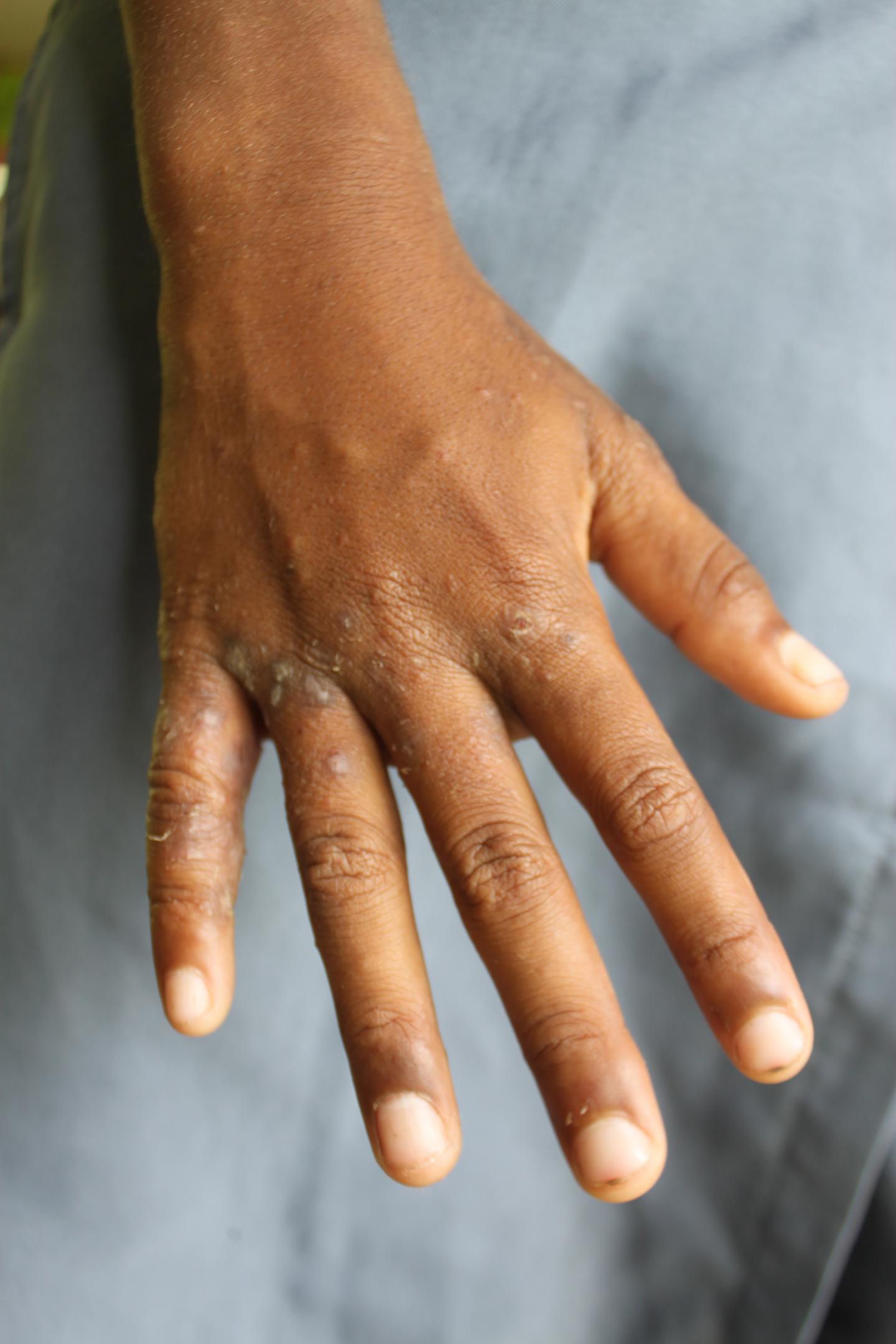
Credit: Lucia Romani, 2018, CC BY 4.0


For years, the diagnosis of scabies has relied on time-consuming and intrusive full-body examinations. Now, researchers reporting in PLOS Neglected Tropical Diseases have found that an exam of just a patient’s hands, feet and lower legs may have the potential to catch more than 90 percent of all scabies cases, regardless of severity. These speedier exams may be useful in public health assessments on the prevalence of scabies.

Scabies, a skin condition caused by the microscopic mite Sarcoptes scabiei, is a major public health problem in low- and middle-income tropical settings. There is no laboratory test for infestation and diagnosis is almost always made with clinical examination. Scabies control relies traditionally on diagnosing individual patients, however there is increasing use of mass drug administration programs. For mass drug administration to be a viables approach surveys of communities to gauge scabies prevalence will be needed.

In the new work, Michael Marks of the London School of Hygiene & Tropical Medicine and colleagues analyzed data from three recent large population-based surveys of scabies in the Solomon Islands and Fiji. In all three surveys, examinations of covered the arms, legs, face and torso. If patients reported itching in the groin, buttocks or breasts, these areas were also examined. Exams in children under 1 year covered the whole body. Reports of scabies in examined patients included which of nine body regions lesions were found in.

Based on the information where lesions were found, the team concluded that exams of exposed body regions–the hands, feet and lower legs– had close to 90 percent sensitivity for detecting scabies compared to a whole-body exam. Further restricting exams limited sensitivity, however, with a sensitivity of only 51.2 percent for exams of the hands alone.

“Our study adds valuable data to the development of a simplified diagnostic process for scabies that may be applied to guide decisions about future public health interventions,” the authors say.

###

In your coverage please use this URL to provide access to the freely available paper: http://journals.plos.org/plosntds/article?id=10.1371/journal.pntd.0006996

Citation: Marks M, Engelman D, Romani L, Mason D, Sokana O, et al. (2018) Exploration of a simplified clinical examination for scabies to support public health decision-making. PLOS Neglected Tropical Diseases 12(12): e0006996. https://doi.org/10.1371/journal.pntd.0006996

Funding: Michael Marks was supported by a Wellcome Trust Clinical Research Fellowship. The funders had no role in study design, data collection and analysis, decision to publish, or preparation of the manuscript.

Competing Interests: The authors declare that no competing interests exist.

Media Contact
Michael Marks
[email protected]

Original Source

http://journals.plos.org/plosntds/article?id=10.1371/journal.pntd.0006996

Related Journal Article

http://dx.doi.org/10.1371/journal.pntd.0006996

Tags: BiologyDiagnosticsDisease in the Developing WorldInfectious/Emerging DiseasesMedicine/HealthParasitologyPolicy/EthicsPublic Health
Share14Tweet9Share2ShareShareShare2

Related Posts

Ancient Plant Populations Reveal Fresh Insights into Climate Resilience — Biology

Ancient Plant Populations Reveal Fresh Insights into Climate Resilience

May 8, 2026
Rare Brain Disorders in Children Linked to Mutations in Lesser-Known Protein Complex — Biology

Rare Brain Disorders in Children Linked to Mutations in Lesser-Known Protein Complex

May 8, 2026

From Odd Insect to Underwater Predator: The Remarkable Evolution of a Bloodthirsty Fruit Fly

May 8, 2026

SNU Professor Sangwoo Seo’s Team Develops Next-Generation CRISPR Biocontainment Technology to Control Microbial Survival Without DNA Cleavage

May 8, 2026
Please login to join discussion

POPULAR NEWS

  • Research Indicates Potential Connection Between Prenatal Medication Exposure and Elevated Autism Risk

    840 shares
    Share 336 Tweet 210
  • New Study Reveals Plants Can Detect the Sound of Rain

    727 shares
    Share 290 Tweet 181
  • Scientists Investigate Possible Connection Between COVID-19 and Increased Lung Cancer Risk

    68 shares
    Share 27 Tweet 17
  • Salmonella Haem Blocks Macrophages, Boosts Infection

    61 shares
    Share 24 Tweet 15

About

We bring you the latest biotechnology news from best research centers and universities around the world. Check our website.

Follow us

Recent News

Urdu Fall Risk Questionnaire Adapted for Elderly

Key Pharmacological Markers for HIV Prevention in MSM

Taking 8,500 Steps Daily May Aid Long-Term Weight Management, Study Finds

Subscribe to Blog via Email

Success! An email was just sent to confirm your subscription. Please find the email now and click 'Confirm' to start subscribing.

Join 82 other subscribers
  • Contact Us

Bioengineer.org © Copyright 2023 All Rights Reserved.

Welcome Back!

Login to your account below

Forgotten Password?

Retrieve your password

Please enter your username or email address to reset your password.

Log In
No Result
View All Result
  • Homepages
    • Home Page 1
    • Home Page 2
  • News
  • National
  • Business
  • Health
  • Lifestyle
  • Science

Bioengineer.org © Copyright 2023 All Rights Reserved.