• HOME
  • NEWS
  • EXPLORE
    • CAREER
      • Companies
      • Jobs
    • EVENTS
    • iGEM
      • News
      • Team
    • PHOTOS
    • VIDEO
    • WIKI
  • BLOG
  • COMMUNITY
    • FACEBOOK
    • INSTAGRAM
    • TWITTER
Monday, May 25, 2026
BIOENGINEER.ORG
No Result
View All Result
  • Login
  • HOME
  • NEWS
  • EXPLORE
    • CAREER
      • Companies
      • Jobs
        • Lecturer
        • PhD Studentship
        • Postdoc
        • Research Assistant
    • EVENTS
    • iGEM
      • News
      • Team
    • PHOTOS
    • VIDEO
    • WIKI
  • BLOG
  • COMMUNITY
    • FACEBOOK
    • INSTAGRAM
    • TWITTER
  • HOME
  • NEWS
  • EXPLORE
    • CAREER
      • Companies
      • Jobs
        • Lecturer
        • PhD Studentship
        • Postdoc
        • Research Assistant
    • EVENTS
    • iGEM
      • News
      • Team
    • PHOTOS
    • VIDEO
    • WIKI
  • BLOG
  • COMMUNITY
    • FACEBOOK
    • INSTAGRAM
    • TWITTER
No Result
View All Result
Bioengineer.org
No Result
View All Result
Home NEWS Science News Biology

Special Nature Conservation issue: Monitoring protected insects in the European Union

Bioengineer by Bioengineer
August 28, 2017
in Biology
Reading Time: 2 mins read
0
Share on FacebookShare on TwitterShare on LinkedinShare on RedditShare on Telegram
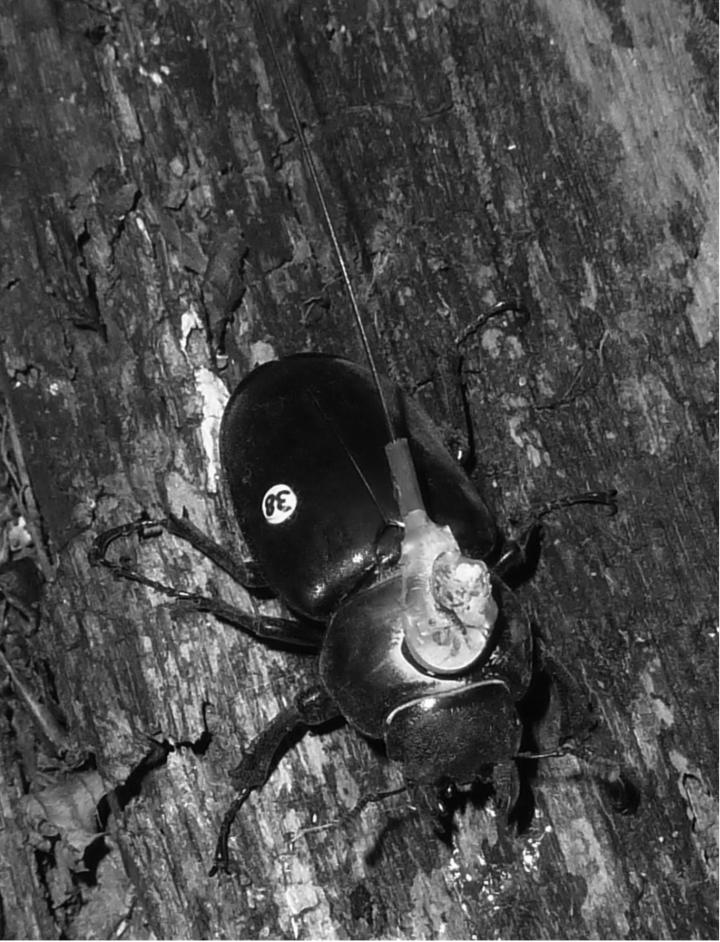
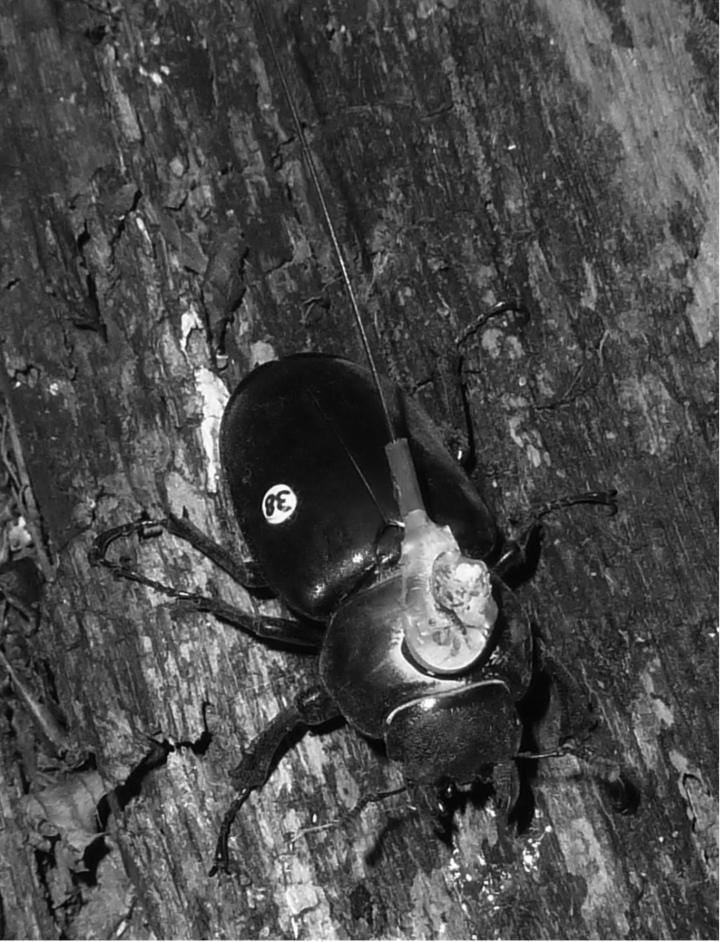
IMAGE

Credit: Massimiliano Tini

With biodiversity loss well underway, conservation measures are urgent on a global scale and the European Union is no exception. However, for efficient strategies and actions to be put in place, plenty of information, acquired primarily through monitoring, is needed to identify priorities for the conservation of threatened species, also for the elusive saproxylic insects, an ecological group of species that depends on dead wood.

Monitoring and conservation of elusive invertebrates is a particularly complex task, as shown in the papers comprising the special issue "Monitoring of saproxylic beetles and other insects protected in the European Union," supported by the EU's LIFE Programme> and published in the open access journal Nature Conservation. This special issue was produced in the framework of the Life Project "Monitoring of insects with public participation" (LIFE11 NAT/IT/000252 MIPP) and is a direct result of a European Workshop held in Mantova in May, 2017.

Colonel Franco Mason, project manager of the MIPP project, notes that the European Workshop was aimed primarily at monitoring of saproxylic beetles. The project MIPP resulted in two special issues: "Monitoring of saproxylic beetles and other insects protected in the European Union" and "Guidelines for the Monitoring of saproxylic beetles and other insects protected in the European Union". The first one is now available in the open access journal Nature Conservation.

"No knowledge exists of the success rate of monitoring elusive invertebrates," writes Dr. Arno Thomaes, Research Institute for Nature and Forest, Belgium, and his team in their paper assessing the feasibility of monitoring the European stag beetle. Having conducted their analysis, though, the scientists conclude that, "monitoring of stag beetles is feasible and the effort is not greater than that which has been found for other invertebrates."

Alessandro Campanaro, a researcher at the "Bosco Fontana" National Center of Carabinieri, highlights the fundamental role of Citizen Science as an essential tool for acquiring data on species, while simultaneously increasing the public awareness about Natura 2000 and the role of saproxylic species in forests.

###

Additional information:

About the Life project MIPP

The main objective of the project MIPP is to develop and test methods for the monitoring of five beetle species listed in the Annexes II and IV of the Habitats Directive (Osmoderma eremita, Lucanus cervus, Cerambyx cerdo, Rosalia alpina, Morimus funereus).

Media Contact

Alessandro Campanaro
[email protected]
@Pensoft

http://www.pensoft.net

Share12Tweet8Share2ShareShareShare2

Related Posts

Tiny Blue Octopus from the Galápagos Islands: Small Enough to Fit in the Palm of Your Hand — Biology

Tiny Blue Octopus from the Galápagos Islands: Small Enough to Fit in the Palm of Your Hand

May 25, 2026
Rising Sightings of Blue and Fin Whales in the South East Atlantic — Biology

Rising Sightings of Blue and Fin Whales in the South East Atlantic

May 23, 2026

New Maps Reveal How European Landscapes Can Simultaneously Promote Climate Action and Biodiversity Conservation

May 22, 2026

University of Cincinnati Structural Biologists Achieve World First in Visualizing Crucial Cell Protein

May 22, 2026
Please login to join discussion

POPULAR NEWS

  • ESMO 2025: mRNA COVID Vaccines Enhance Efficacy of Cancer Immunotherapy

    315 shares
    Share 126 Tweet 79
  • New Study Reveals Plants Can Detect the Sound of Rain

    734 shares
    Share 293 Tweet 183
  • Research Indicates Potential Connection Between Prenatal Medication Exposure and Elevated Autism Risk

    847 shares
    Share 339 Tweet 212
  • Common Food Preservatives Associated with Elevated Blood Pressure and Increased Heart Disease Risk

    56 shares
    Share 22 Tweet 14

About

We bring you the latest biotechnology news from best research centers and universities around the world. Check our website.

Follow us

Recent News

Genetic Drivers of Bile Acid Metabolism Uncovered

Undermining Elder Autonomy Harms Physical Health

CBC Inflammatory Markers Forecast Risks in Elderly Diarrhea

Subscribe to Blog via Email

Enter your email address to subscribe to this blog and receive notifications of new posts by email.

Join 83 other subscribers
  • Contact Us

Bioengineer.org © Copyright 2023 All Rights Reserved.

Welcome Back!

Login to your account below

Forgotten Password?

Retrieve your password

Please enter your username or email address to reset your password.

Log In
No Result
View All Result
  • Homepages
    • Home Page 1
    • Home Page 2
  • News
  • National
  • Business
  • Health
  • Lifestyle
  • Science

Bioengineer.org © Copyright 2023 All Rights Reserved.