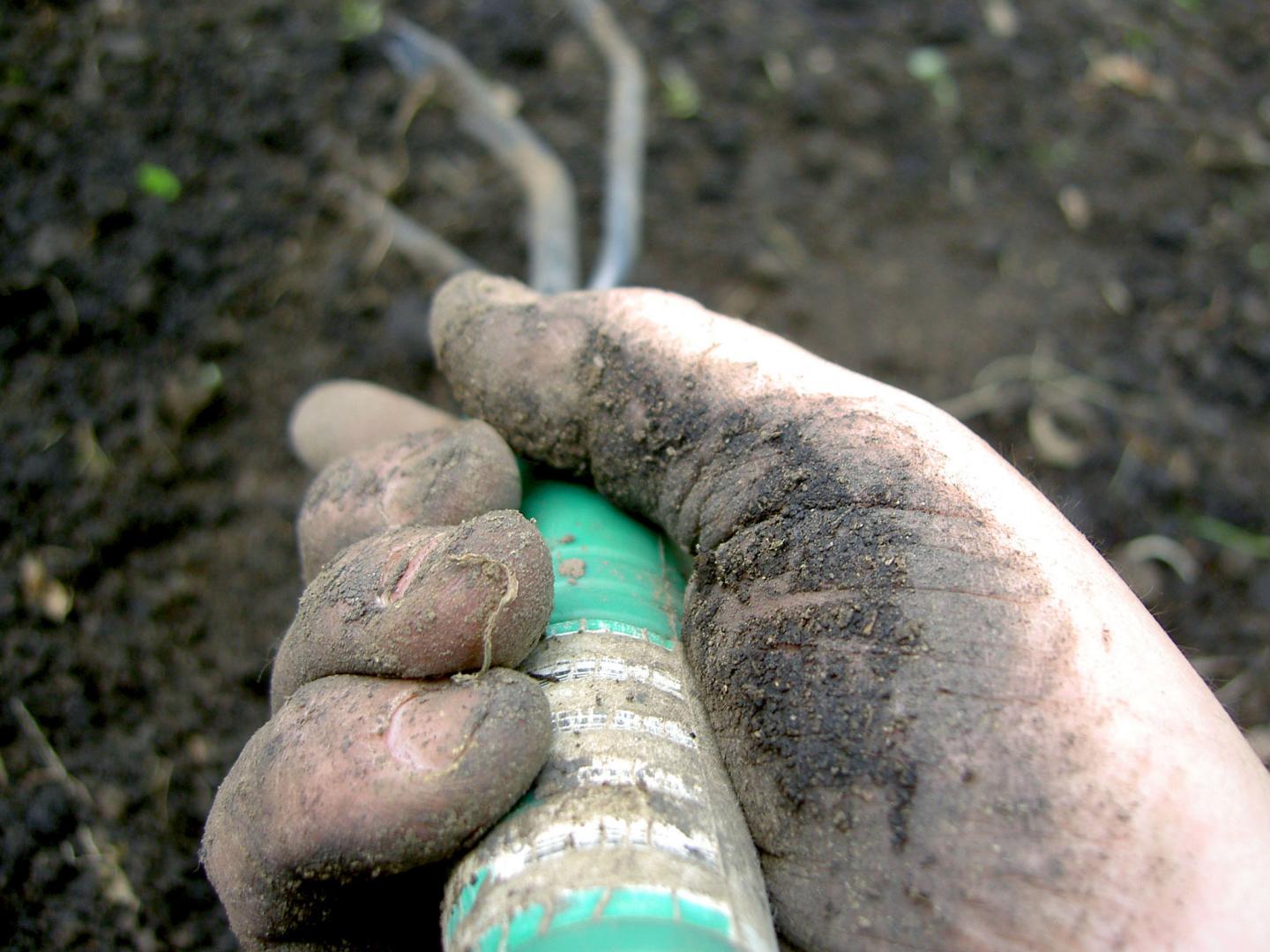
Credit: Ru. Hartnop, from the Global Soil Biodiversity Atlas
Soils are home to more than 25 percent of the earth’s total biodiversity, supporting life on land and water, nutrient cycling and retention, food production, pollution remediation and climate regulation. Scientists have found increasing evidence that when soil organisms are put front and center, numerous global sustainability goals can be enhanced. This is because the activity and interactions of soil organisms are intimately tied to multiple processes that ecosystems and society rely on.
A research team including current and former ecologists from Colorado State University said soil biodiversity should be incorporated into the United Nations’ Sustainable Development Goals – which include zero hunger, sustainable cities and communities, and life on land.
It should also be incorporated into the next generation of Aichi Biodiversity Targets, a set of 20 conservation goals – established in 2010 – being revamped this year. The UN Convention of Biological Diversity, the governing body behind the Aichi Targets, already recognizes the value of soil biodiversity to people and the planet.
The researchers outline their case in “Soil biodiversity integrates solutions for a sustainable future,” published earlier this year in Sustainability.
More people, policymakers recognize soil health
Elizabeth Bach, lead author and a former postdoctoral fellow at CSU, said the research team recognized the increasing awareness around the world about soil biodiversity.
“This study shows how soil biodiversity can take us to the next level and be part of the solution as we work to achieve broad sustainability goals,” said Bach, a soil ecologist with The Nature Conservancy’s Nachusa Grasslands in Illinois.
Global policy groups and government organizations around the world are starting to incorporate soil biodiversity into their work.
Diana Wall, Colorado State University Distinguished Professor and a co-author of the study said that this is a welcome and overdue change.
On the federal level in the United States, lawmakers addressed impacts on soil health in the 2018 Farm Bill. More recently, U.S. Rep. Chelle Pingree, a democrat and farmer from Maine, also introduced the Agriculture Resilience Act in February 2020. The measure includes a call to create a new soil health grant program for state and tribal governments and aims to explore new ways to reward farmers, including the use of future carbon markets or tax incentives for soil carbon sequestration.
In addition, the European Green Deal – created by a commission through the European Union – includes a call to reduce soil biodiversity loss and details land conservation plans for soil, air and water.
“It’s similar to what happened with clean water and air,” Wall explained. “People want soils maintained in high quality. That’s one of the big points. We need to pay attention to what we’re pouring concrete over, pay attention to how we degrade and pollute the soil. And on top of that, there’s the issue of invasive species. Soil biodiversity is good for all of us.”
Wall is also the director of the School of Global Environmental Sustainability at CSU.
Soil health is important for everyone
Bach said what’s needed is a consistent agenda or framework to really move things forward.
“We want to bring home the understanding that soil biodiversity is important for people on Earth, and for life above ground and underwater.”
In the paper, the researchers outline how soil biodiversity is important for sustaining people’s well-being, life and diversity of life on earth and life in water. Soil biodiversity also plays a major role in regulating climate and nutrient cycling, which helps to grow healthy crops and livestock.
Pest and predator pathogens in soil help control disease outbreaks that can make people sick and also impact crops and livestock. Soil biodiversity also plays a key role in carbon cycles, regulating how much carbon dioxide goes back into the atmosphere.
“A lot of life we think about above-ground also relies on below-ground habitat,” said Bach.
Through the study, the researchers learned how some traditional agricultural practices already leverage the benefits of soil health. Bach said this includes farmers who create spaces to grow rice in places that also support fish in China, with soil organisms turning over nutrients to support layered crops.
“This is a part of so many cultures, how they approach livelihood on the landscape,” she said. “That needs more attention.”
Researchers said this overview is a starting point, and also a huge advance for soil biodiversity to move into more mainstream conversations on sustainability.
Many organizations approach sustainability goals by picking and choosing to work on a few of them, said Bach. Yet soil biodiversity supports almost all of the UN’s Sustainable Development Goals, across the board.
“Soil biodiversity has moved beyond academic circles,” said Wall. “It needs to be included in all of the conversations about biodiversity loss. We can’t just talk about it from the ground up any more.”
###
Additional co-authors on the study include Kelly Ramirez, University of Texas at El Paso, and Tandra Fraser, Charlottetown Research and Development Centre in Canada.
Media Contact
Mary Guiden
[email protected]
Related Journal Article
http://dx.