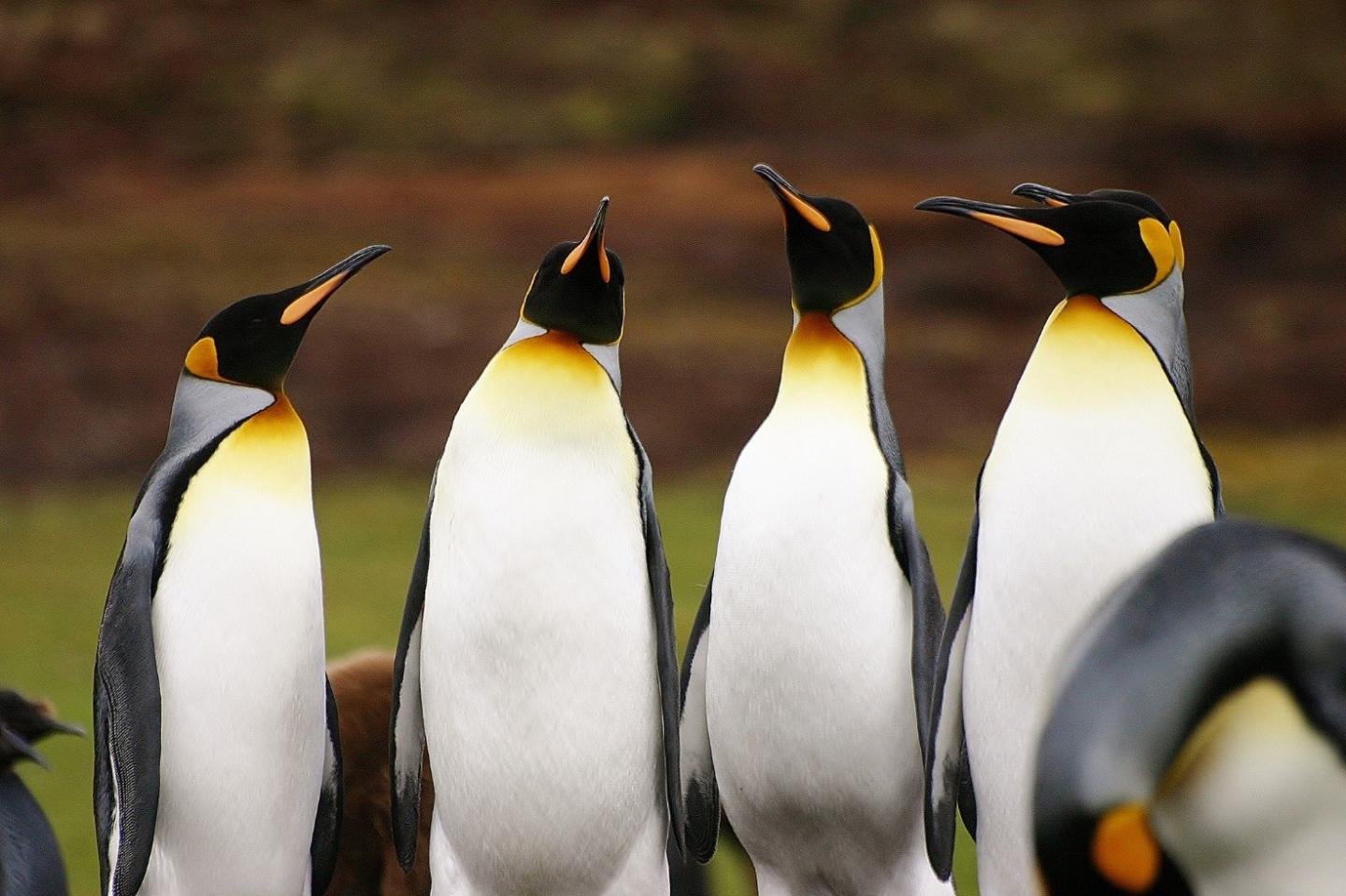
Credit: Anna Hausmann
Understanding how people use and experience important places for living nature is essential for effectively managing and monitoring human activities and conserving biodiversity.
In a new article published in the journal Science of the Total Environment, a team of researchers assessed global patterns of visitation rates, attractiveness and pressure to more than 12,000 Important Bird and Biodiversity Areas (IBAs), which are sites of international significance for nature conservation, by using geolocated data mined from social media (Twitter and Flickr).
The study found that Important Bird and Biodiversity Areas located in Europe and Asia, and in temperate biomes, had the highest density of social media users. Results also showed that sites of importance for congregatory species, which were also more accessible, more densely populated and provided more tourism facilities, received higher visitation than did sites richer in bird species.
“Resources in biodiversity conservation are woefully inadequate and novel data sources from social media provide openly available user-generated information about human-nature interactions, at an unprecedented spatio-temporal scale”, says Dr Anna Hausmann from the University of Helsinki, a conservation scientist leading the study. “Our group has been exploring and validating data retrieved from social media to understand people´s preferences for experiencing nature in national parks at a local, national and continental scale”, she continues, “in this study, we expand our analyses at a global level”.
Tourism is one of the fastest growing industries worldwide, and conservation areas are becoming popular destinations for people seeking nature-based experiences. “Important Bird and Biodiversity Areas represent some of the most important places for nature across the planet. Our results now allow us to pinpoint which of these sites face potentially the greatest threats or greatest opportunities resulting from high numbers of visitors.” says Dr Stuart Butchart, Chief Scientist at BirdLife International, who co-authored the study.
“Social media content and metadata contain useful information for understanding human-nature interactions in space and time”, says Prof. Tuuli Toivonen, another co-author in the paper and the leader of the Digital Geography Lab at the University of Helsinki. “Social media data can also be used to cross-validate and enrich data collected by conservation organizations”, she continues. The study found that the 17 percent of all Important Bird and Biodiversity Areas (IBA) that were assessed by experts to be under greater human disturbance also had higher density of social media users.
Therefore, these sites should be priority for management actions aimed at minimizing pressure at sites. “However, data on threats do not yet exist for many highly visited Important Bird and Biodiversity Areas, even in North America and Europe. Mobilizing such data worldwide should be priority”, says Dr Thomas Brooks, Chief Scientist of IUCN, who also co-authored the paper.
“With the increasing use of social media worldwide, automatic content analysis of digital data sources will help us understand present or emerging human-related threats at sites where threats are currently unknown or difficult to assess”, says Adjunct professor Enrico Di Minin, senior co-author who leads the Helsinki Lab of Interdisciplinary Conservation Science at the University of Helsinki. “We are currently applying and developing machine learning and natural language processing methods to analyze large amount of online information, in order to understand human-nature interactions and inform conservation science and practice”, he concludes.
###
Reference: Hausmann, A., Toivonen, T., Fink, C., Heikinheimo, V., Tenkanen, H., Butchart, S., Brooks, T., Di Minin, E. 2019. Assessing global popularity and threats to Important Bird and Biodiversity Areas using social media data. Science of the Total Environment, doi: 10.1016/j.scitotenv.2019.05.268.
More information:
Dr. Anna Hausmann, Helsinki Lab of Interdisciplinary Conservation Science, Department of Geosciences and Geography, University of Helsinki, Finland.
Email: [email protected]
Tel: +358(0)417088225
Twitter: @Haus_Panda
Media Contact
Riitta-Leena Inki
[email protected]
Original Source
https:/
Related Journal Article
http://dx.