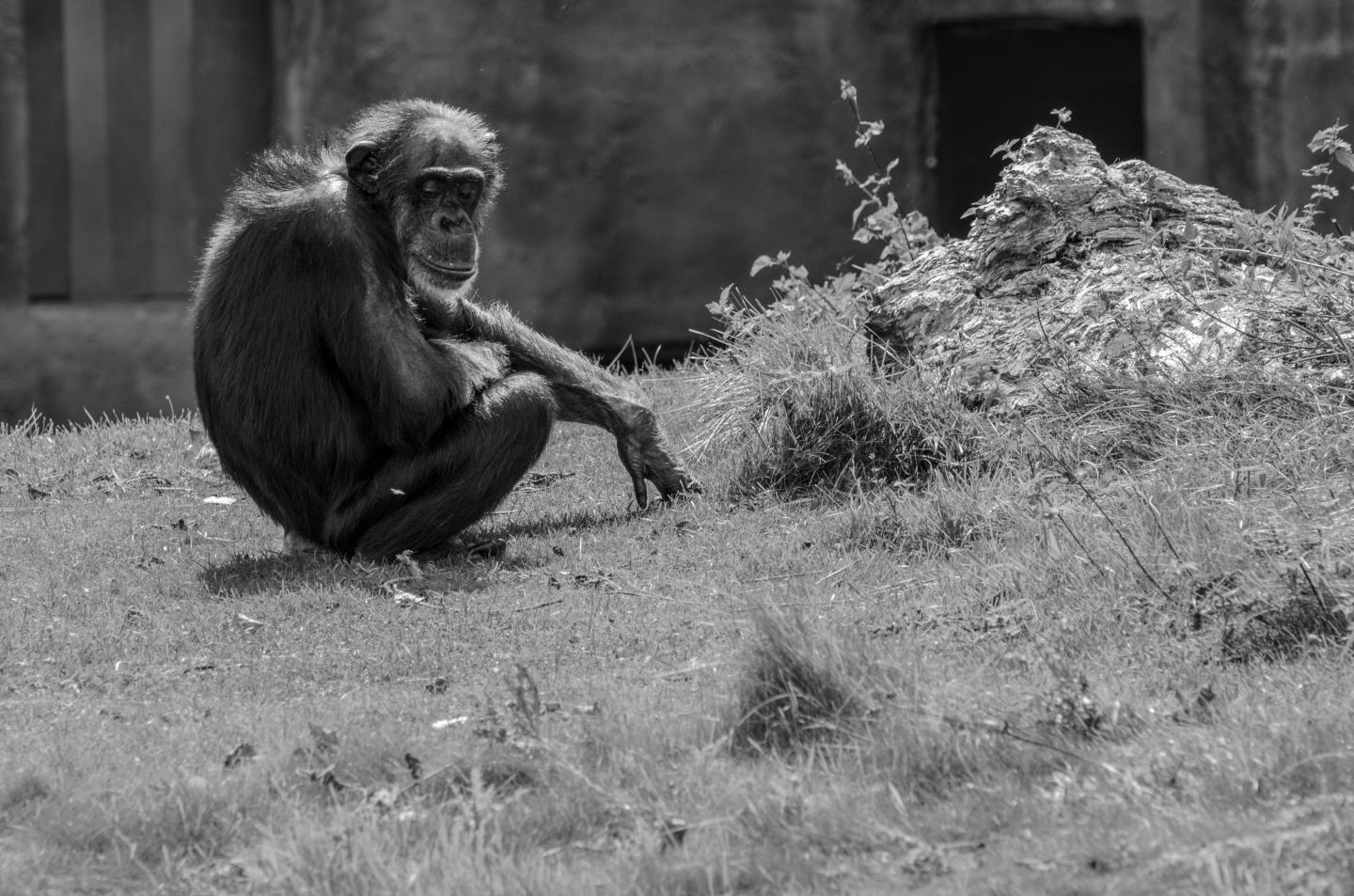
Credit: Dominik Scythe on Unsplash
The notion of social distancing rose to public prominence approximately a year ago, when health officials began recommending it as a way to slow the spread of the novel SARS-CoV-2 virus. Despite the novelty of the concept among many contemporary human audiences, social distancing has considerable precedent among animals.
Writing in BioScience, Mark Butler of Florida International University and Donald C. Behringer of the University of Florida outline the role of social distancing in nature and compare it with its human counterpart. They describe numerous animals in which distancing has evolved, including guppies, chimpanzees, birds, ants, and mice, among many others.
Often, say the authors, social distancing can mark substantial behavioral changes in otherwise highly social species. Butler and Behringer describe the seasonal migrations of spiny lobsters, which occur “en masse, strung out on the seafloor in dramatic single-file lines or queues.” However, because juveniles are particularly susceptible to a virus known as PaV1, which can kill 90% of those infected, healthy lobsters detect and refuse to shelter alongside their diseased conspecifics.
Similarly, say the authors, chimpanzees are known to ostracize unwell group members, such as those infected with polio, and are also thought to benefit from a general avoidance of individuals outside their immediate group. Further examples abound, including among highly social house finches, which avoid experimentally sickened members of the same species, and three-spined stickleback fish, which avoid schools that contain ectoparasite-infected individuals. Some animals even deploy other strategies that resemble humans’ disease precautions, such as ants that “use poisons to disinfect their colonies and prevent epizootics.”
According to the authors, a key to animals’ successful deployment of social distancing lies in their ability to effectively use cues–often olfactory–to detect sickened individuals. Indeed, animals are often able to “use social distancing effectively and efficiently.” In contrast, humans are typically forced to rely on low-accuracy visual or auditory cues, such as feverish appearance or coughing, highlighting the importance of diagnostic testing for the effective reduction of disease transmission.
Butler and Behringer suggest that future study may further illuminate and inform human responses to disease: “The examples of social distancing in wild animals in the present article, although they are compelling, are likely a small fraction of those that actually exist in nature and reflect the limited investigations conducted thus far on this phenomenon in the wild. What lessons might we learn about the human experience with pandemics from an expanded view of diseases, their spread, and their prevention in nature?”
###
BioScience, published monthly by Oxford Journals, is the journal of the American Institute of Biological Sciences (AIBS). BioScience is a forum for integrating the life sciences that publishes commentary and peer-reviewed articles. The journal has been published since 1964. AIBS is an organization for professional scientific societies and organizations, and individuals, involved with biology. AIBS provides decision-makers with high-quality, vetted information for the advancement of biology and society. Follow BioScience on Twitter @AIBSbiology.
Oxford Journals is a division of Oxford University Press. Oxford Journals publishes well over 300 academic and research journals covering a broad range of subject areas, two-thirds of which are published in collaboration with learned societies and other international organizations. The division has been publishing journals for more than a century, and as part of the world’s oldest and largest university press, has more than 500 years of publishing expertise behind it. Follow Oxford Journals on Twitter @OxfordJournals.
Media Contact
James M Verdier
[email protected]