


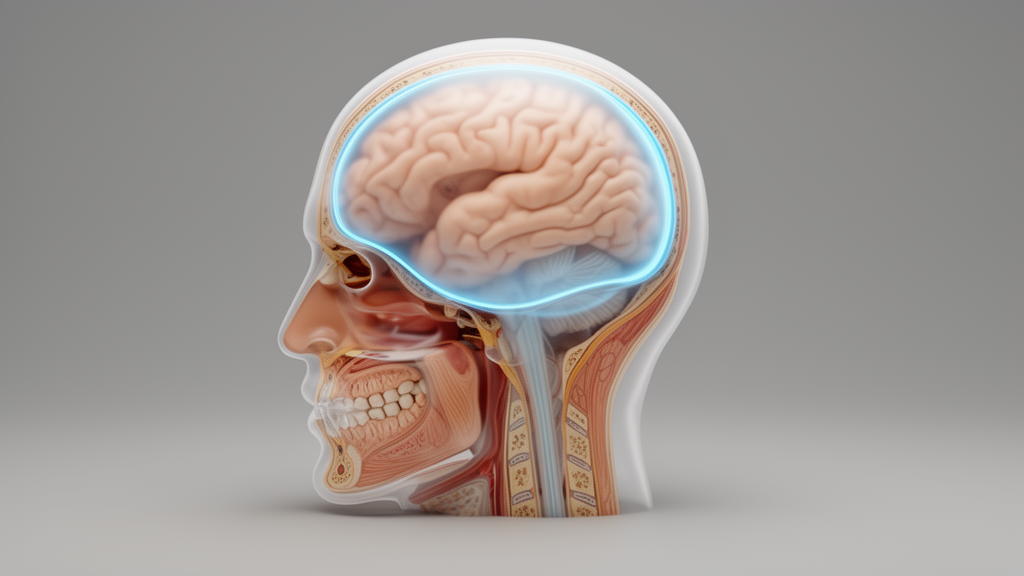
Engineers at Wake Forest University School of Medicine have rebuilt the brain-skull interface of a widely used computational head model, allowing the brain to slide against the skull the way it does in a living person rather than being effectively glued to it. The work, published in Frontiers in Bioengineering and Biotechnology, addresses a long-standing weakness in how computational models represent the thin layer of cerebrospinal fluid that cushions the brain inside the skull.
They are used to reconstruct concussions on the football field, estimate injury risk in automotive crashes, and interpret subconcussive head impact exposure in sport, automotive, and military settings. But a model is only as trustworthy as its validation: before it can be used for injury prediction, its predictions of pressure, strain, and displacement must be checked against physical measurements. Because no single standard exists for quantifying model performance, different validated brain models can produce markedly different regional pressure and strain responses for the same impact, which is precisely the problem the validation protocol adopted in this study was designed to address.
The previous version of the atlas-based brain model, ABMv2, was generated directly from the International Consortium for Brain Mapping brain atlas using a voxel-based meshing approach. That method produces ‘stair-stepped’ interfaces, and the skull and cerebrospinal fluid were effectively coupled together, with the fluid modeled as a solid with very low shear stiffness. The authors note that this approach and its associated model parameters may under-represent relative motion between the skull and brain and may cause overestimates of strain at the surface of the brain. Many other head models use a tied interface at the skull, which the authors describe as a possible oversimplification of the biomechanics at this critical boundary.
To build ABMv4, the team decoupled the skull and cerebrospinal fluid parts and generated a smooth skull surface by wrapping roughly 270,000 shell elements around the old stair-stepped geometry. A layer of about 1.09 million tetrahedral elements, representing 143.7 milliliters of extra-axial cerebrospinal fluid, was then fitted into the space between the new and old skull surfaces. Sliding contact was implemented at the skull interface using a tiebreak formulation in LS-DYNA that permits tangential sliding but limits separation between surfaces, with friction coefficients set to zero. A sliding interface was also added between the falx, the membrane separating the brain’s hemispheres, and the adjacent fluid, and the model’s center of gravity was refined to sit 10.18 millimeters anterior and 27.48 millimeters superior to the external auditory meatus.
The validation suite drew on post-mortem human subject experiments conducted with high-speed biplanar X-ray tracking of implanted radio-opaque neutral density targets. Sixteen tests reported intracranial pressure measured at coup and contrecoup locations, nine reported brain strain, and seventeen reported relative brain displacement. Before each simulation, the model was uniformly scaled to match the head dimensions of the individual cadaver, and the measured three-dimensional head kinematics were applied as boundary conditions. Model performance was scored with CORA, an objective correlation and analysis method, on a sliding scale where 0.86 to 1.0 is excellent, 0.65 to 0.86 is good, 0.44 to 0.65 is fair, and anything below is marginal or unacceptable.
The results were mixed but encouraging. ABMv4 averaged a CORA score of 0.733 for intracranial pressure, rated good, and 0.605 for brain displacement, rated fair. Against the original strain data, the average was 0.563, also fair. But when the team compared against revised strain values recalculated by another group using tetrahedral elements rather than the planar triad approach of the original experiments, the strain average jumped to 0.846, rated good. The revised values were on average roughly six times greater than the originals, and the authors argue they are a truer representation of brain deformation. To their knowledge, this is the first time a brain model has been validated against the complete suite of experimental tests recommended by the 2016 protocol of Giordano and Kleiven.
Compared with four other established head models, the KTH models, THUMS, and GHBMC, ABMv4 held its own. It posted the highest average score of any model for the displacement tests and, using the revised strain data, outperformed all competitors in the strain tests and in the overall average, reaching 0.705 overall. The overall biofidelity rating across all case types ranged from 0.441 to 0.900 with an average of 0.644 when original strain data were used. The authors attribute the largest performance gains to the new sliding contact, though they acknowledge that other changes, including modified falx and hemispheric geometry and the updated center of gravity, may have contributed as well.
The most striking physical consequence of the redesign is how much the virtual brain now moves. Average relative brain-skull displacement roughly doubled, from 0.54 millimeters in ABMv2 to 1.06 millimeters in ABMv4, and in three shown validation tests the maximum relative displacement in the decoupled model was approximately five times greater than in the old one. At the same time, surface strains dropped: across four real-world head impacts simulated with both model versions, two youth football impacts and two collegiate soccer headers, the surface strain metric fell to an average of 61.7 percent of the ABMv2 value, with an average surface MPS1,95 of 0.0921 for ABMv4 versus 0.1462 for ABMv2. Overall whole-brain strain changed little, rising slightly from 0.1409 to 0.1489 on average, indicating that the deformation was redistributed rather than simply eliminated.
The researchers caution that the reduced surface strain, while consistent with expected biofidelic behavior, does not by itself prove improved biofidelity, because there are no high-rate experimental measurements of brain surface strain to compare against. The model still relies on simplifying assumptions, including an isotropic brain material model with homogeneous properties across the cerebrum and cerebellum, and there remains uncertainty about cerebrospinal fluid material properties and optimal contact parameters. Validation is also subject to variability among cadaver subjects. Future development will incorporate directional anisotropy by modeling 100 white matter fiber tracts with roughly 285,000 beam elements, after which the anisotropic model will be re-validated.
For the broader field, the study is a reminder that the interface between the brain and its container, long treated as a computational afterthought, can dominate a model’s predictions. A fluid-structure interaction approach used in an updated KTH model also improved relative motion at the interface, but at an 80 percent increase in computation time, and the authors argue that the ABM’s far greater anatomic detail, roughly 150 times the number of nodes and elements, makes that approach impractical. With a sliding interface, a smooth skull, and objective validation scores across pressure, strain, and displacement, ABMv4 offers researchers studying sports concussion and crash injury a tool whose brain no longer sticks where it should slip.
Subject of Research: Computational biofidelity improvements and validation of a finite element brain model with a sliding brain-skull interface
Article Title: Biomechanically informed improvements to the brain–skull interface in an atlas-based brain model
Article References: Miller, L. E., Smith, C. D., Koya, B., Tatter, S. B., Powers, A. K., Urban, J. E., & Stitzel, J. D. (2026). Biomechanically informed improvements to the brain–skull interface in an atlas-based brain model. Frontiers in Bioengineering and Biotechnology, 14, Article 1881544. https://doi.org/10.3389/fbioe.2026.1881544
Image Credits: AI Generated
DOI: 10.3389/fbioe.2026.1881544
Keywords: finite element model, brain-skull interface, cerebrospinal fluid, biofidelity, CORA validation, traumatic brain injury, cadaver impact tests, intracranial pressure, brain strain, relative brain displacement, head impact simulation, atlas-based brain model
News Source: Cassandra Pierce. (October 29, 2026). Sliding Brain-Skull Interface Boosts Biofidelity of Finite Element Head Model. Scienmag.



