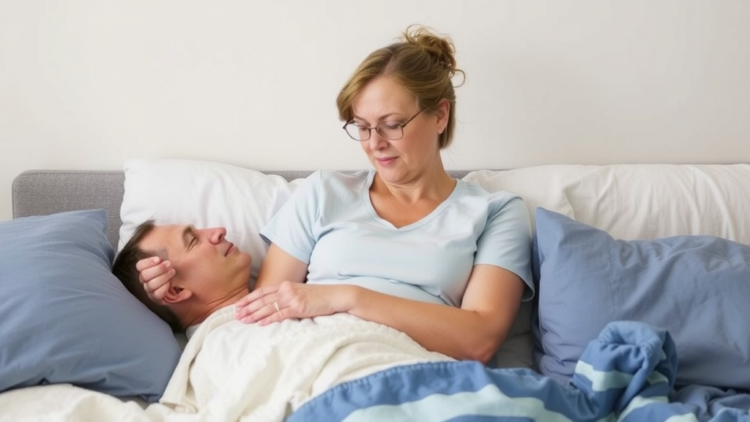
Caring for a loved one through cancer is one of the most emotionally demanding roles in modern medicine, and a new nationwide analysis confirms just how heavy that burden can be. Researchers analyzing data from more than 10,000 unpaid caregivers in the United States found that people caring for cancer patients experience frequent mental distress at dramatically higher rates than other caregivers, with roughly 21.6 percent reporting fourteen or more days of poor mental health in the past month compared with 13.0 percent of those caring for individuals with other conditions. Yet the study, published in the Journal of Cancer Survivorship, also delivers a strikingly hopeful message: when caregivers accumulate enough protective health behaviors, that elevated risk can be nearly erased.
The research team, led by Areesh Mevawalla and Timothy M. Pawlik of The Ohio State University Wexner Medical Center and James Comprehensive Cancer Center, drew on the 2022 Behavioral Risk Factor Surveillance System, an annual, state-based telephone survey administered by the Centers for Disease Control and Prevention. Because the Caregiver Module was administered in Georgia, Louisiana, Mississippi, New Hampshire, Ohio, Oregon, Pennsylvania, Utah, Virginia, Washington, Wisconsin, and Puerto Rico, the analysis was restricted to those jurisdictions, with CDC-provided sampling weights, strata, and primary sampling units used to generate population-representative estimates. Of the 10,923 caregivers in the analytic cohort, 1,483, or 13.6 percent, were caring for someone whose main health problem was cancer.
The outcome of interest was frequent mental distress, defined using established BRFSS methodology as fourteen or more days in the past thirty during which stress, depression, or emotional problems made mental health not good. The investigators focused on four modifiable protective factors, each selected a priori for its established relevance to psychological distress: sufficient sleep, defined as at least seven hours per night; regular physical activity outside of job duties in the past thirty days; non-smoking status; and adequate emotional support, meaning support was usually or always available. By summing these binary indicators, the team constructed a Cumulative Protective Factor Score ranging from zero to four, allowing them to test a central theoretical premise drawn from the Stress-Buffering Hypothesis, the idea that layered psychosocial and behavioral resources can blunt the corrosive mental health effects of sustained stress.
The demographic portrait of cancer caregivers differed in subtle but meaningful ways from their non-cancer counterparts. Cancer caregivers were slightly older, with a median age of fifty-nine years, and more likely to be female, at 64.3 percent versus 61.4 percent. Their caregiving was typically shorter in duration, with cancer caregivers more likely to have been providing care for one to six months or six months to under two years, whereas non-cancer caregivers more commonly reported commitments of five years or longer, reflecting the episodic but intensive nature of cancer treatment trajectories. Cancer caregivers were also more likely to be caring for a spouse or partner or a non-relative friend, while non-cancer caregivers more frequently cared for children or grandchildren.
Across every protective factor measured, cancer caregivers fared worse. They were less likely to report sufficient sleep, at 60.1 percent versus 64.5 percent; regular physical activity, at 75.8 percent versus 79.5 percent; non-smoking status, at 84.6 percent versus 89.4 percent; and adequate emotional support, at 71.9 percent versus 78.8 percent, with all differences statistically significant. Only 40.3 percent of cancer caregivers reported all four protective factors, compared with 42.2 percent of non-cancer caregivers. This pattern of depleted reserves coincided with the elevated distress: cancer caregiver status was independently associated with higher odds of frequent mental distress in survey-weighted multivariable logistic regression, with an odds ratio of 2.18.
Each individual protective factor was associated with lower odds of frequent mental distress in the full cohort. Sufficient sleep was linked to roughly a 53 percent reduction in odds, regular physical activity to a 29 percent reduction, adequate emotional support to a 65 percent reduction, and non-smoking status to a 37 percent reduction, all highly significant. However, interaction analyses revealed an important nuance: the protective associations of sleep, physical activity, and emotional support were significantly attenuated among cancer caregivers, with interaction odds ratios ranging from 0.69 to 0.76. In other words, the same behaviors appear to confer somewhat less protection in the context of cancer caregiving, perhaps because the intensity of the caregiving stressor overwhelms single resources acting alone.
The cumulative picture was far more encouraging. Using marginal standardization to estimate fully adjusted predicted probabilities, the researchers found a graded, inverse relationship between the protective factor score and frequent mental distress in both groups. Among caregivers with no protective factors, the predicted probability of distress reached 0.76 for cancer caregivers versus 0.59 for non-cancer caregivers, a substantial and statistically significant gap. That gap narrowed steadily across scores of one, two, and three. At the maximum score of four, predicted distress fell to just 10 percent among cancer caregivers and 7 percent among non-cancer caregivers, a difference that was no longer statistically significant. The co-occurrence of all four health-promoting behaviors and support resources appeared sufficient to offset the heightened psychological burden of cancer caregiving almost entirely.
The findings also exposed a persistent sex disparity that no amount of protective accumulation fully resolved. Female cancer caregivers had 40 percent higher odds of frequent mental distress than males, and predicted probabilities were higher for women at every level of the cumulative score. With no protective factors, the predicted probability of distress was 0.85 for women versus 0.68 for men; even at the maximum score of four, women faced a predicted probability of 0.17 compared with 0.08 for men, both differences highly significant. The authors point to a substantial literature suggesting that women disproportionately assume primary caregiving roles, provide more intensive and complex care, and carry additional cognitive-emotional labor, including coordinating treatment, managing family stress, and supplying emotional support to others. Prior research has found that women caring for an ill spouse were nearly six times more likely to experience depressive or anxious symptoms than non-caregiving women, while the authors caution that lower observed distress among men may reflect under-recognition and reluctance to seek support rather than genuine resilience.
The study has limitations worth noting. Its cross-sectional design precludes causal inference, leaving open the question of whether depleted health behaviors precede distress or follow from it, and all measures were self-reported, introducing potential recall and reporting bias. BRFSS also does not capture primary caregiver status, task complexity, cancer stage, or treatment phase, so some differences in distress may reflect variation in illness course. Even so, the surveillance system remains a well-validated, nationally representative instrument for population-level behavioral research, and the consistency of the graded dose-response pattern strengthens the plausibility of the cumulative buffering effect.
The implications reach well beyond individual self-care advice. The authors argue that cancer centers should routinely screen for caregiver distress as part of patient management, and they point to legislative momentum from the RAISE Family Caregivers Act and the CARE Act, which mandate expanding support services and formally assessing caregiver needs within hospital care. Evidence-backed measures such as subsidized respite care, affordable counseling, and caregiver-inclusive clinic visits have been shown to reduce burden, particularly among high-risk groups. Because women remain at elevated risk even under the most favorable behavioral profiles, and because men’s needs may go unrecognized, the researchers call for sex-responsive, caregiver-centered support models rather than one-size-fits-all programs. As the population of U.S. informal caregivers has grown from roughly 43.5 million in 2015 to nearly 53 million in 2020, the study suggests that a coordinated, multilevel response, spanning sleep promotion, physical activity, smoking cessation, emotional support, and structural policy reform, is essential to protect the mental health of those who sustain cancer care at home.
Subject of Research: Health behaviors, mental distress, and sex disparities among U.S. cancer caregivers
Article Title: Buffering the burden: health behaviors, mental distress, and sex disparities in U.S. cancer caregivers
Article References: Mevawalla, A., Sarfraz, A., Alizai, Q., Angez, M., Bega, R., Chaudhry, M. Q., Ashraf, A., Elemosho, A., Chatzipanagiotou, O. P., & Pawlik, T. M. (2026). Buffering the burden: health behaviors, mental distress, and sex disparities in U.S. cancer caregivers. Journal of Cancer Survivorship. https://doi.org/10.1007/s11764-026-02120-3
Image Credits: AI Generated
DOI: 10.1007/s11764-026-02120-3
Keywords: cancer caregivers, frequent mental distress, health behaviors, BRFSS, sleep, physical activity, emotional support, smoking, sex disparities, caregiver burden, stress-buffering hypothesis, cancer survivorship
Cite Scienmag News
APA MLA Chicago
Nathaniel Bowman. (September 12, 2026). Sleep, Exercise, and Support May Shield Cancer Caregivers From Mental Distress. Scienmag. https://scienmag.com/sleep-exercise-and-support-may-shield-cancer-caregivers-from-mental-distress/
Nathaniel Bowman. “Sleep, Exercise, and Support May Shield Cancer Caregivers From Mental Distress.” Scienmag, 12 September 2026, https://scienmag.com/sleep-exercise-and-support-may-shield-cancer-caregivers-from-mental-distress/. Accessed 12 September 2026.
Nathaniel Bowman. “Sleep, Exercise, and Support May Shield Cancer Caregivers From Mental Distress.” Scienmag. September 12, 2026. https://scienmag.com/sleep-exercise-and-support-may-shield-cancer-caregivers-from-mental-distress/
Copy citation Download RIS
Tags: behavioral risk factors for caregiver stressBRFSScancer caregiver mental healthcancer caregiverscancer caregiving and mental health disparitiescancer survivorshipcaregiver burdencaregiver burden and psychological resilienceCDC survey on caregiver healthemotional supportfrequent mental distresshealth behaviorsimpact of caregiving on emotional well-beinginterventions to reduce caregiver mental distressmental distress among cancer caregiversnationwide caregiver health studyPhysical activityprotective health behaviors for caregiversrole of sleep and exercise in mental healthsex disparitiessleepsmokingstress-buffering hypothesissupport strategies for unpaid caregivers