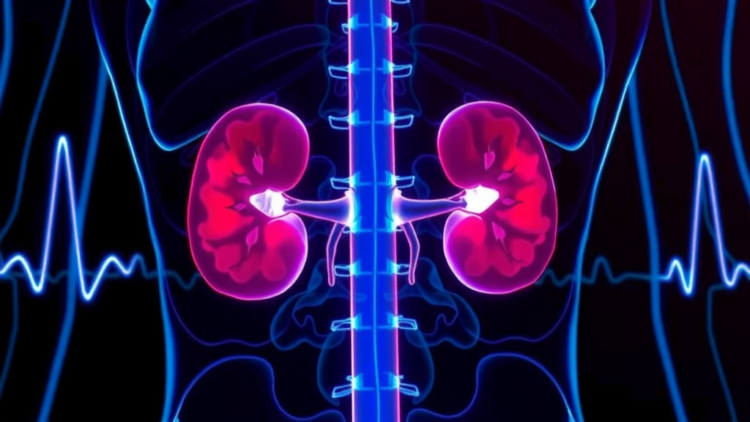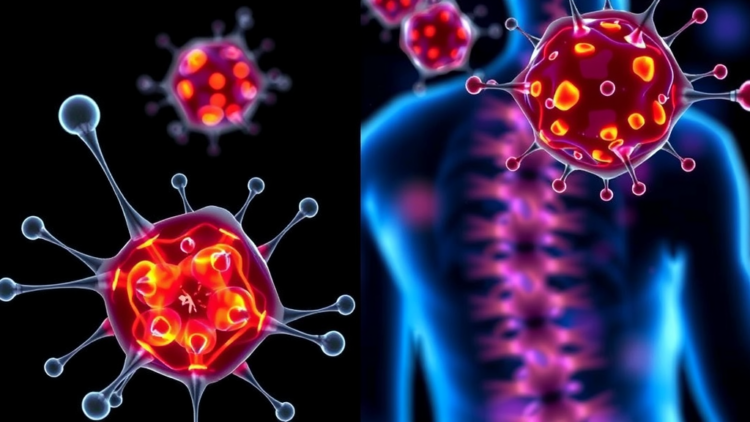
Deep inside the intervertebral disc — the resilient cushion that sits between the vertebrae of the spine — a small population of cells works quietly for decades to keep the tissue functional. These nucleus pulposus cells are the functional core of the disc’s gel-like center, and their long-term health depends on a finely tuned balance of metabolic activity. New research published in Experimental & Molecular Medicine now points to a specific epigenetic enzyme, histone deacetylase 1, better known as HDAC1, as a crucial guardian of that balance, acting through a previously underappreciated partnership with the multifunctional protein YBX1.
The study, whose findings are summarized under the title describing how HDAC1 maintains metabolic homeostasis in nucleus pulposus cells via post-translational modification interactions with YBX1, adds a significant piece to the puzzle of intervertebral disc degeneration, a condition that affects a large proportion of the adult population and is a leading contributor to chronic low back pain. By identifying a molecular axis that links chromatin-modifying enzymes to metabolic regulation, the work suggests that disc degeneration may be driven not only by mechanical loading and aging but also by specific, potentially targetable, biochemical failure points inside the cells themselves.
To appreciate why this matters, it helps to understand the harsh environment in which nucleus pulposus cells operate. The disc interior is poorly supplied with blood vessels, meaning nutrients such as glucose and oxygen arrive only by diffusion through surrounding tissue, while metabolic waste products such as lactate accumulate locally. Cells in this avascular niche must survive on comparatively little energy while simultaneously producing and maintaining an abundant extracellular matrix rich in proteoglycans and collagen, which gives the disc its ability to absorb compressive forces. When the metabolic balance tips — whether through nutrient deprivation, oxidative stress, or the cumulative damage of aging — the cells shift toward catabolic behavior, producing matrix-degrading enzymes and inflammatory mediators that accelerate tissue breakdown.
HDAC1 belongs to a family of enzymes that remove acetyl groups from histone proteins, the spools around which DNA is wound. By deacetylating histones, HDAC1 generally compacts chromatin and represses gene expression, but the enzyme also acts on many non-histone proteins, influencing their stability, activity, and interactions. This dual capacity makes HDAC1 a candidate regulator of programs that must respond quickly to cellular stress, including the metabolic adaptations that nucleus pulposus cells require to survive their nutrient-poor surroundings. Previous work across multiple tissues has implicated HDAC enzymes in cell survival, differentiation, and inflammatory signaling, but their specific role in disc cells has remained incompletely defined.
The new study centers on the interaction between HDAC1 and YBX1, a so-called cold-shock protein that functions as both a DNA- and RNA-binding factor and as a coordinator of stress responses. YBX1 has been linked to cell proliferation, survival under stress, and the regulation of metabolic gene expression in several biological systems. Crucially, both HDAC1 and YBX1 are subject to post-translational modifications — chemical tags such as acetylation, phosphorylation, ubiquitination, and others that are appended to proteins after translation and that can dramatically alter protein behavior. The researchers report that the functional relationship between HDAC1 and YBX1 is governed by such modifications, meaning that the enzymes and tagging systems that install or remove these marks effectively control how the two proteins work together.
According to the findings, when this HDAC1–YBX1 axis is intact, nucleus pulposus cells maintain metabolic homeostasis: their energy-generating pathways remain balanced, their matrix-producing functions are preserved, and degenerative signaling is held in check. When HDAC1 activity or its interaction with YBX1 is disrupted, the cells lose this equilibrium. The consequence, as described in the study, is a drift toward metabolic dysfunction of the kind observed in degenerated disc tissue, providing a mechanistic explanation for how epigenetic changes can translate into the structural failure of the disc over time.
The emphasis on post-translational modification crosstalk is perhaps the most technically significant aspect of the work. Post-translational modifications rarely act in isolation; a single protein may carry multiple marks that compete or cooperate with one another, and enzymes that install one mark can influence the deposition or removal of another. In the case of HDAC1 and YBX1, the study indicates that the acetylation state of the proteins shapes their physical interaction and, by extension, the downstream metabolic programs they regulate. This kind of modification crosstalk provides a rapid, reversible layer of control that operates alongside transcriptional regulation, allowing cells to adjust metabolism on short timescales in response to stress.
For the field of disc biology, the results help connect several previously parallel strands of research. Investigators have long documented that degenerated discs show altered gene expression, mitochondrial dysfunction, increased oxidative stress, and shifts in glucose and lactate metabolism. Separately, epigenetic studies have catalogued changes in histone modifications and DNA methylation in disc disease. By showing that a chromatin-associated enzyme directly maintains metabolic homeostasis through a modification-dependent interaction with a stress-response protein, the new work provides a causal bridge between these observations: epigenetic regulation is not merely a readout of degeneration but an active participant in keeping disc cells metabolically fit.
The translational implications are cautiously encouraging. If the HDAC1–YBX1 axis can be measured or modulated, it could inform strategies aimed at slowing or preventing disc degeneration, from biomarkers that identify early metabolic failure in disc cells to therapies designed to restore the interaction or its downstream protective programs. However, the study also underscores a central challenge in targeting epigenetic enzymes: HDAC1 performs essential functions in many cell types throughout the body, so any therapeutic approach would need to achieve specificity for the disc environment or exploit the modification crosstalk in a way that spares other tissues. The authors’ mechanistic framework offers a starting point for designing such selective interventions, but considerable preclinical work would be required before any clinical application.
Beyond the disc, the findings speak to a broader principle in cell biology: the insulation of tissue-specific metabolism by epigenetic machinery operating through networks of post-translational modifications. Cells in harsh niches — cartilage, the lens of the eye, the avascular regions of tumors — face analogous metabolic constraints, and similar enzyme-partner axes may govern their resilience. As the tools for mapping protein modifications become more powerful, studies of this kind are likely to reveal additional examples in which a single deacetylase, acting through a modification-dependent partnership, secures the metabolic foundations of long-lived cells. For the millions of people whose lives are affected by degenerative disc disease, the demonstration that HDAC1 and YBX1 jointly safeguard the metabolic health of the disc’s core cells represents a meaningful step toward understanding — and eventually intervening in — one of the most common forms of chronic musculoskeletal deterioration.
Subject of Research: The role of HDAC1 and YBX1 post-translational modification interactions in maintaining metabolic homeostasis of nucleus pulposus cells
Article Title: HDAC1 maintains metabolic homeostasis in nucleus pulposus cells via post-translational modification interactions with YBX1
Article References: HDAC1 maintains metabolic homeostasis in nucleus pulposus cells via post-translational modification interactions with YBX1. (n.d.). https://doi.org/10.1038/s12276-026-01843-8
Image Credits: AI Generated
DOI: 10.1038/s12276-026-01843-8
Keywords: HDAC1, YBX1, nucleus pulposus cells, intervertebral disc degeneration, metabolic homeostasis, post-translational modification, epigenetics, histone deacetylase, low back pain, disc biology, chromatin regulation, Experimental & Molecular Medicine
Cite Scienmag News
APA MLA Chicago
Juliet Wilcox. (September 13, 2026). Epigenetic Enzyme Keeps Spinal Disc Cells Metabolically Balanced, Study Finds. Scienmag. https://scienmag.com/epigenetic-enzyme-keeps-spinal-disc-cells-metabolically-balanced-study-finds/
Juliet Wilcox. “Epigenetic Enzyme Keeps Spinal Disc Cells Metabolically Balanced, Study Finds.” Scienmag, 13 September 2026, https://scienmag.com/epigenetic-enzyme-keeps-spinal-disc-cells-metabolically-balanced-study-finds/. Accessed 13 September 2026.
Juliet Wilcox. “Epigenetic Enzyme Keeps Spinal Disc Cells Metabolically Balanced, Study Finds.” Scienmag. September 13, 2026. https://scienmag.com/epigenetic-enzyme-keeps-spinal-disc-cells-metabolically-balanced-study-finds/
Copy citation Download RIS
Tags: biochemical targets for disc degeneration therapycellular metabolic balance in spinal healthchromatin regulationchromatin-modifying enzymes in tissue homeostasisdisc biologyepigenetic regulation of spinal disc cellsepigeneticsepigenetics and chronic low back painExperimental & Molecular MedicineHDAC1histone deacetylaseintervertebral disc degenerationlow back painMetabolic Homeostasismolecular mechanisms of intervertebral disc agingnucleus pulposus cell healthnucleus pulposus cellspost-translational modificationpost-translational modifications in cell regulationpotential therapeutic interventions for disc degenerationrole of HDAC1 in cell metabolismYBX1YBX1 protein in nucleus pulposus cells