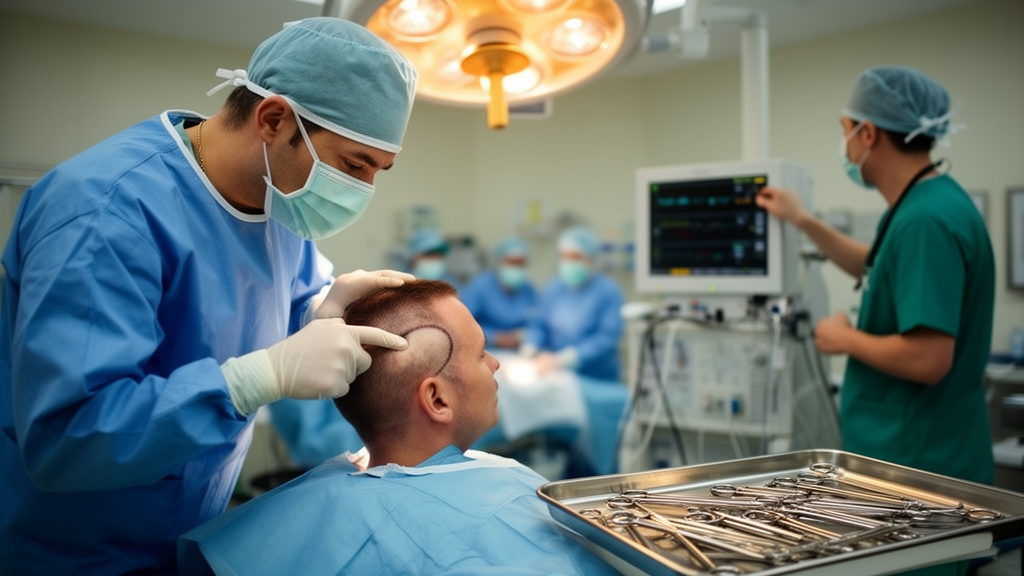
For decades, patients facing brain surgery for an unruptured aneurysm have been told that their entire head must be shaved before the operation. A large new study from China suggests that this ritual may be doing patients no good at all, while costing them something measurable: their hair, and with it a meaningful slice of their postoperative wellbeing. In a propensity score-matched analysis nested within a national, multicenter, prospective cohort, researchers found that shaving only a narrow strip of hair along the planned incision line produced no increase in postoperative infection compared with shaving the entire scalp, and it left patients significantly more satisfied with their appearance months after surgery.
The study, published in the Chinese Neurosurgical Journal, drew on the ChTUIA cohort (China Treatment Trial for Unruptured Intracranial Aneurysm, registered as NCT05844163), a completed national, multicenter, prospective cohort study conducted from December 2021 to December 2024 and designed to investigate appropriate management strategies for unruptured intracranial aneurysms. The present analysis was a matched comparative study nested within that cohort. Patients who underwent microsurgical treatment at 83 participating centers between December 2021 and December 2022 were screened, and the analysis ultimately reviewed 6712 of the 8005 patients in the parent cohort, with 1135 excluded by the study’s criteria and a further 158 lost to follow-up or withdrawn.
Patients were excluded if they had experienced a previous subarachnoid or intracerebral hemorrhage, or if their aneurysms were of types such as recurrent, fusiform, dissecting, traumatic, bacterial, or atrial myxomatous. A family history of intracranial aneurysms or polycystic kidney disease, poor general condition with an expected survival under 12 months, and inability to communicate or refusal of follow-up also led to exclusion. After follow-up, patients with incomplete clipping requiring further surgery, or those who suffered postoperative cerebrovascular ischemic or bleeding events requiring craniotomy or craniectomy during hospitalization, were removed as well.
To compare the two shaving protocols fairly, the researchers used propensity score matching, a statistical technique that pairs patients so that the groups resemble each other on measured baseline characteristics. The propensity score was estimated with a logistic regression model based on age, sex, diabetes mellitus, aneurysm site, aneurysm size, and surgical method, whether clipping or wrapping. Nearest-neighbor matching without replacement was performed in a fixed 1:2 ratio of local scalp shaving to full scalp shaving patients, with a caliper width of 0.1, and covariate balance was checked using standardized mean differences, with values below 0.1 considered acceptable. The final matched cohort contained 2157 patients: 719 who received local scalp shaving and 1438 who received full scalp shaving. Among them were 908 males, and the median age was 59 years. After matching, the two groups showed no significant differences in sex, age, smoking history, hypertension, diabetes, dyslipidemia, ischemic cerebrovascular or cardiovascular disease, aneurysm site and size, surgical method, surgery duration, intraoperative bleeding and transfusion, or admission neurological status.
The two protocols differed sharply in what they demanded of patients. In the full scalp shaving group, the entire scalp was shaved with sterile clippers, after which the scalp was cleansed with antiseptic soap, dried with sterile towels, and disinfected with povidone-iodine solution, with any residual hair meticulously removed. In the local scalp shaving group, only a strip of hair along the incision line, extending from the natural hairline to 2 centimeters behind it, was shaved. The remaining hair was styled and secured with surgical wax or hairnets, and a sterile surgical drape covered the unshaved hair before final disinfection. Since the typical incision for these operations runs 5 to 10 centimeters, the difference in removed hair was substantial. Prespecified definitions of both protocols were applied across centers, although the authors note that minor center-level variations in implementation may have existed.
The primary outcome was central nervous system infection within 90 days after surgery, a diagnosis requiring both clinical suspicion, such as fever, headache, altered mental status, seizures, or focal neurological deficits, and laboratory confirmation from two consecutive cerebrospinal fluid samples taken on different days, showing elevated white cell count, low glucose, high protein, or positive microbiological culture, alongside imaging evidence of abscess, empyema, or other infectious processes. The result was striking in its neutrality: 25 of 719 patients in the local shaving group, or 3.5 percent, developed a central nervous system infection, compared with 49 of 1438 patients, or 3.4 percent, in the full shaving group. The odds ratio was 0.98 with a 95 percent confidence interval of 0.60 to 1.60 and a P value of 0.933, meaning the two approaches were statistically indistinguishable.
The secondary outcomes reinforced the picture. Incision infection within 90 days, defined by clinical signs such as redness, swelling, warmth, pain, or purulent discharge confirmed by positive culture or the need for antibiotics, occurred in 9 of 719 local shaving patients, 1.3 percent, versus 17 of 1438 full shaving patients, 1.2 percent, an odds ratio of 0.94 with a confidence interval of 0.42 to 2.13 and a P value of 0.889. Functional outcome at 180 days, measured with the modified Rankin scale, was also equivalent: 96.2 percent of the local shaving group and 96.3 percent of the full shaving group achieved a score of 0 to 1, indicating good neurological recovery. Subgroup analyses covering age, sex, diabetes, dyslipidemia, aneurysm size and site, surgery duration over three hours, and intraoperative bleeding over 500 milliliters all showed no significant differences in infection rates.
Where the two groups diverged dramatically was in how patients felt about their appearance. The Face-Q score, a patient-reported measure ranging from minus 2 to 5 based on two negative and five positive questions, with higher scores indicating greater satisfaction with facial appearance, was assessed by telephone interview at 180 days. The median score was 4, with an interquartile range of 3 to 5, in the local shaving group, versus 2, with an interquartile range of 0 to 3, in the full shaving group. Ordinal logistic regression yielded an ordinary odds ratio of 0.43 with a 95 percent confidence interval of 0.40 to 0.47 and a P value below 0.001. The authors suggest that local shaving may improve the postoperative experience not by altering neurological recovery, but by reducing the psychosocial burden associated with surgery, since hair is a highly visible component of personal appearance and social identity, and full shaving may contribute to emotional distress, impaired body image, and delayed social reintegration.
These findings align with a broader body of evidence. A systematic review including 21 studies found that preoperative shaving was not superior to no shaving in preventing postoperative wound infection and might even increase infection risk, and other systematic reviews have reached similar conclusions while highlighting the cosmetic and psychological value of minimizing hair removal. The authors offer a biological explanation: hair itself may matter less than the integrity of the scalp barrier and the quality of perioperative sterile preparation, because razor or clipper microtrauma can disrupt the skin barrier, alter the local microbiota, and facilitate bacterial colonization. Postoperative infection is also shaped by many perioperative factors, including antiseptic preparation, sterile draping, wound closure quality, operative duration, cerebrospinal fluid leakage, drain use, and antibiotic management.
The authors are careful about the limits of their work. Because the design was observational, residual confounding cannot be fully excluded despite propensity matching, and variables such as incision length, scalp closure technique, cerebrospinal fluid leakage, drain use, antibiotic details, and thermal injury from electrocautery were not available for adjustment. Outcome assessors were not formally blinded to the shaving protocol, the study included only a Chinese population, and long-term cosmetic satisfaction and delayed wound complications were not evaluated. The Face-Q score, being patient-reported, may be subject to subjective bias. Still, within those constraints, the conclusion is clear: for patients undergoing microsurgical treatment of unruptured anterior circulation aneurysms, shaving only the strip of hair along the incision line carried no additional infection risk over 90 days and was associated with markedly better appearance-related quality of life at 180 days, making it, in the authors’ words, a feasible and patient-centered preoperative scalp preparation strategy.
Subject of Research: Comparing local versus full scalp shaving before microsurgery for unruptured anterior circulation intracranial aneurysms in terms of postoperative infection and quality of life
Article Title: Infection and quality of life after local or full scalp shaving in microsurgical treatment for unruptured intracranial aneurysm sited in anterior circulation
Article References: Hou, Y., Feng, Y., Zhang, J., Zheng, K., Zhang, J., Liu, Q., Liu, P., Zhang, Y., Wu, J., Wang, S., Zhao, D., & Chen, S. (2026). Infection and quality of life after local or full scalp shaving in microsurgical treatment for unruptured intracranial aneurysm sited in anterior circulation. Chinese Neurosurgical Journal, 12(1), Article 31. https://doi.org/10.1186/s41016-026-00449-3
Image Credits: AI Generated
DOI: 10.1186/s41016-026-00449-3
Keywords: unruptured intracranial aneurysm, scalp shaving, microsurgery, central nervous system infection, quality of life, propensity score matching, Face-Q score, neurosurgery, anterior circulation, ChTUIA cohort, patient-reported outcomes, surgical site infection
News Source: Ophelia Keating. (October 28, 2026). Skipping Full Head Shave Before Aneurysm Surgery Cuts Infection Risk Not at All but Boosts Quality of Life. Scienmag.