• HOME
  • NEWS
  • EXPLORE
    • CAREER
      • Companies
      • Jobs
    • EVENTS
    • iGEM
      • News
      • Team
    • PHOTOS
    • VIDEO
    • WIKI
  • BLOG
  • COMMUNITY
    • FACEBOOK
    • INSTAGRAM
    • TWITTER
Sunday, October 4, 2026
BIOENGINEER.ORG
No Result
View All Result
  • Login
  • HOME
  • NEWS
  • EXPLORE
    • CAREER
      • Companies
      • Jobs
        • Lecturer
        • PhD Studentship
        • Postdoc
        • Research Assistant
    • EVENTS
    • iGEM
      • News
      • Team
    • PHOTOS
    • VIDEO
    • WIKI
  • BLOG
  • COMMUNITY
    • FACEBOOK
    • INSTAGRAM
    • TWITTER
  • HOME
  • NEWS
  • EXPLORE
    • CAREER
      • Companies
      • Jobs
        • Lecturer
        • PhD Studentship
        • Postdoc
        • Research Assistant
    • EVENTS
    • iGEM
      • News
      • Team
    • PHOTOS
    • VIDEO
    • WIKI
  • BLOG
  • COMMUNITY
    • FACEBOOK
    • INSTAGRAM
    • TWITTER
No Result
View All Result
Bioengineer.org
No Result
View All Result
Home NEWS Science News Cancer

Skin cancer: Drug combination could improve immunotherapy

Bioengineer by Bioengineer
September 27, 2016
in Cancer
Reading Time: 2 mins read
0
Share on FacebookShare on TwitterShare on LinkedinShare on RedditShare on Telegram

The results of studies involving researchers from the MedUni Vienna and Vienna General Hospital Comprehensive Cancer Center (CCC) show that the effect of immunotherapy on malignant melanoma (black skin cancer) can be improved by combining it with other cancer treatments. However, the results also show that this combination can lead to an increase in side-effects. The CCC is therefore now looking for ways to improve the side-effect profile and is testing these approaches in two upcoming studies.
wien

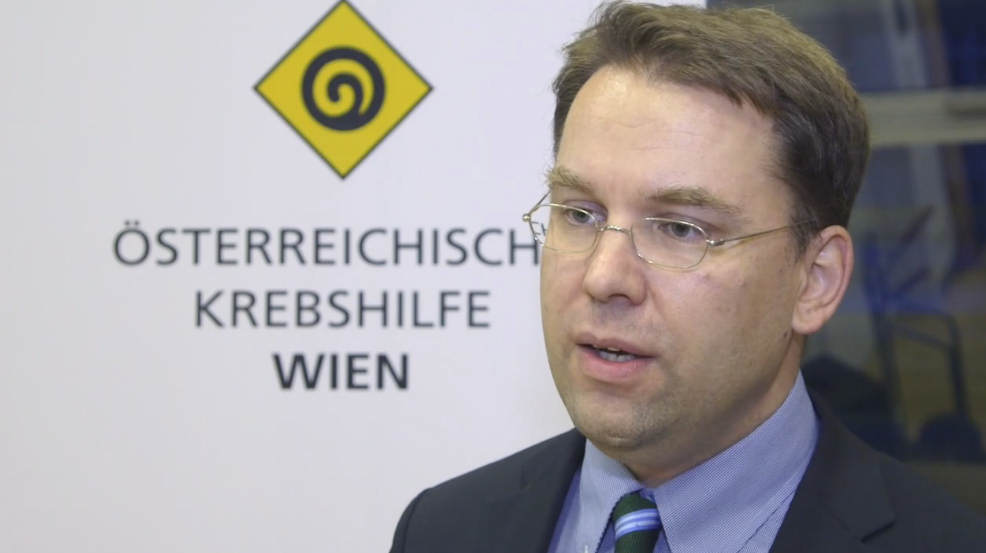
According to official figures, approximately 1,500 Austrians a year develop invasive melanoma, that is to say a metastasising black skin cancer. However, experts believe that the real number could be much higher. Over the past few years, the use of immunotherapy has significantly improved the success rate as against conventional (chemo)therapy. However, CCC researchers are still working to improve the results even further. Professor Christoph Höller at MedUni Vienna and Vienna General Hospital and member of the Comprehensive Cancer Center explains: “New data show that 50% of patients with metastasising melanomas who receive immunotherapy are still alive after 3 years — and indeed with a good quality of life. However, this also means that it works less well, if at all, for the other 50%. We are therefore looking for new ways to bring about further improvements in this success rate.”

Fewer side-effects

The scientists’ path is leading them towards drug combinations. The update of a large-scale, multicentre study, in which CCC cancer researchers were also involved and which was presented at the American Society for Oncology (ASCO) Congress, the largest international cancer congress, in June 2016, shows: treatment with two immune checkpoint inhibitors (the latest immunotherapy drugs) improves the treatment outcome. However, these drugs are also associated with greater side-effects, such as severe fatigue, troublesome skin rashes and diarrhea.

Höller: “This is where our concepts come in and we will be testing them over the coming years. One study has just started. It is being conducted in collaboration with the MedUni Vienna and Vienna General Hospital Department of Medicine I and we are testing a new combination of two immune checkpoint inhibitors, the antibodies against PD-1 and LAG-3. The other study, which is about to start, is looking at whether better results can be achieved by combining the PD-1 antibody with a specially modified virus.”

PD-1 and LAG-3 are immune checkpoint receptors, that is to say proteins that are formed on the surface of T-cells (white blood cells involved in the immune response). If specific signalling substances bind to them, the T-cells are inactivated, thereby curbing the activity of the immune system. The antibodies that are used to suppress these signalling pathways, reactivate the T-cells, thereby triggering an immune response directed against the cancer cells.

The aim of these studies is to improve the success of treatment, whilst at the same time reducing or better controlling any associated side-effects. In the long term, it is hoped to cure the disease in the majority of patients or at least to transform it into a chronic disease.

Web Source: Medical University of Vienna

The post Skin cancer: Drug combination could improve immunotherapy appeared first on Scienmag.

Share12Tweet8Share2ShareShareShare2

Related Posts

Root Canal Bacteria and Breast Cancer: New Meta-Analysis Finds No Clear Link, But Clues to Tumor Progression

Root Canal Bacteria and Breast Cancer: New Meta-Analysis Finds No Clear Link, But Clues to Tumor Progression

October 4, 2026
AI Plans Safer Needle Paths for Lung Biopsies, Feasibility Study Finds

AI Plans Safer Needle Paths for Lung Biopsies, Feasibility Study Finds

October 4, 2026

Five Faces of Fear: How Cancer Patients Cope When War Comes to the Hospital Door

October 4, 2026

Immunotherapy Breakthroughs and Single-Cell Atlas Studies Reshape Liver Cancer Care in China

October 4, 2026
Please login to join discussion

POPULAR NEWS

  • Alloys That Shrink Their Own Grains: New PIX Mechanism Refines Metals With Heat Alone

    Alloys That Shrink Their Own Grains: New PIX Mechanism Refines Metals With Heat Alone

    29 shares
    Share 12 Tweet 7
  • Endurance Exercise Reshapes the Liver in Males and Females Through Distinct Molecular Routes

    29 shares
    Share 12 Tweet 7
  • Single Transcription Factor PU.1 Rapidly Converts Fibroblasts into Macrophage-Lineage Cells

    29 shares
    Share 12 Tweet 7
  • New Scale Measures How Ready Nurse Educators Really Are for the AI Era

    29 shares
    Share 12 Tweet 7

About

We bring you the latest biotechnology news from best research centers and universities around the world. Check our website.

Follow us

Recent News

Alloys That Shrink Their Own Grains: New PIX Mechanism Refines Metals With Heat Alone

Endurance Exercise Reshapes the Liver in Males and Females Through Distinct Molecular Routes

Single Transcription Factor PU.1 Rapidly Converts Fibroblasts into Macrophage-Lineage Cells

Subscribe to Blog via Email

Success! An email was just sent to confirm your subscription. Please find the email now and click 'Confirm' to start subscribing.

Join 85 other subscribers
  • Contact Us

Bioengineer.org © Copyright 2023 All Rights Reserved.

Welcome Back!

Login to your account below

Forgotten Password?

Retrieve your password

Please enter your username or email address to reset your password.

Log In
No Result
View All Result
  • Homepages
    • Home Page 1
    • Home Page 2
  • News
  • National
  • Business
  • Health
  • Lifestyle
  • Science

Bioengineer.org © Copyright 2023 All Rights Reserved.