• HOME
  • NEWS
  • EXPLORE
    • CAREER
      • Companies
      • Jobs
    • EVENTS
    • iGEM
      • News
      • Team
    • PHOTOS
    • VIDEO
    • WIKI
  • BLOG
  • COMMUNITY
    • FACEBOOK
    • INSTAGRAM
    • TWITTER
Wednesday, November 18, 2026
BIOENGINEER.ORG
No Result
View All Result
  • Login
  • HOME
  • NEWS
  • EXPLORE
    • CAREER
      • Companies
      • Jobs
        • Lecturer
        • PhD Studentship
        • Postdoc
        • Research Assistant
    • EVENTS
    • iGEM
      • News
      • Team
    • PHOTOS
    • VIDEO
    • WIKI
  • BLOG
  • COMMUNITY
    • FACEBOOK
    • INSTAGRAM
    • TWITTER
No Result
View All Result
Bioengineer.org
No Result
View All Result
Home NEWS Science News Technology

Simulation Design Yields 28.18% Efficiency for Lead-Free Perovskite Solar Cells

by
November 10, 2026
in Technology
Reading Time: 2 mins read
0
Simulation Design Yields 28.18% Efficiency for Lead-Free Perovskite Solar Cells

Simulation Design Yields 28.18% Efficiency for Lead-Free Perovskite Solar Cells

Share on FacebookShare on TwitterShare on LinkedinShare on RedditShare on Telegram

Researchers have presented a detailed theoretical study demonstrating that lead-free Cs2CuSbBr6 double-perovskite solar cells can achieve a power conversion efficiency of 28.18% when optimized using the SCAPS-1D simulation platform.

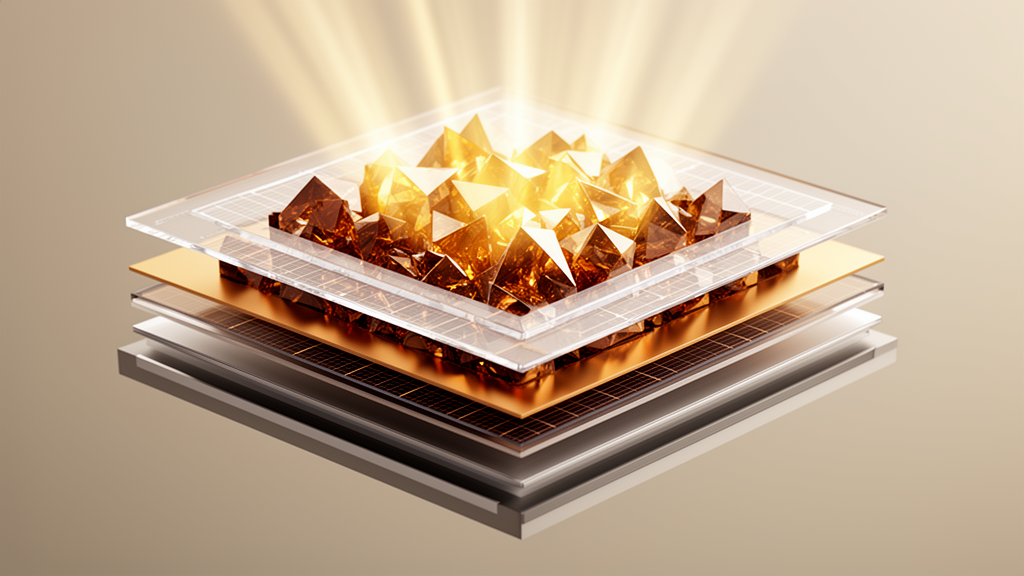
The investigation utilized the SCAPS-1D platform to model a specific device architecture consisting of FTO, ZnOS, Cs2CuSbBr6, CuSCN, and flat-bands. In this configuration, CuSCN serves as the hole transport layer, while ZnOS functions as the electron transport layer. The choice of this lead-free double-perovskite absorber is driven by its environmental compatibility and stability.

The study systematically examined several critical material variables to understand their impact on solar cell performance. These variables included the thickness of the active layer, the acceptor concentration within both the absorber and the hole transport layer, and the densities of bulk and interfacial defects. Additionally, the team analyzed the effects of series and shunt resistance, temperature variations, and the metal work function.

A key finding of the simulation work relates to the role of defect densities in the device structure. The results indicated that reducing the defect density of the Cs2CuSbBr6 absorber, as well as the interfaces between ZnOS and Cs2CuSbBr6 and between Cs2CuSbBr6 and CuSCN, to 10^13 cm−3 significantly enhances device performance.

The thickness of the absorber layer was another critical parameter optimized in the study. The analysis revealed that the highest current output is attained when the Cs2CuSbBr6 absorber thickness is set to 800 nm.

Thermal stability emerged as a significant consideration in the simulation results.

The work function of the rear contact electrode was found to have a significant impact on the efficiency of charge extraction.

Upon optimization of the device parameters, the simulated solar cell achieved a power conversion efficiency of 28.18%. This performance was supported by a fill factor of 86.12%, an open-circuit voltage of 1.13 V, and a short-circuit current density of 28.81 mA/cm².

Subject of Research: Theoretical optimization of lead-free Cs2CuSbBr6 double-perovskite solar cells using SCAPS-1D simulation.

Article Title: SCAPS-1D-guided design of high-efficiency lead-free Cs2CuSbBr6 double-perovskite solar cells

Article References: Ullah, S., Shah, A. U. I., Khan, M. R., Khan, F., Meyer, E. L., Alam, K., & Khan, M. T. (2026). SCAPS-1D-guided design of high-efficiency lead-free Cs2CuSbBr6 double-perovskite solar cells. Discover Materials. https://doi.org/10.1007/s43939-026-01029-z

Image Credits: AI Generated

DOI: 10.1007/s43939-026-01029-z

Keywords: perovskite solar cells, lead-free materials, SCAPS-1D, Cs2CuSbBr6, power conversion efficiency, defect density, thermal stability, charge extraction, device simulation, Discover Materials, SCAPS-1D-guided, design

News Source: Denise Maddox. (November 10, 2026). Simulation Design Yields 28.18% Efficiency for Lead-Free Perovskite Solar Cells. Scienmag.


Tags: charge extractionCs2CuSbBr6defect densitydesigndevice simulationDiscover Materialslead-free materialsperovskite solar cellspower conversion efficiencySCAPS-1DSCAPS-1D-guidedthermal stability
Share12Tweet7Share2ShareShareShare1

Related Posts

Fixed Point Method Solves Nonlinear Fractional Integral Equations in Lipschitz Banach Algebras

Fixed Point Method Solves Nonlinear Fractional Integral Equations in Lipschitz Banach Algebras

November 18, 2026
Dynamic Engineering Model Predicts Wind Turbine Helix Wakes Faster Than Real Time

Dynamic Engineering Model Predicts Wind Turbine Helix Wakes Faster Than Real Time

November 18, 2026

Patch Classification and Generative Models Accurately Detect Photovoltaic Panel Defects

November 18, 2026

Retinal Artificial Intelligence Demonstrates High Diagnostic Accuracy but Faces Clinical Implementation Barriers

November 18, 2026

POPULAR NEWS

  • Multi-Environment Trials Identify Four Superior High-Yielding Barley Genotypes in Egypt

    Multi-Environment Trials Identify Four Superior High-Yielding Barley Genotypes in Egypt

    29 shares
    Share 12 Tweet 7
  • Shandong Listeria Study Links Food and Clinical Isolates Using Genomic Profiling

    29 shares
    Share 12 Tweet 7
  • Engineers Develop Curved Lithium-Sulfur Battery Electrodes for Drone Frame Energy Storage

    29 shares
    Share 12 Tweet 7
  • Maternal Serum Elements Link to Cardiometabolic Risk Factors in Pregnancy

    29 shares
    Share 12 Tweet 7

About

We bring you the latest biotechnology news from best research centers and universities around the world. Check our website.

Follow us

Recent News

Topical metronidazole improves anal fissure healing in clinical review of microbiome treatments

Editorial Highlights Natural Products Targeting Inflammation and Degeneration Across Experimental Disease Models

Pediatric Intensive Care Clinician Workload Strain Surges Past Specific Operational Thresholds

Subscribe to Blog via Email

Enter your email address to subscribe to this blog and receive notifications of new posts by email.

Join 88 other subscribers
  • Contact Us

Bioengineer.org © Copyright 2023 All Rights Reserved.

Welcome Back!

Login to your account below

Forgotten Password?

Retrieve your password

Please enter your username or email address to reset your password.

Log In
No Result
View All Result
  • Homepages
    • Home Page 1
    • Home Page 2
  • News
  • National
  • Business
  • Health
  • Lifestyle
  • Science

Bioengineer.org © Copyright 2023 All Rights Reserved.