Trap Recombination Hits Organic and Perovskite Solar Cells in Opposite Ways
A drift–diffusion modeling study finds that trap-assisted SRH recombination mainly cuts the short-circuit current of organic solar cells while mostly ...
A drift–diffusion modeling study finds that trap-assisted SRH recombination mainly cuts the short-circuit current of organic solar cells while mostly ...

A simulation study finds that pairing serrated textures at the front interface and back electrode of all-perovskite tandem solar cells ...

A computational study designed three P3CPenT-based donor–acceptor molecules whose calculated energy gaps, visible-light absorption and theoretical efficiency descriptors outperform the ...

A PRISMA-guided review of 105 studies argues that moisture-driven degradation, not efficiency, is the key barrier facing perovskite solar cells ...
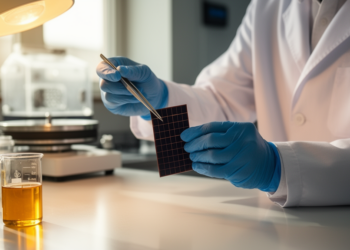
A precursor linkage strategy using acetate anions enabled single-phase Cu(In,Ga)Se2 films and solar cells with 18.53% champion efficiency.
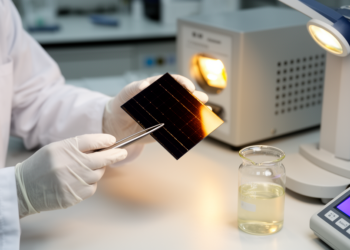
An AI-guided framework identified a readily synthesizable self-assembled monolayer that delivers 27.2% efficiency and retains over 95% of initial efficiency ...

Researchers at Chiba University identified a thermodynamic boundary for photocurrent generation in organic solar cells and found that more rigid ...
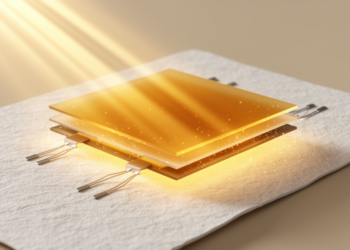
A simulation-only study predicts a lead-free, tin-free bilayer solar cell using Cs₂TiI₆ and La₂NiMnO₆ absorbers could reach 28.5% efficiency.
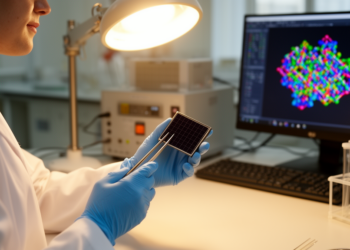
A research team used SCAPS-1D simulation to optimize a lead-free CsSnI3 perovskite solar cell and then fabricated it, lifting the ...
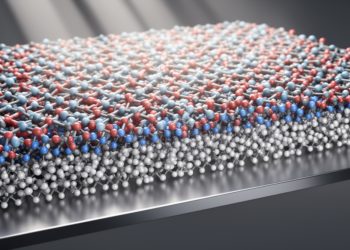
A methanol-assisted deposition process controlled cathode-interlayer molecular orientation and enabled a binary organic solar cell with certified 20.65% efficiency and ...

A SCAPS-1D simulation study reports that a lead-free inorganic Cs2BiAgI6 perovskite solar cell with optimized TiO2 and Cu2O transport layers ...

Simulations show that tuning the valence band offset at the hole transport layer interface of lead-free Cs2PdBr6 perovskite solar cells ...
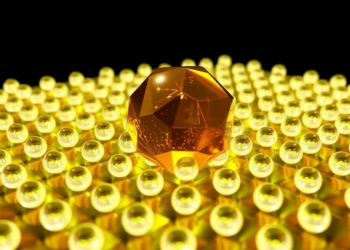
Researchers have discovered that tightly packed C60 molecules create band-like electronic states that drive recombination in perovskite solar cells, and ...

Researchers have introduced solid-state emissive guest acceptors that open thermally accessible radiative pathways, suppressing non-radiative voltage losses and enabling certified ...
Researchers blended three self-assembled molecules into high-entropy hole-selective contacts, achieving a certified 27.31% efficiency and negligible loss after 1,300 hours ...

Researchers built 2D perovskite spacer cations in situ from formamidinium and n-hexyl phosphonic acid, achieving 26.32% efficiency and retaining over ...

Researchers fabricated spray-deposited CFTS/CdS solar cells reaching 5.23 percent efficiency and used SCAPS-1D simulations calibrated to the experiments to identify ...

Solar cells represent a cornerstone in the global transition toward renewable energy, with ongoing efforts to improve their efficiency, sustainability, ...

In the relentless pursuit of sustainable and efficient energy solutions, solar cell technology continues to evolve, promising groundbreaking advancements that ...