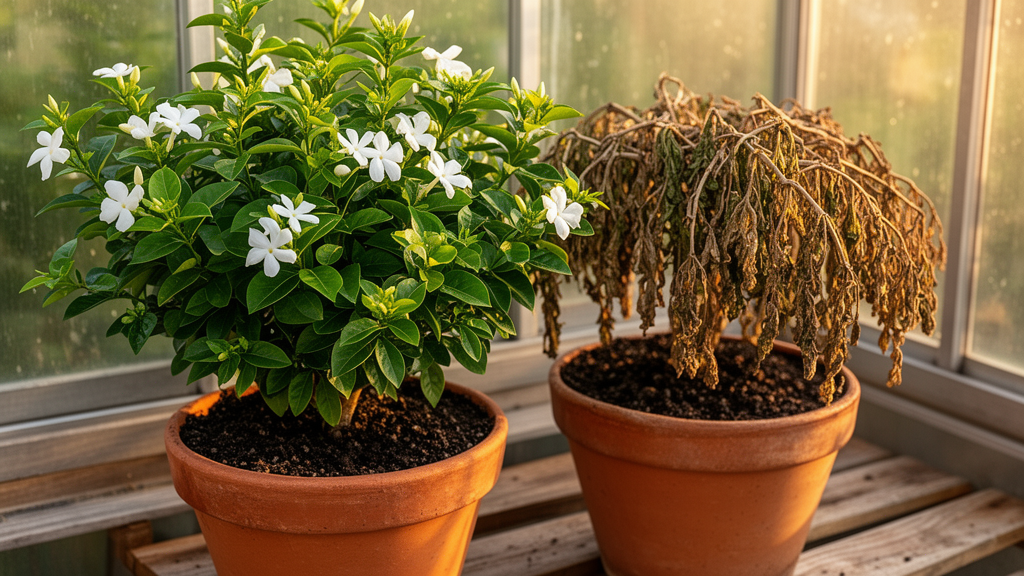
Jasmine (Jasminum sambac), the fragrant ornamental shrub widely cultivated in India for its flowers and essential oil, suffers when water runs short. Drought can impair photosynthesis, disrupt metabolism and cut flowering performance, which matters in a crop grown for the cosmetic and pharmaceutical industries. A new study from researchers at Vellore Institute of Technology reports that a single pre-treatment with sodium metasilicate, a soluble form of silicon, was associated with markedly better physiological and biochemical responses in drought-stressed jasmine plants, including a significantly higher fresh flower weight than in plants that endured drought without supplementation.
The experiment compared four treatment groups: well-watered control plants, drought-stressed plants, drought-stressed plants given 5 mM sodium metasilicate (D+Si), and plants given 5 mM sodium metasilicate alone. The silicon supplement was applied once, as a soil drench, before drought was imposed. The researchers then measured physiological parameters, the activities of key antioxidant enzymes, fresh flower weight, the profiles of thylakoid membrane protein complexes in the chloroplast, and the relative expression of putative drought-responsive genes and silicon transporter genes.
Several physiological parameters differed significantly between the D+Si plants and the drought-stressed plants that received no silicon, according to the study published in Frontiers in Horticulture. In other words, the silicon-treated plants did not simply look better; measurable aspects of their physiology shifted in ways consistent with improved tolerance of water deficit.
A central part of the story involves antioxidant enzymes. In the study, the activities of superoxide dismutase (SOD), catalase (CAT) and ascorbate peroxidase (APX) were significantly modulated by sodium metasilicate supplementation under drought conditions.
The photosynthetic machinery also showed changes.
At the molecular level, the treatment was linked to changes in the relative expression of putative drought-responsive genes and silicon transporter genes. Because these genes were identified as putative responders rather than functionally validated targets, the authors frame this as an association with tolerance mechanisms rather than a complete causal pathway. Still, the combination of physiological, biochemical, proteomic and gene-expression evidence points in the same direction: silicon appears to interact with multiple layers of the plant’s drought response.
The most economically relevant result concerns yield. Fresh flower weight was significantly higher in the D+Si plants than in the drought-stressed plants, meaning the supplemented plants produced heavier flowers despite facing the same water limitation.
The authors conclude that sodium metasilicate supplementation improved physiological and biochemical responses and increased flower yield under drought conditions in J. sambac, suggesting it may help mitigate the adverse effects of drought and support flower production in this ornamental crop. Because the treatment was applied once before drought onset, the approach would require growers to anticipate stress rather than react to it, and the reported effects are associations observed in this experimental system.
Whether the same single-drench protocol delivers comparable benefits across seasons, soils and cultivation systems remains to be tested, but for now the evidence indicates that a modest silicon intervention shifted how this fragrant ornamental coped with one of agriculture’s most common stresses.
Subject of Research: Effects of sodium metasilicate supplementation on drought-stressed jasmine plants
Article Title: Silicon modulates drought stress and enhances tolerance by improving physiology and key gene regulations in jasmine (Jasminum sambac L.)
Article References: Lesharadevi, K., Parthasarathi, T., & Muneer, S. (2026). Silicon modulates drought stress and enhances tolerance by improving physiology and key gene regulations in jasmine (Jasminum sambac L.). Frontiers in Horticulture, 5, 1964842. https://doi.org/10.3389/fhort.2026.1964842
Image Credits: AI Generated
DOI: 10.3389/fhort.2026.1964842
Keywords: jasmine, drought stress, silicon, sodium metasilicate, antioxidant enzymes, flower yield, gene expression, chloroplast proteome, plant physiology, ornamental crops, modulates, drought
News Source: Juliet Wilcox. (October 29, 2026). Silicon Supplement Helps Jasmine Plants Withstand Drought, Study Finds. Scienmag.