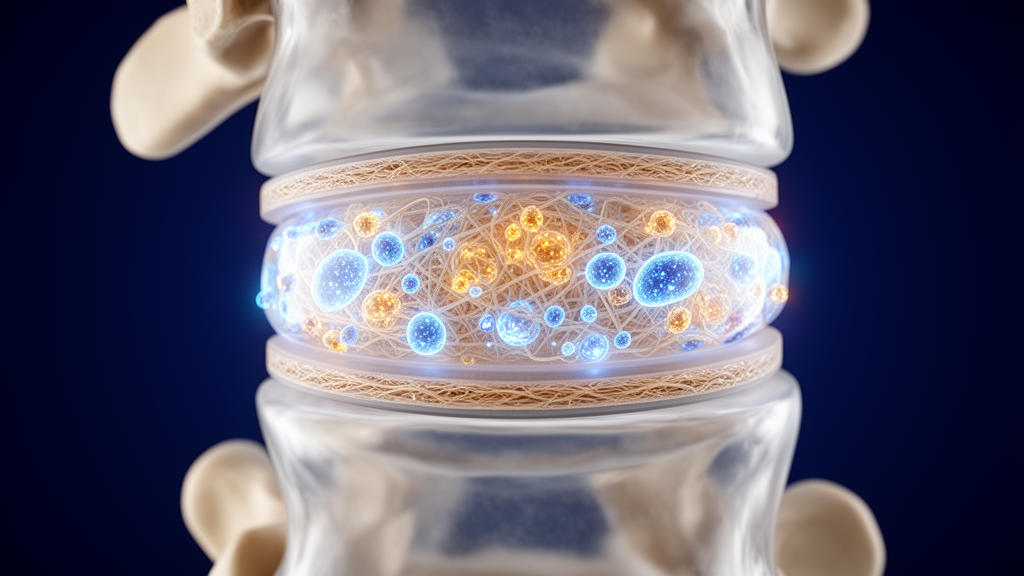
A single-cell transcriptomic investigation of human nucleus pulposus tissue has revealed that cellular senescence-like alterations linked to CDKN2A expression do not consistently align with tissue-level degeneration assessed by Pfirrmann grading. Researchers evaluating human disc samples discovered that transcriptomic and compositional patterns associated with CDKN2A activity diverge from those tied to clinical degeneration grades, pointing to distinct biological dynamics occurring simultaneously within the spinal disc microenvironment.
The study analyzed nucleus pulposus tissues collected from six human donors using single-cell RNA sequencing, establishing each donor as an independent biological replicate. To evaluate molecular and structural deterioration, the investigators measured CDKN2A expression continuously as well as across post hoc intensity tiers, while structural disc degeneration was categorized according to established Pfirrmann grades II, III, and IV. Donor-aware pseudobulk evaluations and Gene Ontology Biological Process gene set enrichment analyses were implemented to map pathway activity without confounding individual donor variation.
Across the profiled donor tissues, single-cell sequencing identified five distinct nucleus pulposus cell subtypes: ProNPC, RegNPC, EffNPC, HomoNPC, and FibroNPC. When examining cell composition, cell-cycle distributions, and specific pathway activations across all six individuals, the investigators found that CDKN2A-associated markers and Pfirrmann-associated signatures exhibited substantial heterogeneity and were not consistently concordant across donor profiles.
Subtype-level vulnerability and transcriptomic shifts were further explored through donor-blocked Augur analyses to determine which populations responded most strongly to each condition. These evaluations showed that FibroNPC ranked highest in responsiveness across post hoc CDKN2A-intensity groups, whereas RegNPC ranked highest across advancing Pfirrmann grades.
The research team also tracked the consequences of short-term in vitro culture by analyzing matched freshly isolated and first-passage cells from three donors. Following first passage, overall CDKN2A expression increased across all three paired samples. This transition was accompanied by marked descriptive remodeling of cell composition, characterized by increased proportions of FibroNPC and ProNPC alongside decreased proportions of EffNPC, HomoNPC, and RegNPC, suggesting that culture conditions induce selective pressures and cellular adaptation.
Among the identified subtypes, the ProNPC cluster demonstrated unique features by exhibiting relatively high CDKN2A expression in tandem with prominent cell-cycle characteristics. Donor-aware regulon analysis using pySCENIC and AUCell identified nine candidate transcription-factor regulons with consistently elevated activity in ProNPC across all six donors. The researchers noted, however, that these computational analyses do not establish direct regulation of CDKN2A or causal control of the ProNPC phenotypic state.
To complement the single-cell sequencing dataset, the investigators conducted histological evaluations and flow-cytometric assessments using additional independent tissue samples. The collective findings indicate that CDKN2A-associated senescence and Pfirrmann-associated structural degeneration represent partly uncoupled biological processes in human disc disease, while highlighting that primary cell culture rapidly modifies native cellular proportions and senescence markers.
Subject of Research: Single-cell transcriptomic analysis of CDKN2A expression and degeneration in human nucleus pulposus cells
Article Title: CDKN2A-associated senescence-like and degeneration-related changes in human nucleus pulposus cells and culture-associated alterations: a single-cell RNA sequencing study
Article References: Xu, N., Cao, Y., Zhang, Z., Wang, Z., Jiang, C., Chen, Y., Jiang, Z., Li, Z., Liu, X., Shan, H., Jiang, X., Jin, L., Chen, Z., & Wang, X. (2026). CDKN2A-associated senescence-like and degeneration-related changes in human nucleus pulposus cells and culture-associated alterations: a single-cell RNA sequencing study. Journal of Translational Medicine. https://doi.org/10.1186/s12967-026-09112-y
Image Credits: AI Generated
DOI: 10.1186/s12967-026-09112-y
Keywords: CDKN2A, nucleus pulposus, single-cell RNA sequencing, intervertebral disc degeneration, cellular senescence, Pfirrmann grade, ProNPC, FibroNPC, RegNPC, EffNPC, HomoNPC, cell culture, transcriptomics, in vitro adaptation, pySCENIC, Augur analysis
News Source: Beatrice Stafford. (November 12, 2026). Senescence Marker CDKN2A Does Not Fully Align With Spinal Disc Degeneration. Scienmag.